
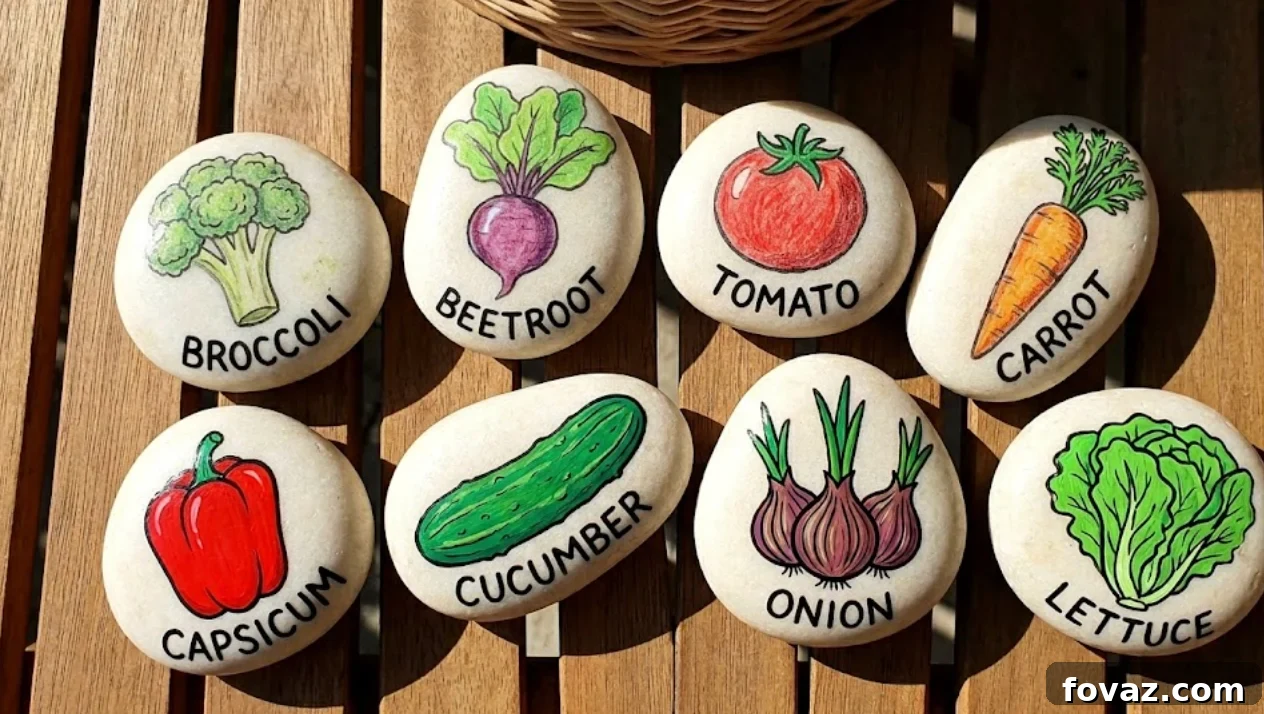
At a Glance: Painted Rock Garden Markers
- A simple weekend craft that transforms smooth river rocks into durable, attractive plant labels.
- Cost ranges from $0 to $40 depending on whether you source stones from your yard or purchase them, and whether you already have paint pens and a clear outdoor sealer.
- Beginner- and kid-friendly; markers typically last 1–3 seasons before needing a fresh coat of sealer.
Every spring you mean to label the garden, but by mid-summer rows of similar green leaves can leave you guessing which is vegetable and which is volunteer weed. Plastic markers fade quickly, wooden stakes rot, and paper tags disappear after a rain. Painted rock markers stay put, weather well, and look like they belong in the bed. They also make for a relaxing Saturday with paint pens—simple, useful, and pretty.
Materials List
- Smooth stones: Flat, light-colored river rocks about 3–4 inches wide. Forage locally first; buy a bag only if needed.
- Soap and water: A bucket and a scrub brush to remove dirt and grit.
- Pencil: A standard #2 pencil for sketching designs before painting.
- Acrylic paint pens: Water-based acrylic pens (Posca-style) give clean lines; you can also use craft paint and a small brush, but pens are easier for lettering.
- Black fine-tip paint pen: For outlining shapes and writing plant names. Avoid standard Sharpies for final outlines—some bleed when sealed.
- Clear outdoor sealer: A spray acrylic sealer or a brush-on outdoor Mod Podge to protect the design from rain and sun.
Step-by-Step Instructions
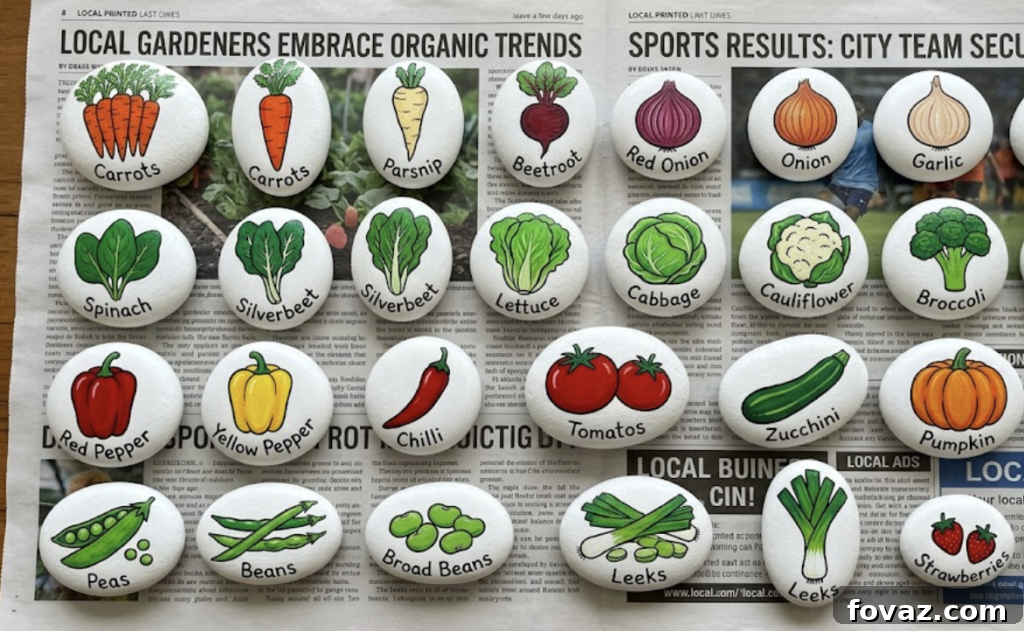
1. Clean the stones Place rocks in warm, soapy water and scrub until all dirt and grit are gone. Rinse and let them dry completely in the sun—at least a few hours, preferably overnight. Any trapped moisture under the paint can lift the finish later, so make sure the stones are fully dry.
2. Sketch your design Lightly draw the vegetable or herb shape on the dry rock with a pencil, leaving space for the plant name. Simple, cartoon-style shapes work best because bold colors and clear outlines read well from a distance and hide imperfect lines.
3. Color it in Fill the design with paint pens or brush-on acrylic in two thin coats for even, vibrant coverage. Allow the first coat to dry about 10 minutes before applying the second to avoid streaks.
4. Outline and label Use a black fine-tip paint pen to trace the painted shapes and add the plant name in block letters for legibility across the bed. Clear outlines give the marker a polished, intentional look and make the design pop.
5. Seal the deal After the paint is fully dry—ideally 24 hours—apply a light, even coat of clear outdoor sealer. Hold the spray can about 8 inches away and use thin passes; heavy coats can cause bleeding. Let the first coat dry, then add a second thin coat. Two thin layers protect better than one thick layer.
Shareable Result Benchmark
You’ll know the project succeeded when:
- The plant name is readable from about six feet away.
- The rock clearly resembles the intended vegetable or herb.
- The design remains bright and intact after the first rain.
For under $20 and an afternoon, you can create markers that outlast many store-bought options and integrate naturally into the garden. Re-seal them annually and they should hold up for three to four seasons, making them a small investment with a good return.
FAQs
1. How long will a painted rock garden marker last outside? With proper sealing and quality paint pens, expect about 1–3 seasons. UV exposure and freeze-thaw cycles shorten lifespan, so plan to reapply a clear coat once a year to extend durability.
2. What’s the best paint for rock garden markers? Water-based acrylic paint pens (Posca-style) are ideal for crisp designs and lettering. Finish with a clear acrylic spray sealer. Avoid permanent markers like Sharpies for final artwork because they can bleed when sealed.
3. Can I use rocks from my yard? Yes—flat, smooth, light-colored stones work best. Wash and dry them thoroughly before painting. Using yard stones saves money and blends naturally into the garden.
4. Do I have to seal the painted rocks? Yes, if they will stay outdoors. Unsealed acrylic will fade or wash off quickly. Some specialized outdoor patio paints are self-sealing; otherwise apply a clear sealer as instructed.
5. Why did my paint pen bleed when I sprayed sealer? Bleeding usually happens when the sealer is applied too closely or too heavily, or when non-paint pen inks (like Sharpie) are used. Spray from about 8 inches away in light coats and allow each coat to dry before adding another. If the ink bled, repaint the design with an acrylic paint pen and reseal carefully.