
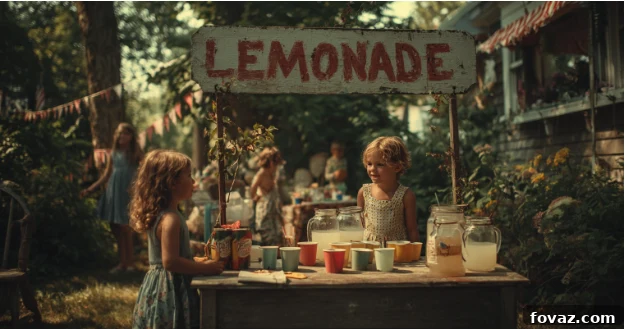
The summer sun bathes the afternoon in golden light, yet inside, a familiar restlessness stirs. Your child, having exhausted their usual repertoire of indoor games and satisfied their snack cravings, now seeks something new. They crave an activity that not only capt captures their imagination but also offers a tangible sense of accomplishment, guiding them through each step of a meaningful process. This is where the classic, yet profoundly educational, lemonade stand shines as an ideal solution for engaging young minds and fostering crucial life skills.
A lemonade stand transcends its simple appearance, offering far more than just a delightful way to pass a summer afternoon. It presents a unique, hands-on learning experience, empowering children to delve into planning their setup, mastering the art of mixing delicious beverages, and confidently interacting with neighbors and passersby who stop for a refreshing cup. This seemingly simple project organically encourages children to organize their materials, cultivate attentiveness towards their “customers,” and meticulously see a task through from its inception to a successful conclusion. Among the myriad of beloved summer activities, few empower children with such an extensive degree of freedom to take the lead and genuinely experience the weight and reward of real responsibility, laying foundational bricks for future entrepreneurial endeavors and personal growth.
Building the Perfect Lemonade Stand: A Creative & Practical Endeavor
The journey to entrepreneurial success begins with the construction of the stand itself. Encourage your child to unleash their creativity by starting with whatever materials are readily available around the house. A sturdy folding table serves as an excellent base, or for a more rustic and ingenious approach, a crate topped with a sturdy board can easily be transformed into a functional counter. The initial decision-making process, such as where to strategically place the stand for maximum visibility and how to decorate it to attract customers, should largely be driven by your child’s vision. This not only imbues them with a sense of ownership but also introduces them to basic principles of location strategy and visual merchandising.
While fostering independence, parental involvement remains crucial for safety. Offer your assistance whenever sharp tools or heavy lifting are involved, but always strive to keep your child in charge of the creative direction and execution. They can be invaluable helpers, holding tape for signs, drawing vibrant illustrations, or steadying a board while you carefully hammer. If a component leans precariously or slips out of place, resist the urge to immediately fix it yourself. Instead, engage your child in a thoughtful discussion, guiding them through the troubleshooting process and encouraging them to devise their own solutions. This collaborative approach, where they actively participate in setting up the booth, is invaluable. It teaches them fundamental spatial planning, the importance of making adjustments as needed, and a practical understanding of how different tools and materials work in harmony. This hands-on construction phase is a powerful lesson in resourcefulness, design, and practical problem-solving, all while building excitement for their grand opening.
Crafting the Perfect Brew: From Ingredients to Innovation
Before sales can begin, the product itself needs attention: the lemonade! This stage offers a fantastic opportunity to teach children about recipes, measurements, and even basic budgeting. Involve them in choosing the ingredients – fresh lemons, sugar, water – and perhaps even a secret ingredient for a unique twist, like a few berries or a sprig of mint. A trip to the grocery store can become a lesson in comparing prices, understanding quantities, and making informed choices within a budget. This introduces the concept of cost of goods sold, a fundamental aspect of business.
Back in the kitchen, guide them through the process of mixing, ensuring they understand the importance of hygiene and safety. Measuring cups and spoons become tools for precision, teaching basic math skills in a practical, engaging way. Encourage them to taste-test and adjust the recipe, fostering critical thinking and an understanding of quality control. Will it be classic sweet, or a little tart? Should they offer different flavors? These decisions not only enhance the product but also deepen their understanding of customer preferences and product diversification. This segment of the lemonade stand experience is a delicious blend of culinary arts, scientific measurement, and introductory market research.
Mastering the Art of Sales & Customer Interaction
With the stand built and the lemonade perfectly brewed, it’s time for the crucial sales phase. To simplify financial transactions, suggest a price point that is easy for young minds to manage, such as a dollar per cup. This makes counting money and making change a straightforward, educational exercise. Empower your child to personally write the price on the sign, fostering a sense of ownership over their marketing message, and to meticulously set out a change jar. Each time a customer approaches, encourage your child to practice essential social skills: a friendly greeting, clearly stating the price, skillfully pouring and handing over the drink, and politely accepting payment.
Mistakes are inevitable and offer prime learning opportunities. Should a cup accidentally tip over, or a coin slip from their grasp, resist the immediate urge to intervene. Instead, remain close, offering silent support, and allow your child the space to respond first. Engage them with open-ended questions that encourage critical thinking, such as, “What do you think we should do next?” or “How can we make sure that doesn’t happen again?” rather than simply stepping in to solve the problem for them. Each and every sale transforms into a brief, invaluable interaction that hones clear speech, develops steady hands, and reinforces polite behavior. These interactions are fundamental early steps in a child’s entrepreneurial journey, allowing them to vividly experience how effort, strategic decision-making, and effective communication converge in a real-world business setting, building confidence with every successful transaction.
Embracing Challenges and Cultivating Resilience
Not every moment at the lemonade stand will be a triumphant success, and that’s precisely where some of the most profound lessons lie. Children may encounter various challenges: perhaps a long lull with no customers, an unexpected change in weather, or even a tricky situation with an impatient customer. These moments, while potentially disheartening, are crucial for building resilience and adaptability. Guide your child to understand that setbacks are a natural part of any endeavor. If sales are slow, encourage them to brainstorm solutions: Should they shout “Lemonade!” louder? Offer a special deal? Or simply be patient? Learning to adjust to unforeseen circumstances without giving up is a vital life skill.
Likewise, teach them to handle small disappointments with grace. A spilled drink, an incorrect change calculation, or even constructive feedback from a customer can all be turned into positive learning experiences. Your role here is to be a supportive mentor, helping them process these moments and frame them as opportunities for growth rather than failures. By navigating these challenges with your guidance, children develop a stronger sense of self-efficacy, learning that they possess the inner strength to overcome obstacles and adapt their strategies, a lesson far more valuable than any profit earned.
The Importance of Follow-Through and Responsible Closure
The entrepreneurial lesson doesn’t end when the last cup is sold. Once the day’s business wraps up, it’s essential to guide your child through the crucial process of cleanup and accountability. Ask them where the leftover supplies should be stored, reinforcing organizational skills. Demonstrate how to meticulously wash out the pitchers, carefully wipe down the stand, and neatly fold any tables or collapse any structures. These tasks, though seemingly mundane, are integral components of finishing a job thoroughly and responsibly. This teaches them about maintaining equipment, inventory management, and preparing for the next venture.
If your child collaborated with a friend or a sibling, facilitate a reflective discussion about their shared experience. Encourage them to articulate what aspects went particularly well and what areas could be improved. Perhaps one child enjoyed interacting with customers while the other excelled at managing the cups and refills. This guided reflection is not merely about recapping the day; it’s a powerful tool for developing self-awareness, fostering teamwork, and enabling them to think strategically about how to enhance their approach for future endeavors. While a lemonade stand may only operate for a few hours, the habits it instills—such as starting tasks on time, seeing projects through to completion, and conscientiously putting things away—are invaluable life lessons that extend far beyond a summer afternoon, serving them well in academics, future careers, and personal organization.
Empowering Young Entrepreneurs: Letting Kids Make the Rules (With Your Help)
Children thrive and engage more deeply when they are given the autonomy to shape elements of a task. The lemonade stand offers a perfect canvas for this empowerment. Encourage them to make pivotal decisions, such as brainstorming a catchy name for their stand, deciding on the ideal price per cup, or even determining the number of cups they aim to sell. These choices provide ample room for them to feel genuinely in charge, fostering a powerful sense of ownership and boosting their self-confidence. This autonomy is crucial for cultivating intrinsic motivation and a deeper understanding of cause and effect.
Should your child propose an idea that might not be practical or financially sound—for instance, suggesting they give all the lemonade away for free—resist the urge to immediately dismiss it. Instead, engage them with thoughtful questions like, “What is your main goal for the stand?” or “How will we cover the cost of the lemons and sugar if we give it away?” Help them logically compare different ideas and their potential outcomes without ever taking the lead away from them. The core objective here is to empower them to make small, guided choices and then learn directly from the tangible results of those decisions. As the Child Mind Institute wisely explains, even small, consistent steps toward independence are profoundly instrumental in helping children cultivate confidence and sharpen their decision-making abilities. This expert guidance aligns perfectly with the ethos of simple yet impactful summer projects like a lemonade stand, which serves as a potent catalyst for encouraging genuine independence in children, preparing them for more complex challenges ahead.
Celebrating Imperfection: The True Value of Child-Led Projects
In the world of a child-led lemonade stand, perfection is not the goal; genuine effort and hands-on learning are. If the paint on their hand-drawn sign smudges, or the tape struggles to hold a banner perfectly straight, embrace it. Let the booth retain its charming, slightly rough-around-the-edges character. Children gain significantly more from the process of doing it themselves, mistakes and all, than they do from passively watching an adult meticulously fix every single detail. This acceptance of imperfection fosters a growth mindset, teaching them that it’s okay for things not to be flawless, and that the learning journey is often more valuable than a polished final product.
Make a conscious effort to notice and acknowledge their proactive and positive actions. Whether they confidently address a customer, intuitively refill the pitcher without being prompted, or exhibit unwavering persistence during a quiet hour when sales are slow, verbalize your appreciation. Specific, positive feedback like, “I noticed how politely you greeted that customer,” or “It was great how you kept trying even when things were slow,” resonates deeply and builds lasting confidence. This kind of genuine encouragement reinforces desirable behaviors and helps children internalize their successes. The dedicated team at Highlights consistently shares compelling examples of how child-led projects are incredibly effective at building practical, real-world skills. Their insightful advice further emphasizes how simple tasks can be powerfully tied to strong educational lessons, championing the immense benefits of Kid-Led Learning Ideas in fostering independent, capable children.
Lemonade Stand Life Lessons That Grow Over Time: A Foundation for Success
Ultimately, a lemonade stand imparts far more than just the mechanics of selling a refreshing drink. It serves as a comprehensive, miniature business school, helping your child profoundly grasp what it truly takes to initiate a task, warmly welcome and interact with others, and steadfastly persevere through minor problems and unexpected challenges. This foundational experience cultivates a robust work ethic and an understanding of perseverance.
Beyond the practical skills, it also offers them an invaluable glimpse into the empowering feeling of taking initiative, formulating a plan, and seeing that plan through to its conclusion. This makes it unequivocally one of the most enriching and valuable summer learning activities you can possibly offer, entirely outside the confines of a formal classroom. Children walk away from this experience with much more than just a handful of coins. They accumulate invaluable experience in customer service, basic financial literacy, marketing, problem-solving, and social interaction – skills that are directly transferable and immensely useful in school, in navigating friendships, and in tackling future projects and endeavors. For some, this seemingly simple summer activity could very well ignite a lifelong interest in entrepreneurship, growing and evolving as they are inspired to explore new ideas and launch innovative projects entirely on their own, shaping them into future leaders and creative thinkers.
If your family has embraced the classic lemonade stand adventure this summer, we would love to hear about it! Please share your child’s favorite part of the experience in the comments below. We are eager to learn what valuable lessons they took away from it and what exciting new ideas they might be eager to try next!
FAQ: Unpacking Lemonade Stand Life Lessons
At what age is best for running a lemonade stand?
The beauty of a lemonade stand lies in its adaptability across various age groups. Children as young as 5 or 6 years old can enthusiastically assist with simpler, yet crucial, tasks. This includes helping to mix the drinks under supervision, creatively decorating vibrant signs, or even greeting customers with a cheerful “hello.” As children mature to ages 8 or 9, they typically develop the cognitive and motor skills necessary to independently handle more complex tasks with only light parental supervision. This includes confidently counting change, engaging in more extended conversations with customers, and meticulously managing the cleanup process. The key is to tailor the responsibilities to their developmental stage, ensuring they feel challenged yet capable.
How much help should a parent give?
The art of parental involvement in a lemonade stand is a delicate balance, centered on fostering independence while ensuring safety. Your primary role should be to step in when safety is paramount, such as with sharp knives for slicing lemons or handling hot water. Beyond that, strive to let your child lead the endeavor. Guide their decisions with thoughtful, open-ended questions rather than providing direct answers. For example, instead of saying, “Put the stand here,” ask, “Where do you think the most people will see your stand?” Empower them to choose the setup, manage the money, and actively solve any problems that arise. They gain significantly more invaluable experience and confidence when they are allowed to work through each part of the project themselves, even if it means a few missteps along the way.
What if my child is shy or nervous talking to customers?
It’s completely normal for some children to feel shy or nervous when interacting with strangers, and the lemonade stand can be a wonderful, gentle way to build their social confidence. Start by creating low-pressure situations. Encourage them to practice serving and interacting with trusted family members or close neighbors first. Suggest simple, concise greetings or phrases to begin with, such as a friendly “Hi!” or “Lemonade is one dollar, please.” These small, successful interactions will gradually build their confidence. You can also model the first few interactions yourself, demonstrating polite greetings and clear communication, until your child feels more comfortable and ready to take the reins. Remember, every positive interaction, no matter how brief, is a step forward in their social development.
How long should a lemonade stand run?
For most children, especially younger ones, an ideal duration for a lemonade stand is typically two to three hours for a single day. It’s crucial to observe your child for signs of fatigue, boredom, or declining enthusiasm. The overarching goal is for them to finish the experience feeling successful and positive, rather than dragging it out until they are exhausted or frustrated. Keeping the session relatively short ensures that it remains an enjoyable and memorable activity. If they express a desire to try again, you can always repeat the activity on another day, reinforcing the lessons learned in a fresh, exciting way.
Do lemonade stands need a permit?
The regulations regarding lemonade stands can vary significantly based on your local municipality, so it’s always wise to check your specific local rules and ordinances. In many cities and towns, particularly for short-term events held directly in front of a private residence and run by children, permits are often not required. However, some areas may have specific guidelines concerning food safety, sales limits, or even noise regulations. To ensure compliance and avoid any potential issues, the best course of action is to contact your city or county office, typically the clerk’s or business licensing department, or conduct a quick search online for “lemonade stand regulations [your city/county name].” When in doubt, a quick inquiry can save a lot of trouble and allow your child’s entrepreneurial spirit to flourish legally.