
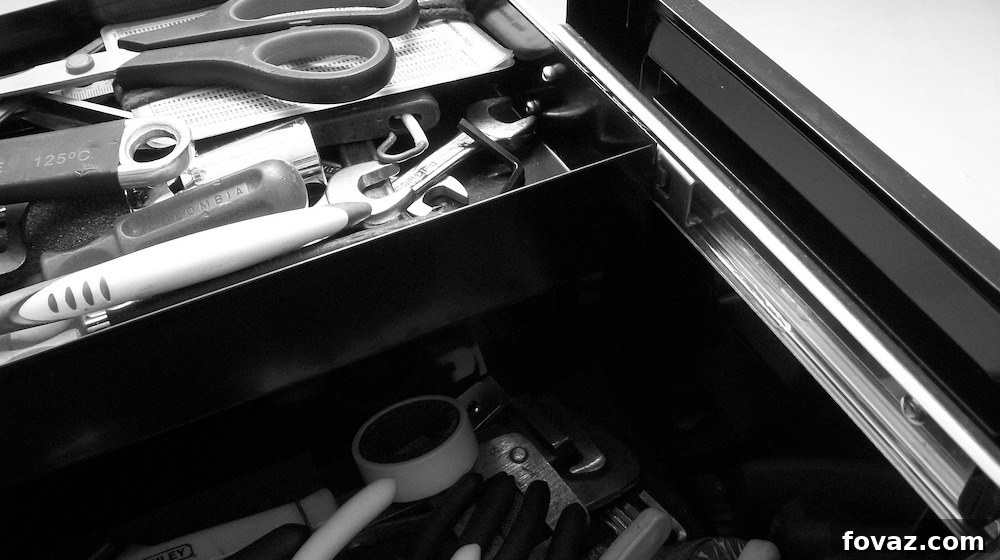
Every seasoned DIY enthusiast knows that a well-stocked toolbox is the cornerstone of successful projects. From the sturdy hammer to the versatile screwdriver and the precision drill bits, a conventional toolkit forms the bedrock of our creative endeavors. However, within my own workbench, I maintain a ‘secret compartment’ – a hidden arsenal of non-conventional tools that have proven indispensable in countless situations. Would you be surprised to learn that this special section houses items as ordinary as a toothbrush and a handful of toothpicks? These humble objects, often overlooked, possess an uncanny ability to tackle those tricky tasks where traditional tools fall short, transforming frustrating challenges into satisfying victories.
Unlock DIY Potential: 9 Unexpected Tools for Your Workbench Toolbox
While standard tools are undeniably essential, there are moments when their rigid design or sheer size makes them unsuitable for delicate operations or confined spaces. Imagine trying to retrieve a tiny screw dropped into an inaccessible crevice with a bulky screwdriver – a task a simple magnet can effortlessly resolve. Or consider the frustration of attempting to clamp two minuscule pieces of wood together with an oversized clamp, when a humble rubber band could achieve the perfect hold. For those of us who embrace the spirit of resourceful DIY, these everyday items become invaluable assets, offering ingenious solutions to common workshop dilemmas. They represent a mindset of adaptability, proving that sometimes the best tool for the job isn’t found in a hardware store, but right in your own home. Let’s explore these nine unsung heroes that deserve a permanent spot in your DIY toolkit:
1. Rubber Bands: The Versatile Gripper and Secure Fastener
Rubber bands are perhaps one of the most underestimated items you can keep in your toolbox, offering a surprising array of applications. When working on intricate furniture assembly or delicate repairs, the last thing you want is to scratch the beautiful finish with a slipping screwdriver. By stretching a rubber band over the head of a screwdriver, you create an instant buffer, enhancing grip and preventing marring of screw heads or surrounding surfaces. This simple trick can save your project from unsightly damage and extend the life of your fasteners. Beyond this, rubber bands excel as temporary clamps, perfect for holding small pieces of wood, fabric, or electrical components together while glue dries or during assembly when conventional clamps are too large or unwieldy. They provide just enough tension without marring surfaces. You can also use them to bundle wires, secure loose parts, or even provide a makeshift grip on smooth tool handles. Keeping a diverse assortment of sizes in your toolbox ensures you’re prepared for any small-scale clamping or securing need that arises.
Stock up on a bulk set of rubber bands here.
2. Resealable Plastic Bags: The Ultimate Organizer and Protector
Small parts are the bane of any DIY project if not properly managed. Screws, bolts, nuts, washers, and other tiny components have an uncanny ability to roll away, disappear into carpet fibers, or simply get lost at the bottom of a cluttered toolbox. This is where resealable plastic bags, like those typically found in kitchens, become invaluable. They are perfect for organizing and categorizing these small items, preventing them from scattering and making it significantly easier to find exactly what you need when you need it. Labeling each bag with the project or part type will further streamline your workflow, saving precious time and reducing frustration. But their utility doesn’t stop at organization. These bags are also excellent for temporarily storing wet paint brushes when you need to take a break, preventing the paint from drying out or dripping all over your workspace. They can also protect sensitive electronic components from dust and moisture, serve as impromptu waste disposal for small messes, or even be used to mix small batches of epoxy or filler without creating a huge mess. A variety pack of sizes is a must-have for any meticulous DIYer.
Get an assortment of resealable plastic bags here.
3. Baby Oil: Gentle Cleanser and Lubricant
Anyone who has spent time painting knows the stubborn challenge of removing paint from skin. Harsh chemical paint removers can be effective, but they often leave your skin dry, irritated, and smelling unpleasant. This is where baby oil shines as a surprisingly effective and gentle alternative. Its mineral oil base works wonders at dissolving both oil-based and latex paints from your hands and arms, often without the need for aggressive scrubbing. Simply apply a generous amount to the affected area, rub gently, and watch the paint start to lift away. Not only does it effectively clean your skin, but it also leaves your hands feeling smooth and moisturized, a welcome bonus after a long day of work. Beyond personal hygiene, baby oil has other uses in the workshop; it can be used as a light lubricant for squeaky hinges or small mechanical parts, or to polish and protect chrome tools, leaving them with a clean, shiny finish. Its mild nature makes it a safer option for many delicate applications compared to harsher petroleum products.
Grab your perfect baby oil right here.
4. Magnet: The Retrieval Master and Part Holder
The dreaded moment when a crucial screw or nail slips from your grasp and vanishes into the abyss behind heavy furniture or into a tight corner is familiar to all DIYers. This is precisely when a simple, strong magnet becomes your best friend. Tying a piece of string or wire around a powerful magnet allows you to suspend it into those seemingly unreachable areas, acting like a fishing rod for ferrous metals. It’s an incredibly effective way to retrieve dropped fasteners, washers, or small tools without the back-breaking effort of moving heavy objects. But the utility of a magnet extends further. Attach it to your workbench to temporarily hold screws, nails, or drill bits during assembly, preventing them from rolling away and keeping them within easy reach. A small magnet can also be used to magnetize the tip of your screwdriver, making it easier to pick up and hold screws, or conversely, to demagnetize tools that are attracting unwanted metal shavings. It’s a silent hero that saves time, effort, and countless lost parts.
Find a strong magnet for your toolbox here.
5. String: Precision Aligner and Geometric Aid
Who needs a compass when you have a piece of string? This humble item is remarkably effective for drawing perfect circles of any size, a task often encountered in woodworking, crafting, or design projects. To do this, simply cut a piece of string to the desired radius of your circle. Tie one end securely around a pencil or pen, and pin the other end to the exact center point on your drawing surface. Holding the pencil firmly upright and keeping the string taut, draw around the pinned center. The result is a flawlessly accurate circle, far simpler and often more precise than using a traditional compass for larger radii. Beyond drawing, string serves multiple purposes. It can be used to establish perfectly straight lines over long distances, acting as a makeshift chalk line when stretched taut between two points. It’s also invaluable for measuring odd or curved shapes, checking for plumb (vertical alignment) with a weight attached, or even for retrieving light objects dropped into hard-to-reach places if you can lasso them. A roll of durable twine or thin rope is a versatile addition.
6. Toothbrush: The Detail Cleaner and Applicator
The small, angled head and flexible bristles of an old toothbrush make it an incredibly effective tool for tasks requiring precision cleaning or application in tight spaces. Traditional brushes or cloths often can’t reach the intricate crevices of hinges, hardware, or delicate electronic components, but a toothbrush excels here. It’s perfect for brushing away accumulated dust, dirt, grime, and even light rust from intricate mechanisms, ensuring smooth operation and longevity. Whether you’re cleaning antique furniture hardware, car parts, or dusty electronics, a toothbrush gets into every nook and cranny. Furthermore, its small size makes it an excellent applicator for glues, lubricants, or protective coatings in areas where larger brushes would be impractical. Need to apply wood filler into a tiny gap or dab a bit of stain onto a hard-to-reach spot? A toothbrush is your go-to. Keep a few clean, dedicated toothbrushes in your kit for various cleaning and application needs – one for dry brushing, one for wet cleaning, and one for applying finishes.
Add a toothbrush to your DIY toolbox right here.
7. Fork: The Miniature Pry Bar and Finger Saver
An old stainless steel dinner fork might seem out of place in a toolbox, but its unique design makes it surprisingly useful for several specific tasks. For starters, the space between the tines of a sturdy fork can act as an excellent miniature pry bar, particularly for pulling thin nails that are embedded deep in a wall or piece of wood. It works similarly to the claw of a hammer but offers more leverage and precision for smaller fasteners that a hammer might damage. The fork’s tines provide a strong, thin edge that can get under the nail head, allowing you to rock it out gently. Another fantastic application is as a nail holder. Before hammering a nail, you can hold it securely between the tines of a fork, keeping your fingers safely out of harm’s way. This is especially useful for small nails or when working in awkward positions. Beyond nails, a fork can be used for mixing small amounts of paint, epoxy, or wood filler, or even for scoring lines in soft materials like clay or plaster. Don’t underestimate the power of a repurposed kitchen utensil!
8. Empty Water Bottle: The Makeshift Level and Storage Solution
In a pinch, an empty plastic water bottle can be ingeniously repurposed as a rudimentary but effective level. To create this makeshift tool, fill the bottle with water up to one of its molded ridges or a clearly marked line. When you place the bottle on the object you wish to level, observe the water line. If the water aligns perfectly with the chosen ridge or line across the entire length of the bottle, the surface is level. This method is surprisingly accurate for many DIY tasks where precise leveling isn’t critical but a general sense of straightness is needed. Furthermore, the versatility of an empty water bottle doesn’t end there. Its robust, enclosed design makes it an excellent temporary container for various liquids such as your baby oil, paint thinner, or even small batches of mixed glues. It can also serve as an impromptu funnel when cutting off the bottom, or a safe, transparent receptacle for storing small parts that you want to keep visible but secure, like tiny screws or beads. Just ensure it’s clean and dry before use.
9. Toothpicks: The Hole Filler and Precision Applicator
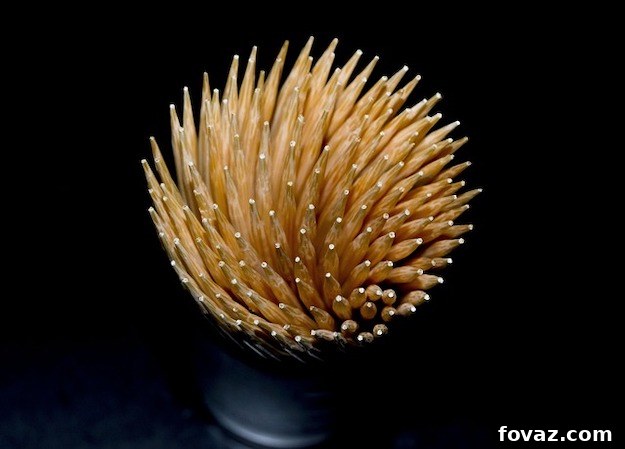
Toothpicks are minuscule powerhouses when it comes to repairing and refining wood projects. Their primary use in a DIY context is to effectively fill stripped screw holes or oversized nail holes, providing a much-needed ‘bite’ for new fasteners. When a screw hole becomes too wide and the screw no longer holds, simply insert several toothpicks into the hole, break them off flush with the surface, and then apply a small amount of wood glue. Once the glue dries, you can drill a new pilot hole (if necessary) and reinsert the screw, which will now have a much stronger and more secure grip. This technique saves you from having to patch and redrill entirely, offering a quick and robust repair. Toothpicks are also excellent for applying tiny dabs of glue or paint into very small, intricate areas, or for cleaning fine grooves and crevices where larger tools cannot reach. They can even be used to press small reset buttons on electronics or to clear clogged nozzles. Always keep a generous supply on hand; their disposable nature makes them perfect for messy tasks.
Grab a box of toothpicks for your workshop right here.
For more insights into essential tools for every homeowner, consider watching this informative video from HICarolina:
There you have it, fellow DIY enthusiasts! Equipping your workbench toolbox with these nine non-conventional items is a small step that yields significant returns. These simple, often overlooked household objects prove that ingenuity and resourcefulness are just as important as specialized tools. By embracing these clever hacks, you’ll be better prepared to tackle unexpected challenges, streamline your projects, and achieve professional-looking results with minimal fuss. So, take a moment to look beyond the obvious, rummage through your kitchen drawers, and start thinking outside the traditional toolbox. You’ll be amazed at how these humble items transform your DIY experience, making you a smarter, more efficient, and truly resourceful handyman or handywoman.
Click here for more articles about woodworking tools and expanding your DIY knowledge.
Feature Image Via My Ride Is Me