

Welcome to the fascinating world of Lego Mindstorms, where imagination meets engineering! For decades, LEGO has captivated builders of all ages, but with Mindstorms, the iconic bricks transcend simple construction to bring intricate robots and intelligent machines to life. This revolutionary platform combines LEGO building elements with programmable bricks, motors, and sensors, empowering users to design, build, and program their very own robotic creations.
Whether you’re a seasoned robotics enthusiast, a curious parent looking for engaging DIY projects for your children, or an educator seeking innovative STEM tools, Lego Mindstorms offers an unparalleled hands-on learning experience. It’s not just about assembling bricks; it’s about understanding mechanics, basic programming logic, problem-solving, and fostering critical thinking. The possibilities are truly limitless, from simple automated devices to complex machines that interact with their environment.
If you’re eager to dive into the world of creative robotics, you’ve come to the right place. We’ve curated an inspiring collection of Lego Mindstorms ideas that promise to ignite your passion for building and programming. Get ready to transform ordinary bricks into extraordinary robots!
Explore More LEGO Inspiration:
-
21 Awesome DIY Lego Ideas
-
Could THIS Be The LEGO Of Our Future?
-
11 DIY Lego Star Wars Ideas
Inspiring DIY Lego Mindstorms Project Ideas
Having witnessed the incredible innovation in robotics through the years, I’m always amazed at how accessible and engaging these concepts have become, especially with platforms like Lego Mindstorms. It’s a fantastic entry point for anyone interested in STEM fields, combining the joy of LEGO building with the thrill of programming and engineering. These DIY Lego Mindstorms projects are designed to challenge and inspire, helping you develop valuable skills while having a blast. Let’s explore some captivating ideas that you can build today!
1. The Time Twister: A Unique Digital Clock
Tired of ordinary digital clocks? Imagine a timepiece that not only tells you the hour but does so with a mechanical flourish! The Time Twister is an innovative Lego Mindstorms project that uses robotic movements to display the time. Instead of static numbers, gears and motors elegantly rotate elements to reveal the current hour and minute. This project is a brilliant demonstration of how simple programming can control precise mechanical actions, making an everyday object into a mesmerizing display of engineering. Building the Time Twister introduces concepts of timing, sequencing, and motor control, perfect for aspiring engineers. It’s a fantastic way to blend functionality with a touch of robotic artistry, transforming a mundane clock into a captivating conversation piece for any desk or shelf. For a closer look at this ingenious creation and to kickstart your own build, be sure to check out the video demonstration here.
2. Robotic Spin Art Creator
Unleash your inner artist with a robotic twist! The Lego Mindstorms Spin Art project allows you to create vibrant, abstract masterpieces with the help of a programmable robot. This fun and engaging build involves a spinning platform driven by a Mindstorms motor, onto which you can drip paint as it rotates. What makes this project particularly exciting is the ability to adjust the speed of the spin, offering endless possibilities for unique patterns and designs. Experiment with different colors and rotation speeds to discover a wide array of artistic expressions. Beyond the artistic outcome, building the Spin Art robot teaches fundamental principles of mechanics, motor control, and variable programming. It’s an excellent way to see how simple robotic systems can be used for creative applications. If you’re ready to combine technology and artistry, you’ll find all the building instructions here to create your own robotic art studio. Watch the robot in action:
3. Edge-Following and Obstacle-Sensing LEGO MINDSTORMS EV3 Robot
Delve into the core concepts of autonomous robotics with the Edge-Following and Obstacle-Sensing EV3 Robot. This sophisticated project challenges builders to construct a robot capable of navigating its environment intelligently. Utilizing color sensors, the robot can detect and follow lines or edges, while ultrasonic or infrared sensors enable it to identify and avoid obstacles in its path. Building such a robot is a fantastic introduction to sensor integration and conditional programming, where the robot makes decisions based on the data it collects. While this project might seem a bit more complex, the step-by-step instructions break down the process into manageable parts, ensuring a rewarding building experience. Successfully completing this robot will give you a profound understanding of how real-world autonomous vehicles and industrial robots operate. It’s a truly hands-on lesson in engineering and computational thinking. Ready to give your robot spatial awareness? You can find comprehensive instructions and resources here. See a basic obstacle avoidance version:
4. The Ultimate Lego Mindstorms Claw Machine
Who can resist the allure of a claw machine? Now you can build your very own, right at home, using Lego Mindstorms! This project recreates the classic arcade game experience, complete with a movable gantry and a gripping claw mechanism. Designing and building a functional claw machine is an excellent way to explore complex mechanical systems, gear ratios, and precise motor control. You’ll learn how to program the robot to move the claw horizontally, vertically, and then open and close it to pick up small objects. It’s a challenging yet incredibly fun project that brings a piece of the arcade into your living room. Perfect for understanding coordination of multiple motors and implementing user controls, this build will undoubtedly impress your friends and family. Gather your bricks and prepare to master “The Claw” by following this detailed Instructables tutorial.
5. Lego Mindstorms Mini Golf Course
Bring the fun of mini golf to an entirely new, miniature scale with this innovative Lego Mindstorms project! This clever creation features a small, automated system designed to putt a tiny golf ball. Building a Mini Golf robot involves precise construction to ensure the putter mechanism works smoothly and accurately. It’s a fantastic exercise in mechanical design, allowing you to experiment with different power levels and angles for the perfect shot. You can even design various course obstacles and holes for your robot to conquer, adding an extra layer of challenge and creativity. This project is not only engaging to build but also incredibly entertaining to play with once completed. It demonstrates how robotics can be applied to recreate popular games, teaching principles of force, motion, and programming for specific actions. Explore how this tiny golfer takes its swing and get started on your own course with the instructions available here. Witness the miniature action:
6. Guitar-Playing Lego Mindstorms EV3 Robot
Who says robots can’t be musical? Prepare to be amazed by the Guitar-Playing Lego Mindstorms EV3 Robot! This ambitious project showcases the incredible versatility of Mindstorms by constructing a robot capable of strumming a real guitar. Designing such a robot requires intricate mechanical engineering to ensure the “fingers” and “strummer” can accurately interact with the guitar strings. It’s a brilliant demonstration of how sophisticated synchronized movements can be achieved through careful programming and construction. This project will challenge your understanding of timing, multi-motor control, and precision. It’s a testament to how far creativity can push the boundaries of what’s possible with Lego robotics, proving that these programmable bricks can indeed carry a tune. Get inspired by this unique musical robot and see it perform its melodious feat. You can watch the impressive performance and conceptualize your own design by checking it out right here.
7. The Robotic Drawbot: Your Personal Artist
If you enjoyed the spin art, why not take robotic artistry to the next level with a Drawbot? This captivating Lego Mindstorms project involves building a robot that can hold a pen or marker and draw intricate patterns or even specific images on a piece of paper. The Drawbot challenges builders to consider coordinates, movement control, and precise motor calibration to achieve desired drawing outcomes. It’s an excellent way to introduce concepts of plotter technology and geometric programming. You’ll learn how to program the robot’s X and Y axes to move the pen accurately, creating lines and shapes based on your commands. The satisfaction of watching your robot translate code into physical art is truly rewarding. This project encourages experimentation with different drawing algorithms and mechanical designs, making it a fantastic educational tool for understanding automation and design. Unleash your robot’s artistic potential by checking out the detailed building guide here. See it in action:
8. The Ultimate Rubik’s Cube Solver Robot
Conquer the notorious Rubik’s Cube with the help of your very own Lego Mindstorms robot! This advanced project demonstrates the power of robotics and algorithms in solving complex problems. Building a Rubik’s Cube solver involves designing a mechanism that can hold, rotate, and manipulate the cube’s faces, along with integrating sensors to “read” the colors of each side. The true challenge lies in programming the robot to follow a solving algorithm, making it an exceptional learning experience in computational logic and artificial intelligence. While definitely one of the more intricate builds, successfully creating this robot is an incredible accomplishment, showcasing a high level of programming and engineering skill. It’s a perfect project for those looking to push the boundaries of their Mindstorms capabilities and delve into the fascinating world of algorithmic problem-solving. If you’re ready to tackle this ultimate puzzle, you can watch the impressive solution and find inspiration for your build by checking it out here.
9. Sweet Innovations: The Lego Mindstorms Candy Machine
Who doesn’t love candy? Now, imagine building a robot that dispenses it! The Lego Mindstorms Candy Machine is a delightful and highly functional project that combines engineering with a sweet reward. This engaging build typically involves designing a mechanism to store and dispense small candies, often activated by a button or a simple program. It’s a fantastic project for learning about simple mechanical levers, gears, and sensor-based triggers. You’ll gain practical experience in building a user-friendly interface and programming sequential actions. The joy of seeing your creation dispense a treat makes this an incredibly satisfying build for all ages. It’s an excellent way to introduce basic automation concepts and understand how real-world vending machines operate, all while creating something fun and interactive. Ready to engineer a system that satisfies your sweet tooth? You can grab the full tutorial here and start building your own robotic snack dispenser.
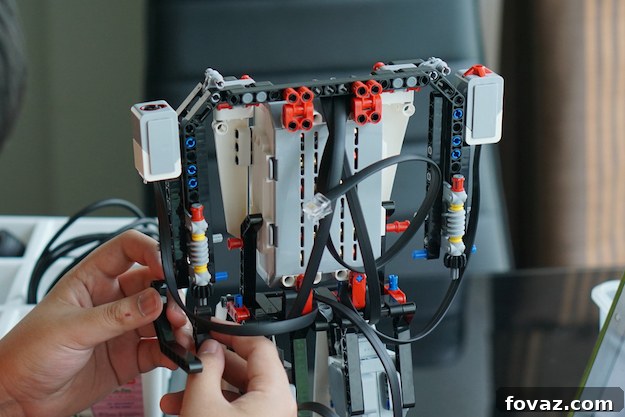
The Educational Power of Lego Mindstorms
Beyond the fun and creativity, Lego Mindstorms serves as an incredibly powerful educational tool, perfectly aligning with modern STEM (Science, Technology, Engineering, and Mathematics) curricula. Engaging with these DIY projects helps cultivate a range of essential skills that are vital in today’s technologically driven world.
- Problem-Solving and Critical Thinking: Every Mindstorms project presents a challenge, requiring builders to analyze problems, design solutions, test them, and iterate. This iterative process is at the heart of engineering and scientific inquiry.
- Introduction to Coding and Robotics: Mindstorms provides an intuitive, block-based programming environment that makes complex coding concepts accessible to beginners. Users learn about loops, conditional statements, variables, and sensor inputs in a tangible, hands-on way.
- Mechanical Engineering and Design: Building robots from LEGO bricks helps develop an understanding of structural integrity, gear ratios, linkages, and how mechanical components interact to achieve specific movements.
- Creativity and Innovation: With an open-ended system, Mindstorms encourages users to think outside the box, modify existing designs, and invent entirely new robots from scratch. The only limit is imagination.
- Collaboration and Communication: Many Mindstorms projects can be tackled in teams, fostering collaboration, communication, and the ability to work together towards a common goal.
These skills are not just for future engineers; they are transferable to any field, empowering individuals with the logic and resilience needed to thrive in a complex world. Lego Mindstorms makes learning engaging, exciting, and deeply rewarding.
Start Your Lego Mindstorms Adventure Today!
We hope this expanded list of DIY Lego Mindstorms ideas has sparked your imagination and inspired you to embark on your next robotic building adventure. From artistic creations to problem-solving machines and even sweet treat dispensers, the potential of Lego Mindstorms is truly boundless. These projects are more than just toys; they are gateways to understanding the principles of robotics, engineering, and coding, all while having an incredible amount of fun.
Whether you’re new to robotics or looking for your next challenge, Lego Mindstorms provides an accessible and robust platform for builders of all ages. Don’t be afraid to experiment, customize, and even invent your own unique robots. The journey of building, programming, and troubleshooting is where the real learning happens, and the sense of accomplishment from seeing your creation come to life is truly unparalleled.
What are your thoughts on these Lego Mindstorms ideas? Have you built something incredible with your Mindstorms kit that you’d love to share? We thrive on creating a community of DIY enthusiasts, where every project, big or small, is celebrated. Share your experiences, tips, and creations in the comments section below – we’d love to hear from you!
Stay connected with us for more exciting DIY projects, craft ideas, home decor inspiration, upcycling tutorials, recipes, and so much more. Follow us on Facebook, Twitter, Pinterest, and Instagram to join our growing community of makers!