
Quick Summary: Saturated Resin Jewelry Market
- More sellers doesn’t mean there’s no room left for you.
- A saturated market only shuts you out if your shop looks like every other shop.
- Buyers aren’t choosing between resin and no resin.
- They’re choosing between your shop and the next one in their feed.
- Cloudy resin and technique issues cost you a piece, not a whole shop’s sales.
- If your pours are clean and sales are still slow, check your pricing and positioning first.
- Confident, consistent pricing signals quality, and hesitant pricing reads as cheap.
- A shop with a clear point of view stands out more than a shop with clearer resin.

If you’ve been trying to understand why your shop isn’t selling, it’s natural to look at the technical side first: cloudy resin, trapped bubbles, or a finish that’s not as glassy as another seller’s. Those issues matter and are worth fixing when they actually happen in your molds. There are well-known causes for cloudy resin and ways to avoid bubbles, so start there if your pieces look milky or frosted.
But for many sellers, technique stopped being the problem months ago. They poured clean pieces and still saw slow sales. The real question then isn’t simply “what’s wrong with my resin?” It’s: with so many people making resin jewelry today, why would a stranger stop on your shop instead of scrolling past to the next listing?
That’s a fair question, and it deserves a direct answer.
The Saturated Resin Jewelry Market Fear Is Real. It’s Also Not the Whole Story.
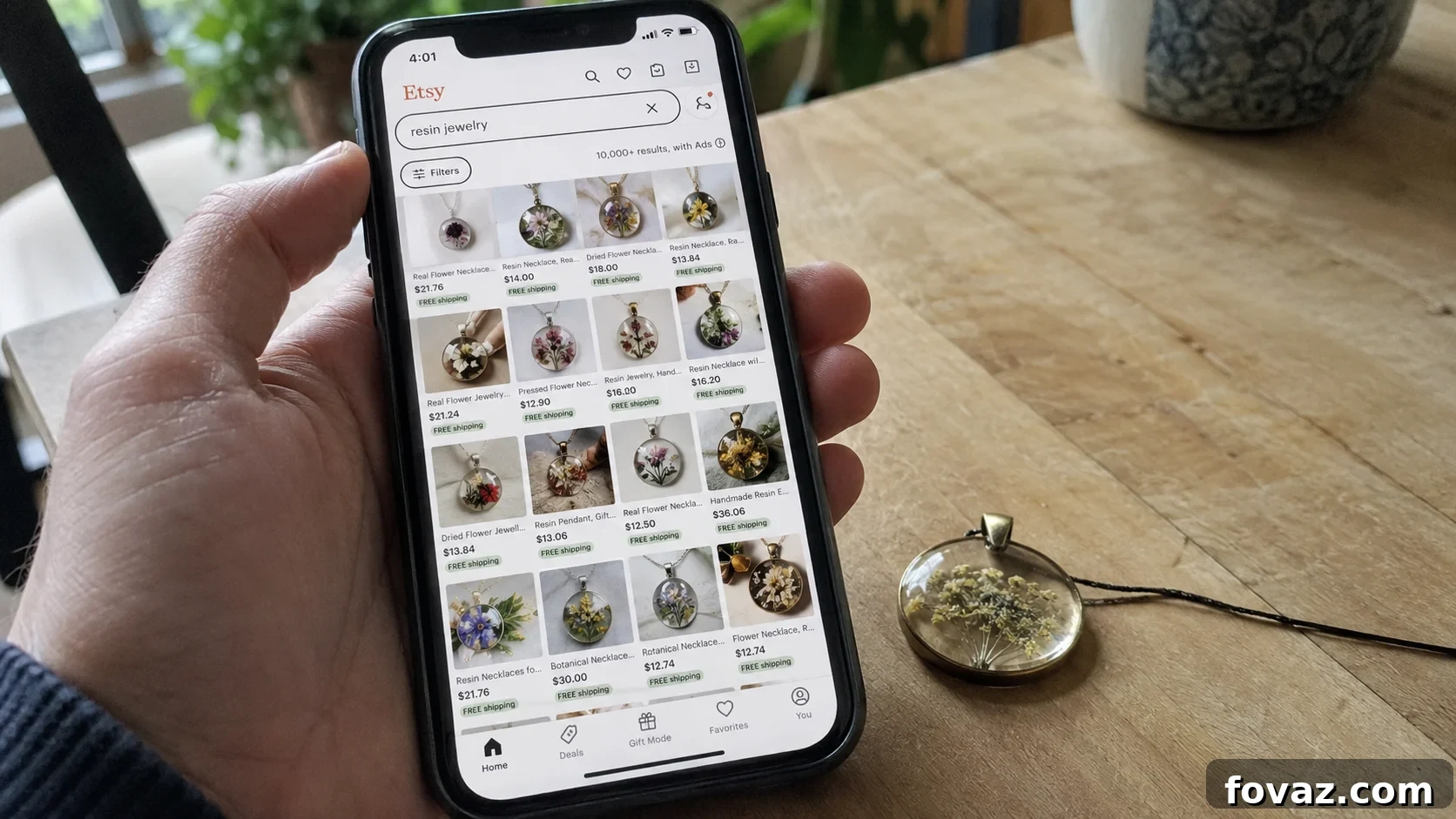
Search “resin jewelry” on marketplaces or watch social feeds for a short time and you’ll see thousands of similar listings and videos. It’s easy to assume the market is closed and that there’s no room for another maker. But a crowded market isn’t the same as a market with no opportunity. It means buyers have choices, and they choose quickly — usually based on factors other than resin technique.
Once basic clarity, color choices, and competent craftsmanship are met, those things become table stakes. Most active sellers can now produce a clean, clear pour. What separates shops that sell regularly from those that don’t is whether a casual shopper has a reason to stop and click on your listing rather than the next one. That reason is rarely “the resin is clearer.” More often it’s about the shop’s identity, pricing, and how the product is presented.
Blaming the market is tempting because it feels external and less personal. But the saturated resin jewelry market behaves more like a busy room than a locked door: plenty of people are in it, and only some get noticed. You can influence that outcome with deliberate choices about price, positioning, and presentation.
Why Resin Jewelry Isn’t Selling on Etsy Even With Good Technique
If your pours are technically solid and sales are still slow, check two things before you revisit technique.
Your pricing. Many new sellers underprice their work as if apologizing for making it. A low price can signal the maker doesn’t value the piece, and buyers sense that. Underpricing doesn’t usually win customers long-term; it trains buyers to treat your shop like a discount option. Do the math: resin, findings, packaging, and your labor all cost time and money. A pendant that costs you more than your price once you include your hours is not priced sustainably.
Your positioning. “I sell resin jewelry” is not a compelling reason for buyers to choose your shop. Thousands of sellers say the same thing. A specific promise such as “pressed flower resin pendants made from locally sourced blooms” tells the buyer exactly what to expect and why it’s meaningful. A clear, specific niche beats a generic description every time. This is about the story and benefit you offer, not just the materials.
The saturated market punishes shops without identity and rewards shops that know their audience. Pricing and positioning are decisions you can change now, without altering your molds or your curing process.
What a Buyer Actually Compares Before They Click Buy
Imagine a shopper scrolling for a resin pendant as a gift. They skim many listings quickly and are not inspecting cure times or bubble counts. They notice four things fast: the primary photo, the price, the first line of the listing, and whether the shop looks professional and consistent.
The photo shows whether the product looks intentional or like a hobby sample. The price signals how much the maker values their work. The opening line tells the shopper if the listing matches their purpose—gift, memorial, personal treat. The rest of the shop—other listings, the about section, and reviews—tells them if the seller is reliable. Resin clarity isn’t one of those rapid checks, which means many of the decisions that influence a sale are things you can control immediately.
How to Stand Out Selling Resin Jewelry Without More Tutorials
When sales slow, the instinct is to learn a new pour style or technique. That can help, but often it just adds another skill to a shop that still hasn’t decided what it charges or who it’s for. Standing out starts with firm pricing and a clear niche.
Set a price that covers materials, packaging, fees, and your time, with room for profit so you can sustain the business. Knowing your numbers makes your listings and customer conversations more confident. Confidence reads as quality even to buyers who never meet you.
Choose a lane. You don’t need to be the shop that does everything. You need to be the obvious choice for one specific buyer. That could be pressed-flower pendants for gardeners, birth-flower jewelry for new parents, or pet memorial pieces for grieving owners. Pick a clear angle you can explain in a sentence and let that focus inform your photos, your listing titles, and your pricing.
Where to Start
Start with your numbers. Many sellers never calculate the true cost of a piece including resin, findings, packaging, and time. Once you know the real cost, pricing becomes less emotional and easier to defend. Understanding margins also lets you decide whether to invest in marketing, better photos, or refining your niche.
Conclusion
A saturated resin jewelry market is real, but it doesn’t mean your shop has no opportunity. Clean technique gets you considered; consistent pricing and a clear shop identity are what make buyers choose you. If your pours are solid and sales are slow, focus on your pricing, your niche, and how you present your work. Those changes often move the needle faster than another tutorial or a new pour method.
FAQ
Is the resin jewelry market too saturated to start now?
No. It’s more competitive than in the past, but new sellers still break in regularly. Those who struggle most often have unclear pricing or no defined niche, not bad timing.
Why isn’t my resin jewelry selling on Etsy even though my pieces look good?
Good technique helps listings appear to buyers, but it doesn’t close the sale alone. Check your pricing and positioning before assuming it’s a craftsmanship issue.
Should I lower my prices to compete in a saturated resin jewelry market?
Usually not. Underpricing often signals low quality and makes it harder to raise prices later. Confident, cost-based pricing is generally a stronger long-term strategy.
How do I stand out selling resin jewelry when so many people are doing it?
Pick a specific angle for a specific buyer and price your work confidently. A clear identity differentiates you more effectively than one more technical trick.
Does having more listings help me stand out in a saturated market?
Not by itself. A shop with many unfocused listings can be less memorable than a smaller shop with a cohesive theme. Volume without identity creates noise, not distinction.
What should I fix first if I think my technique is fine but sales are still slow?
Start with your pricing. Calculate the true cost of a piece, including your time, and compare that to your price. If the numbers don’t work, adjust pricing before reworking technique.