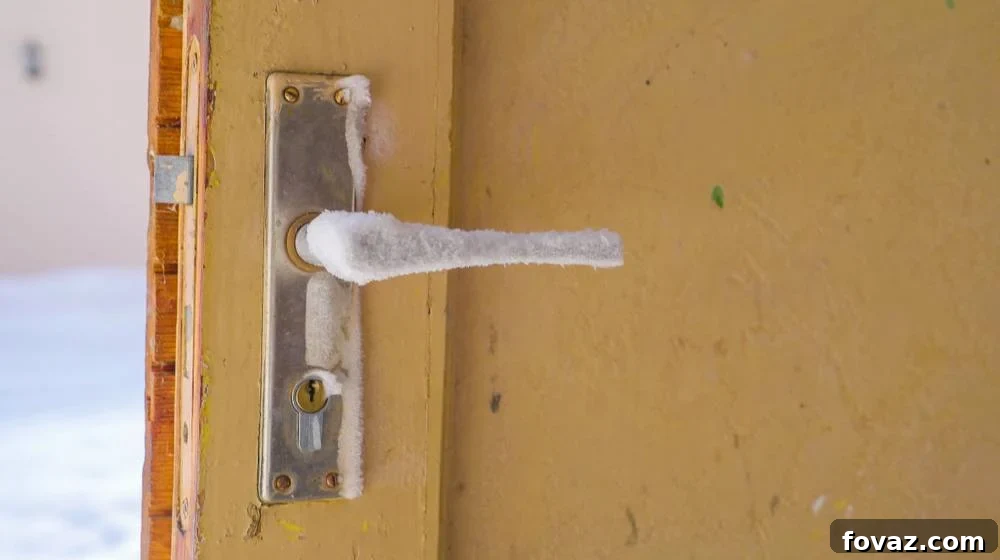
There’s nothing quite as frustrating as stepping out on a frigid winter morning, only to find your car or house lock stubbornly frozen solid. This common winter nuisance can leave you stranded, late, and incredibly cold. But fear not, as dealing with a frozen lock doesn’t always require a professional locksmith or an expensive tow. With a little know-how and some common household items, you can quickly and safely thaw those icy mechanisms and get back to your day.
Understanding why locks freeze is the first step to preventing and resolving the issue. Moisture, whether from rain, snow, or even condensation, seeps into the lock’s delicate mechanisms. When temperatures drop below freezing, this water transforms into ice, effectively jamming the pins and preventing your key from turning. The good news is that breaking this icy bond is often simpler than you might imagine.
This comprehensive guide will equip you with seven incredibly effective and easy-to-implement methods to unfreeze any lock, using items you likely already have on hand. We’ll also dive into crucial preventative measures to help you avoid this chilly dilemma altogether, ensuring your winter mornings are smooth and stress-free.
RELATED: 21 Cozy Fleece Patterns You Can Sew To Stay Warm This Winter
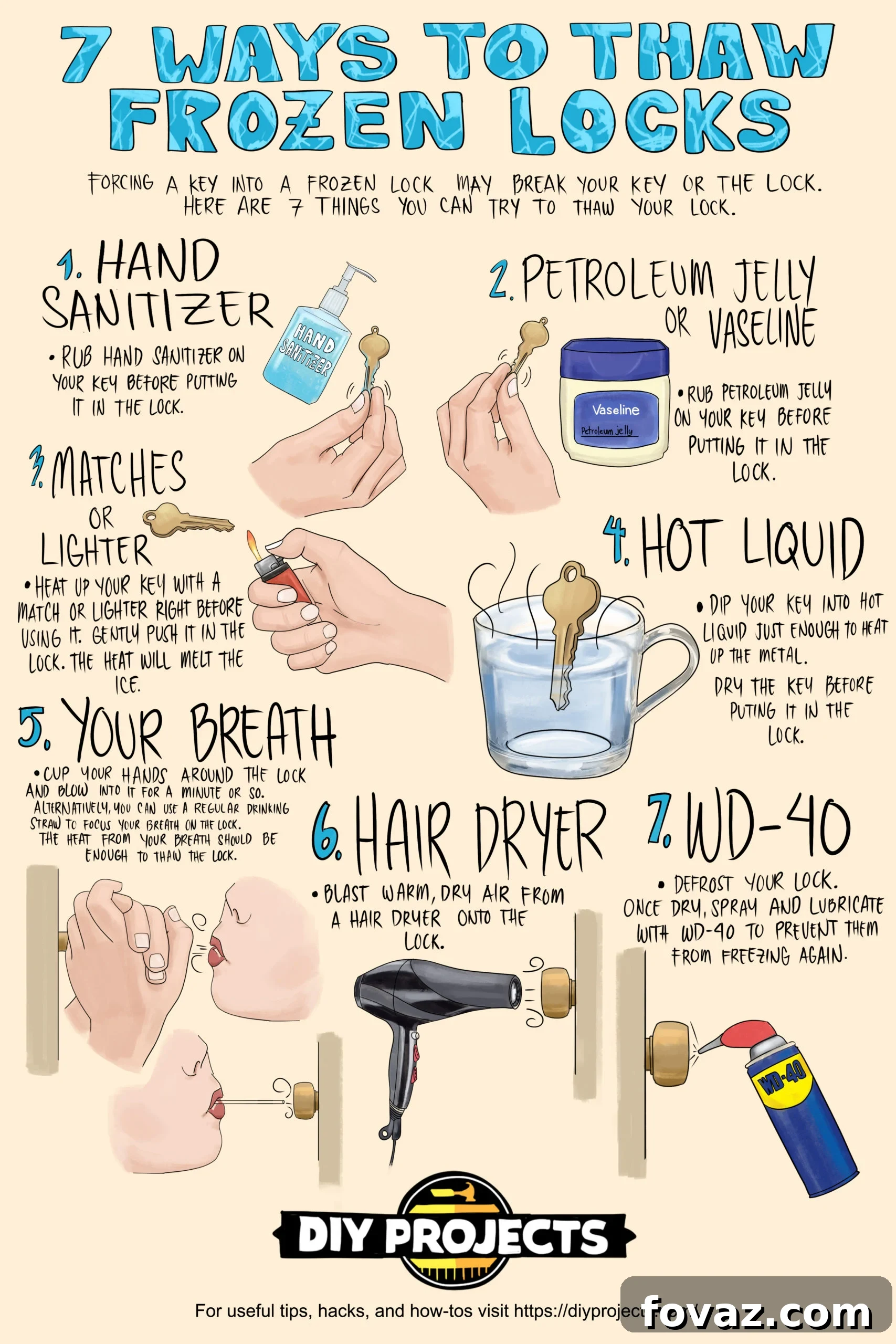
Unlocking Winter Woes: 7 Practical Ways to Thaw Frozen Locks
When you’re faced with a frozen lock, time is of the essence. The following methods offer quick relief, utilizing principles of heat transfer and chemical properties to melt ice safely and efficiently. Remember to always exercise caution and patience to avoid damaging your lock or key.
1. Hand Sanitizer: The Alcohol Advantage for Quick Thaws
Your everyday hand sanitizer is more than just a germ killer; it’s a powerful ally against frozen locks. The secret lies in its high alcohol content, typically ethanol or isopropyl alcohol. Alcohol has a significantly lower freezing point than water, meaning it can dissolve ice and prevent refreezing effectively. It acts quickly, making it an excellent first-response solution for stubborn locks.
To use this method, dispense a small amount of hand sanitizer directly onto your key. Ensure the key is adequately coated, particularly along its grooves and teeth. Carefully insert the coated key into the frozen lock, pushing gently. Avoid applying excessive force, as a brittle key could snap inside the lock, turning a minor inconvenience into a major repair. Allow the alcohol a few seconds to penetrate the lock’s mechanism and begin dissolving the ice. You might feel a slight resistance initially, but as the ice melts, the key should start to turn more freely. Once thawed, turn the key slowly to fully open the lock. For persistent freezes, you can also try applying a small drop of hand sanitizer directly into the keyhole if it’s accessible and you have a steady hand, perhaps using a dropper or a cotton swab.
2. Lubricants: Petroleum Jelly and Specialized Sprays
Lubricants like petroleum jelly are not just for moisturizing; they can also be highly effective in tackling frozen locks. Petroleum jelly works in a couple of ways: first, its oily consistency can help to melt the existing ice by creating a barrier that traps heat. Second, and more importantly for prevention, it lubricates the internal mechanisms, making it harder for water to penetrate and freeze in the future. This method is particularly useful for locks that are frequently exposed to moisture and cold.
To apply, take your key and coat it generously with petroleum jelly, ensuring it gets into all the key’s contours. Gently insert the key into the frozen lock. The petroleum jelly will begin to work its way into the intricate parts of the lock, helping to dislodge any ice. Leave the key in the lock for a few minutes, allowing the lubricant time to work. Then, try to turn the key slowly and steadily. If you meet significant resistance, gently wiggle the key while applying slight rotational pressure. Remember, patience is crucial here; forcing the key can cause internal damage to the lock’s delicate mechanisms. Beyond petroleum jelly, silicone-based lubricants or graphite sprays are also excellent choices for both de-icing and preventing future freezes.
Petroleum jelly
3. Direct Heat: Matches or Lighters (Use with Extreme Caution)
Applying a small amount of direct heat to your key can be a remarkably fast way to transfer warmth into a frozen lock, especially for minor freezes. The principle is simple: heating the metal key allows it to conduct warmth directly to the ice within the lock, melting it on contact. This method is best reserved for situations where other non-flammable options are not readily available or have not worked.
Before attempting this, **extreme caution is paramount.** Ensure you are in a well-ventilated area and away from any flammable materials, especially if you’ve already tried using hand sanitizer or petroleum jelly on the key. Hold the metal portion of your key with pliers or a thick glove to protect your fingers from the heat. Carefully use a match or a lighter flame to warm the key. Do not make the key glowing hot; a few seconds of heating until it’s warm to the touch (but not scalding) is usually sufficient. Once warmed, quickly insert the key into the frozen lock. The residual heat from the key should melt the ice immediately surrounding it, allowing you to turn the lock. Repeat this process if necessary, reheating the key each time, but always prioritize safety and avoid prolonged direct flame exposure to the lock itself.
4. Hot Liquid: Coffee, Tea, or Warm Water
A simple cup of hot liquid, such as coffee, tea, or even just plain hot water, can be a surprisingly effective tool against a frozen lock. The warmth of the liquid transfers heat to your key, which then conducts that heat into the lock, melting the ice. This method is particularly convenient if you’re already enjoying a hot beverage on a cold day.
Carefully submerge the metal part of your key into a cup of hot liquid for about 30 seconds to a minute. The goal is to make the key warm, not necessarily boiling hot. Once the key is sufficiently warm, quickly remove it from the liquid and, this step is crucial, **thoroughly dry it off** with a cloth or paper towel. Inserting a wet key into a cold lock risks the liquid refreezing almost instantly, potentially worsening the problem. After drying, insert the warm key into the frozen lock and attempt to turn it gently. The warmth should help to melt the ice, allowing the lock to open. For house doors or larger car locks, you can also soak a cloth in hot water, wring out the excess, and press it against the keyhole for a few minutes to transfer warmth to the exterior of the lock cylinder before inserting your key.
RELATED: Ingenious Way to Hack A Lock with A Soda Can
5. Your Breath: A Natural and Always-Available Solution
When you’re caught off guard without any tools, your own warm breath can be your most accessible and surprisingly effective de-icing solution. This method leverages your body’s natural heat to melt the ice, especially useful for smaller, less severely frozen locks. It’s a testament to ingenuity in a pinch, and it requires absolutely no special equipment.
To maximize the effect, cup your hands tightly around the frozen lock cylinder, creating a small chamber. Then, blow warm air from your mouth directly into this confined space. The warmth and moisture from your breath will transfer heat to the lock, gradually melting the ice within. Continue blowing steadily for several seconds, or even a minute, taking short breaks if needed. For stubborn freezes, you may need to repeat this process multiple times. You might feel the lock gradually become less stiff as the ice begins to yield. Once you feel a slight give, try inserting your key gently. This method works best on house locks or car door locks that are not too deeply frozen. While it might take a bit longer than other methods, it’s free, readily available, and safe for your lock.
6. Hair Dryer: Targeted and Sustained Warm Air
For a more robust and sustained application of heat, a hairdryer can be an invaluable tool. It allows you to direct a consistent stream of warm air precisely into the lock’s mechanism, making it highly effective for deeply frozen locks or situations where ambient temperatures are extremely low. The key is to provide enough warmth without overheating the lock components.
Position the hairdryer so that its nozzle is aimed directly at the keyhole and the surrounding lock cylinder. Turn it on a medium to high heat setting (depending on the strength of your hairdryer) and allow the warm air to blow into the lock for several minutes. You should notice the ice melting and moisture forming around the keyhole. For car locks, you might need an extension cord if your vehicle isn’t parked near an outdoor outlet. A clever trick to amplify this effect is to create a funnel: take a toilet paper or paper towel tube, place one end over the hairdryer nozzle, and the other end directly against the frozen lock. This funnels the warm air efficiently, concentrating the heat for faster melting action. After the lock appears to be thawed, heat your key briefly with the hairdryer as well before inserting it to ensure the quickest possible action. Always keep the hairdryer moving slightly to distribute heat evenly and prevent localized overheating.
Hairdryer
7. WD-40: De-icing, Lubrication, and Prevention
WD-40 is renowned for its versatility, and its ability to deal with frozen locks is yet another testament to its usefulness. It works not only as a de-icer but also as a preventative measure by displacing water and providing lubrication. Its penetrating properties allow it to reach deep into the lock’s internal components, making it a highly effective solution for both immediate relief and long-term maintenance.
To de-ice a frozen lock, use the straw applicator that typically comes with WD-40 to squirt a small, targeted amount directly into the keyhole. Allow a minute or two for the product to penetrate and work its magic, dissolving the ice and lubricating the mechanism. Then, gently insert your key and try to turn it. You might need to apply a second small squirt for particularly stubborn freezes. Beyond its de-icing capabilities, WD-40 is excellent for preventing locks from freezing in the first place. Applying a small amount into your locks on a weekly or bi-weekly basis throughout the colder months will displace any moisture that has entered, keeping the internal mechanisms lubricated and making it much harder for ice to form. This proactive approach can save you considerable hassle and discomfort during winter. Consider adding a can of specialized lock de-icer, which often contains a higher concentration of alcohol and rust inhibitors, to your winter car safety kit for easy and effective de-icing on the go. Such products are specifically formulated to melt ice quickly and leave behind a protective film.
WD-40
OR, if you’re putting together your own Winter car safety kit, consider adding THIS PRODUCT to it for easy de-icing.
Beyond the Thaw: Essential Preventive Measures for Frozen Locks
While knowing how to thaw a frozen lock is crucial, preventing the problem altogether is even better. Implementing a few simple preventive measures before the cold truly sets in can save you from future frustration and potential damage to your locks.
- Regular Lubrication: Proactively lubricate all your outdoor locks (car doors, house doors, shed doors) with a silicone-based spray, graphite lubricant, or a light oil before winter. These lubricants create a barrier against moisture and ensure smooth operation, making it harder for water to freeze inside.
- Cover Keyholes: For exposed locks, consider purchasing small, magnetic keyhole covers or even improvising with a piece of tape to protect the keyhole from direct exposure to rain, snow, and condensation.
- Apply De-icer Proactively: Periodically spray a lock de-icer or a solution like WD-40 into your locks throughout the winter. This displaces water and prevents ice formation.
- Park Strategically: If possible, park your car in a garage or under a carport during cold weather. Even parking on the sunny side of a building can make a difference.
- Wipe Away Moisture: After rain or snow, if you remember, quickly wipe down car door handles and exposed lock cylinders to remove any surface moisture before it has a chance to freeze.
Important Considerations and Safety Tips
When dealing with frozen locks, safety and patience are your best tools. Always remember:
- Never Force It: The most important rule is to never force a key into a frozen lock or try to turn it with excessive force. This can bend or break the key, or worse, damage the delicate internal components of the lock, leading to an even more expensive repair.
- Be Patient: Give your chosen method time to work. Ice melts gradually, and rushing the process won’t speed it up and might cause damage.
- Mind Flammables: If using a direct flame, ensure there are no flammable substances (like hand sanitizer or petroleum jelly) on your key or near the lock.
- Prevent Refreezing: If using hot liquids, always dry the key thoroughly before inserting it to prevent refreezing.
- Know When to Call for Help: If all your attempts fail, or if you suspect internal damage to the lock, it’s best to call a professional locksmith. They have specialized tools and expertise to safely resolve the issue without causing further damage.
Is simply thawing your frozen locks not enough, or are you curious about how lock mechanisms work in extreme conditions? Watch this insightful video from The Modern Rogue for a deeper dive into locks:
With these seven easy-to-find items and a few preventive strategies, you’re now well-equipped to tackle any frozen lock emergency that winter throws your way. You no longer need to shiver outside, waiting for assistance or struggling with a stubborn lock. Being prepared not only saves you time and discomfort but also protects your locks from potential damage. Remember to stay calm, apply these methods cautiously, and always prioritize the integrity of your key and lock.
Do you have other tried-and-true methods for defrosting locks, or clever winter hacks? Share your insights with us in the comments section below!
Up Next:
- A DIY Key Organizer To Make Your Crazy Life Easier
- 10 Valuable Winter Storage Ideas You Need On Chilly Days
- 9 Halloween Wood Crafts To Decorate Your Spooky Home With
Calling all crafting DIYhards, DIY Projects needs YOU! Click here if you want to write for us.
Don’t forget to stay connected with us on Facebook, Twitter, and Instagram!