
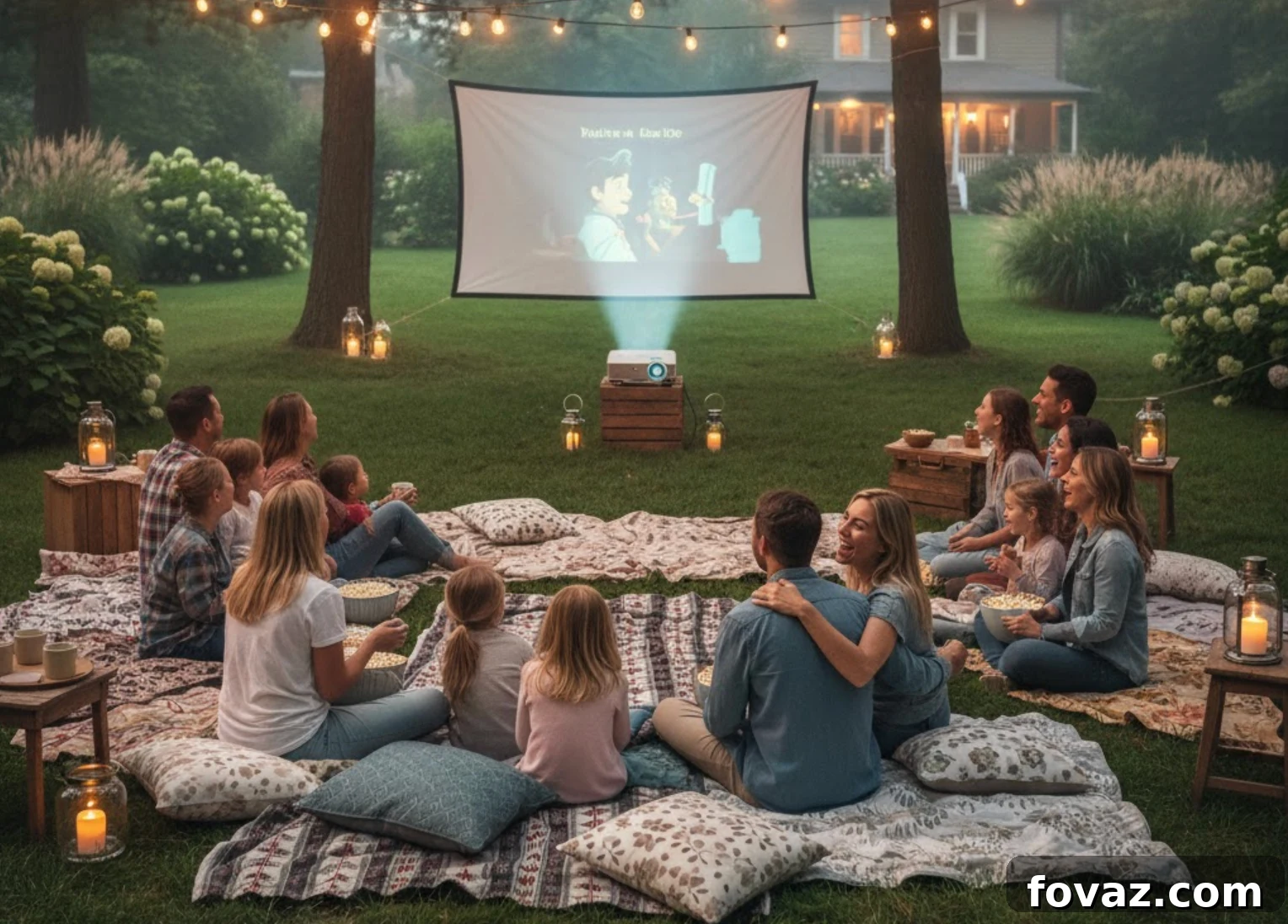
There’s an undeniable magic that comes alive on a warm summer night. As the sun dips below the horizon, casting a final golden glow, the allure of the great outdoors beckons. Forget the confines of a living room or the bustle of a crowded cinema; your own backyard holds the potential for an infinitely more personal and enchanting experience. A DIY backyard movie night effortlessly transforms familiar grass into a captivating open-air theater, inviting friends and family to gather, unwind, and create cherished memories under a canopy of stars. It’s an opportunity to turn ordinary evenings into extraordinary adventures, where every shared laugh, whispered comment, and lingering moment takes on a special significance.
The immersive blend of a compelling film, the crisp night air, and the vast expanse of the night sky enriches the cinematic experience in a way indoor viewing rarely can. Sounds seem sharper, colors more vibrant, and the sense of togetherness is palpable. Hosting an outdoor movie night isn’t merely a fleeting trend; it’s an invitation to savor the season differently, fostering connection and crafting summer nights that guests will fondly recall long after the projector powers down. This extensive guide will walk you through every step of setting up the ultimate DIY backyard movie night, ensuring a seamless and enjoyable experience for everyone, from constructing the perfect screen to preparing delightful outdoor-friendly snacks and arranging inviting seating.
Crafting Your Outdoor Cinema: Building a Robust Screen
The foundation of any successful backyard movie night is, of course, the screen. While a smooth, light-colored exterior wall can serve as a convenient impromptu screen, its fixed location might not always be ideal. For those seeking flexibility and superior image quality, a portable, purpose-built screen is often the best choice. One popular and durable DIY solution involves stretching blackout cloth—a thick, opaque fabric designed to block light—across a sturdy PVC pipe frame. This method provides a taut, wrinkle-free surface that maximizes picture clarity and contrast, even in ambient light.
You can easily find comprehensive, no-sew tutorials online, like the simple outdoor movie screen guide from Lowe’s, which demonstrates how to assemble a stable PVC frame using basic plumbing materials and a few connectors. When constructing your frame, ensure it’s robust enough to withstand gentle breezes; anchoring the corners with stakes or sandbags is crucial for stability. Consider the size of your yard and your expected audience when deciding on screen dimensions. A larger screen offers a more immersive experience but requires a more powerful projector and more space.
Once your screen is in place, strategically position your projector. For optimal viewing, place it on a stable, elevated surface such as a crate, a small table, or a dedicated projector stand, ensuring it’s level with the screen’s center. This helps minimize image distortion (keystone effect). Before guests arrive and while there’s still daylight, run all necessary cords and power cables, taping them securely to the ground to prevent tripping hazards. Safety is paramount! Protect your valuable electronic gear—projector, speakers, and players—from unexpected dew or light rain with a bin lid or a small tarp. Finally, conduct a full audio and video test at dusk. Outdoor spaces drastically change how sound travels compared to enclosed rooms, especially in open yards, so fine-tuning your speaker placement and volume is essential for a clear, audible experience.
Delightful Bites: Preparing Outdoor-Friendly Snacks and Drinks
No movie night is complete without an array of delicious snacks, but outdoor settings require a bit more planning. Prioritize treats that can withstand warm air and don’t require constant refrigeration. Popcorn, the undisputed king of movie snacks, is a perfect choice. Prepare it in advance and divide it into individual paper cups or sandwich bags for easy, mess-free distribution. This not only keeps things hygienic but also prevents hands from constantly dipping into a communal bowl.
For more inspiration, explore easy outdoor snack ideas from resources like Tasty Kids, which feature fruit kabobs, individually bagged trail mixes, and creative “no-melt” treats that maintain their integrity throughout a longer movie. Think about refreshing options like pre-sliced watermelon, grapes, or cheese cubes. Individual portions are always a winner for outdoor events. Use small, labeled containers for trail mix ingredients, allowing guests to customize their blend. Pre-slice fruits and vegetables and serve them with dips in sealed containers to keep them fresh.
When it comes to drinks, simplify choices. Use two separate coolers: one dedicated to water bottles and another for any sugary options like sodas or juice boxes. Labeling drinks with tape or markers can significantly reduce confusion and waste. To keep the area tidy and minimize post-event cleanup, strategically place several small trash bags. You can easily tie them to chair arms, hang them from stakes near seating areas, or place them inside decorative bins. Providing hand wipes or sanitizer stations is also a thoughtful touch.
Comfort and Clarity: Arranging Optimal Seating
Creating a comfortable and inclusive seating arrangement is key to a truly enjoyable outdoor cinema experience. Begin with layered ground seating at the front, perfect for children and those who prefer a more relaxed vibe. Spread out picnic mats, thick folded comforters, or large beach blankets, perhaps with extra cushions for added comfort. Behind these, incorporate low stools, beanbag chairs, or inflatable lounges, ideal for guests who appreciate a bit more support without obstructing views. For older guests or those needing significant back support, position standard folding chairs or benches towards the back of the viewing area.
Crucially, avoid placing tall chairs directly in front of the screen or in positions that could block sightlines for others. A tiered or staggered seating plan ensures everyone has a clear view of the screen. Always maintain clear pathways through the middle and around the perimeter of your seating area, allowing people to move freely without having to step over others. This also makes bathroom breaks or snack refills much easier. For navigation after dark, use soft, ambient lighting such as battery-powered lanterns, solar-powered path lights, or string lights hung around the edge of the seating area. Ensure these lights are subtle enough not to create a glare on the screen or distract from the movie itself, guiding guests without washing out the picture.
Setting the Scene: Embracing a Subtle Theme
A touch of thematic decor can elevate your backyard movie night from a simple viewing to a special event, without requiring extensive planning or a hefty budget. Start by selecting your movie and then introduce one or two subtle touches that complement its genre or storyline. For instance, if you’re showing a superhero blockbuster, a few comic book-style signs on the snack table or a hero mask casually placed can add a fun, thematic flair. If a nature documentary is on the agenda, consider stringing leafy garlands along the ground or placing small animal figures among the blankets. The goal is to enhance the atmosphere, not to overwhelm it.
Involve younger guests by letting them help create a welcome sign, design themed labels for drinks, or even choose a specific color scheme. These small, personalized elements signal intention and care, making the night feel thoughtfully shaped rather than simply staged. Such details don’t demand elaborate costumes or complex decorations but successfully create a cohesive and immersive environment that guests will appreciate and remember.
Prepared for Anything: Planning for Contingencies and Interruptions
A truly successful outdoor movie night is one where potential interruptions are anticipated and planned for, allowing the evening to unfold smoothly. Before it gets dark, make sure all power cords and speaker wires are neatly run and securely fastened with clips or heavy-duty tape, especially where they cross walking paths, to prevent trips and falls. Double-check your projector’s angle and speaker placement well before guests start to arrive, ensuring optimal sound and picture quality.
Keep a small, accessible basket near the seating area filled with essentials: insect repellent (both spray and wipes), extra batteries for remotes or lanterns, and a powerful flashlight for navigating in the dark. Wet wipes are invaluable for quick spill cleanups, and an extra towel can be a lifesaver if the ground gets damp from dew. Weather can be unpredictable; have a contingency plan for sudden rain, even if it’s just a large tarp to cover electronics or a quick move indoors if possible. For windier evenings, ensure your screen is firmly anchored. If younger children are attending, consider setting up a designated side mat with quiet toys, books, or coloring pages. This allows them to take a break from the screen without feeling isolated or disrupting the main event.
The Grand Finale: Wrapping Up Your DIY Backyard Movie Night
Ultimately, the beauty of a DIY backyard movie night lies in its relaxed atmosphere and the cherished memories it creates. The best experiences are those that run smoothly, free from undue pressure to achieve cinematic perfection. No one expects a professional-grade projection or absolute silence; what truly matters is that everyone has a clear view, can comfortably hear the story unfold, and has a cozy place to relax and enjoy the company. It’s about the collective experience, the shared enjoyment, and the simple joy of being together under the open sky.
Families and friends will remember the subtle flicker of the screen against the darkening sky, the shared laughter, and the unique feeling of experiencing a film together in the comfort of their own outdoor space. These are the moments that last, transforming a simple summer evening into an enduring memory. So, dim the lights, cue the feature presentation, and immerse yourselves in the magic of your very own backyard cinema.
Have you hosted a memorable outdoor movie night? We’d love to hear about your setup and any unique tips you discovered in the comments below! If you’re planning your first backyard cinema this summer, share what you’re using and how it went.
Frequently Asked Questions: DIY Backyard Movie Night
What type of projector works best for DIY backyard movie nights?
For optimal performance and brightness, especially before full darkness, consider outdoor-specific projectors with high lumen counts (typically 3,000+ lumens) and a good contrast ratio. Models with built-in audio can be convenient, but external speakers are almost always recommended for richer sound. If you’re using an indoor projector, ensure it has a brightness of at least 2,500 lumens and plan to start your movie well after sunset to compensate for lower light output. Always check for necessary connectivity options (HDMI, USB, Wi-Fi).
What’s a quick and reliable screen solution that holds up well?
A highly effective and quick solution is to use blackout cloth stretched taut across a PVC pipe frame. Blackout cloth provides excellent contrast and image quality. Anchor the sides with clips, bungee cords, or zip ties to maintain tension and prevent wrinkles. Alternatively, a smooth, light-colored exterior wall can work if it’s clean and free of obstructions. Inflatable projector screens are another quick setup option, though they require a continuous air pump.
How can I effectively keep bugs away without using strong chemical sprays?
Several natural and less intrusive methods can help deter bugs. Place battery-powered fans near the seating area; the air movement makes it difficult for mosquitoes to land. Citronella candles, torches, or essential oil diffusers (lemon eucalyptus, peppermint) placed around the perimeter of the viewing area can create a scent barrier. You can also strategically plant bug-repelling plants like lavender or marigolds around your yard. Encourage guests to wear light-colored clothing, as dark colors can attract mosquitoes.
How many guests can comfortably fit in a small yard for a movie night?
As a general rule of thumb, allow approximately 15-20 square feet per person for comfortable movement and seating. For a more intimate setup, you might manage with 10 square feet per person. Maximize space by utilizing layered seating: blankets and cushions at the front, low chairs or bean bags in the middle, and taller chairs or benches at the back. Always ensure you leave clear pathways for people to move around safely and easily without disturbing others.
What is the ideal time to start the movie for the best viewing experience?
The best time to start your outdoor movie is typically 15 to 20 minutes after official sunset. This allows the sky to darken sufficiently for the projector’s image to be vibrant and clear, especially if you’re not using a super-high lumen projector. Starting slightly before full darkness also gives you a buffer to finalize any last-minute projector adjustments or sound checks. In most summer locations, this falls roughly between 7:45 p.m. and 8:45 p.m., depending on the time of year and geographical location.
How do I manage power for all the equipment outdoors?
Careful power planning is crucial. You’ll likely need an outdoor-rated extension cord (or multiple) with sufficient gauge to handle the combined wattage of your projector, speakers, and any additional lighting. Ensure all connections are secure and protected from moisture (e.g., using weatherproof outlet covers or junction box protectors). If outlets are scarce, a portable power station or generator (if noise isn’t an issue for neighbors) can be an option, but always prioritize safety with outdoor electrical setups.
What about sound considerations for neighbors?
Be mindful of your neighbors. Position speakers to direct sound towards your seating area rather than towards neighboring homes. Test the volume during your pre-show check and keep it at a reasonable level. Informing neighbors about your movie night in advance can also go a long way in fostering good relations, perhaps even inviting them to join the fun!
Can I use my phone or tablet as a video source?
Yes, you can often connect smartphones or tablets to a projector. You’ll typically need an adapter (e.g., HDMI to USB-C or Lightning) to mirror your device’s screen to the projector. Ensure your streaming app (Netflix, Hulu, etc.) supports output to external displays and that you have a stable Wi-Fi connection if streaming wirelessly.