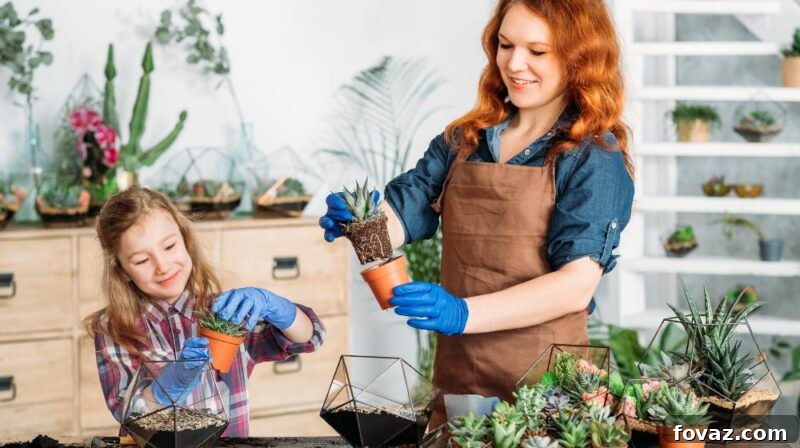
Dive into the enchanting world of terrariums with your children! This guide highlights the best terrarium plants you can use for a fun and engaging DIY project. Creating a terrarium is an excellent way to introduce kids to botany, responsibility, and the magic of miniature ecosystems, offering enjoyment at every stage, from selecting tiny figurines to watching their green world flourish.
Create a Miniature World: 15 Amazing Terrarium Plants for Kids’ DIY Projects
A terrarium is essentially a mini garden encapsulated within a transparent container, typically made of glass or plastic. These self-contained ecosystems have a rich history, gaining popularity in the 1800s, experiencing a resurgence in the 1970s, and are now more popular than ever. They offer a unique blend of nature and decor, providing a beautiful, living accent for any home while offering a fantastic bonding activity for families.
Beyond the aesthetic appeal, building a terrarium with your kids is a deeply rewarding experience. It’s a hands-on science lesson, teaching children about plant life cycles, humidity, and the delicate balance of an enclosed environment. It fosters creativity as they design their miniature landscape and promotes patience as they observe their plants grow over time. This weekend, why not transform your living room into a botanical workshop? Here are 15 fantastic terrarium plants, along with simple tips, to help you embark on this exciting journey.
Why Terrariums Are an Educational and Fun Activity for Children
Terrariums are more than just decorative items; they are living laboratories. For children, they offer countless educational benefits:
- Understanding Ecosystems: Kids learn firsthand how plants create their own environment, recycle water, and thrive within a sealed space.
- Fostering Responsibility: Caring for a terrarium teaches children the importance of nurturing living things, even if the daily demands are minimal.
- Boosting Creativity: From choosing the plants and decorative elements to arranging them, terrariums are a canvas for imaginative expression.
- Developing Patience: Watching plants grow and change over weeks and months is a lesson in patience and observation.
- Connecting with Nature: Even without a large garden, a terrarium brings a piece of the natural world indoors, sparking curiosity about plants and biology.
Getting Started: Essential Tips for Building Your Kids’ Terrarium
Before diving into plant selection, let’s cover some basic steps for setting up a healthy terrarium. This ensures your chosen plants have the best chance to thrive.
- Choosing the Right Container: Glass jars, old aquariums, or clear plastic containers work well. Decide between a closed terrarium (with a lid, for high-humidity plants) or an open terrarium (without a lid, for plants that prefer less humidity).
- Creating Drainage: Start with a 1-2 inch layer of small pebbles or gravel at the bottom. This prevents water from pooling around the plant roots, which can cause rot.
- Adding Activated Charcoal: A thin layer of horticultural activated charcoal (about ½ inch) on top of the drainage layer helps filter the air and water, keeping the terrarium fresh and preventing mold.
- The Substrate Layer: Next, add 2-3 inches of good quality potting mix specifically formulated for houseplants. This is where your plants will grow, so ensure it’s rich and well-draining.
- Planting Your Selection: Gently place your chosen plants, ensuring their roots are covered by soil. Leave enough space between plants for growth.
- Decorate and Personalize: This is the fun part for kids! Add small figurines, polished stones, moss, or miniature ornaments to create a unique scene.
- Initial Watering: Lightly water the terrarium, ensuring the soil is moist but not soggy. A spray bottle works perfectly for this.
- Proper Placement: Place your terrarium in a spot with appropriate light conditions for your chosen plants. Avoid direct sunlight, which can overheat the enclosed environment.
Top 15 Terrarium Plants Your Kids Will Love to Grow
1. Mini English Ivy (Hedera helix)
- Mini English Ivy features charming heart-shaped leaves and woody vines, making it a versatile choice that adapts to various conditions. Its smaller varieties are ideal for the confined spaces of a terrarium. Available in numerous cultivars, some boast variegated leaves with shades of gold, white, or yellow, adding visual interest.
- Light: Prefers bright, indirect light. Direct sunlight can scorch its delicate leaves.
- Water: Keep the soil consistently moist but never waterlogged or muddy.
- Tip: If a variegated variety starts losing its colorful patterns and turning all green, it often indicates insufficient light. Move it to a brighter spot.
2. Lemon Button Fern (Nephrolepis cordifolia ‘Duffii’)
- A personal favorite among houseplants for its relative ease of care and delightful appearance, the Lemon Button Fern offers delicate, arching fronds with tiny, button-like leaflets. Its compact size and vibrant green color make it an excellent addition to any terrarium.
- Size: Typically grows 12-18 inches tall, making it a good medium-sized plant for terrariums.
- Light: Thrives in abundant indirect light.
- Water: Keep the soil consistently damp, ensuring high humidity levels, which ferns adore.
- Caution: Direct sunlight will quickly dry out its fronds, causing them to turn brown and crispy.
3. Creeping Fig (Ficus pumila)
- This robust and fast-growing plant is an excellent choice for terrariums due to its ability to establish quickly and spread rapidly. Its small, heart-shaped leaves can create a lush, carpet-like effect or climb up terrarium elements, adding a dynamic texture.
- Growth: Its vigorous growth means regular pruning and trimming are necessary to encourage bushier growth and maintain a compact size suitable for an enclosed environment.
- Light: Prefers bright, indirect light or partial shade. Absolutely avoid direct sun.
- Water: Maintain evenly moist soil complemented by high humidity.
4. Artillery Fern (Pilea microphylla)
- Despite its common name, the Artillery Fern is not a true fern but a member of the Pilea family, known for its fine, fern-like foliage. It’s incredibly easy to grow and adds a delicate, airy texture to terrariums. Its common name comes from the way it “shoots” its pollen when disturbed.
- Size: Reaches about 12 inches in height.
- Care: Keep the soil slightly moist, providing medium to high humidity.
- Maintenance: While it flourishes with minimal attention, occasional pinching back of the stems will encourage a bushier form and prevent it from becoming too leggy, ensuring a fuller look in your terrarium.
5. Baby Tears (Soleirolia soleirolii)
- Baby Tears is a charming, low-growing plant that forms dense mats of tiny, bright green leaves, making it perfect for creating a lush ground cover in contained terrariums. It’s excellent for filling in spaces and adding a soft, textured look.
- Size: Grows up to 6 inches tall, but usually spreads horizontally.
- Light: Prefers bright, indirect light.
- Caution: Direct sunlight can scorch the edges of its leaves, while excessive watering can lead to yellowing leaves. Maintain a balanced moisture level.
- Growth: This fast-growing plant can be quite vigorous; regular pruning with small scissors will help keep it contained and prevent it from overwhelming other terrarium inhabitants.
6. Aluminum Plant (Pilea cadierei)
- The Aluminum Plant is an eye-catching, fast-growing plant recognized by its distinct silvery-white markings on its green leaves, giving it a metallic, textured appearance. It adds a unique visual element to terrariums.
- Size: Can grow up to 12 inches tall.
- Light: Thrives in bright to medium filtered light.
- Water: Keep the soil slightly moist.
- Maintenance: To prevent it from becoming leggy and to encourage a bushier growth habit, occasionally pinch off the terminal buds (the growing tips).
Make Sunday a little more interesting with these super cool science projects! https://t.co/itXo3pMttI pic.twitter.com/PwbQEyszvM
— DIY Projects (@DIY Projects) September 18, 2016
7. Maidenhair Fern (Adiantum capillus-veneris)
- Despite its delicate and feathery leaflets, the Maidenhair Fern is an excellent terrarium plant that absolutely flourishes in very high humidity. Its elegant, arching fronds with black stems add a touch of grace and sophistication to any enclosed garden.
- Size: Grows 12-24 inches tall.
- Light: Prefers low, indirect light with partial to full shade.
- Water: Requires consistently moist soil and extremely high humidity to thrive.
- Temperature: Best kept above 70 degrees Fahrenheit (21 degrees Celsius). If temperatures drop too low, the plant may go dormant or dry out.
8. Pothos (Epipremnum aureum)
- Pothos is a widely recognized and incredibly easy-to-grow houseplant, often affectionately called “Devil’s Ivy” or mistakenly referred to as philodendron. Its trailing vines and heart-shaped leaves make it a versatile plant that can either spill over the edges or climb within a terrarium.
- Growth: Given its vigorous growth in contained environments, constant pruning is necessary to manage its size and encourage bushier growth. Clippings can often be used for propagating new pothos plants.
- Light: Thrives in bright, indirect light. The full green varieties can tolerate lower light conditions more readily.
- Care: Overwatering can lead to leaves turning brown or black, while excessive direct sunlight may cause leaves to become pale or bleached.
9. Hypoestes (Hypoestes phyllostachya), also known as Polka Dot Plant
- Hypoestes, or the Polka Dot Plant, is celebrated for its vividly colored leaves, adorned with spots of red, pink, or silver. This playful appearance makes it a standout addition to any terrarium, adding splashes of color.
- Growth: It grows quickly under optimal lighting conditions.
- Maintenance: It tends to become leggy if not managed. Regular pinching off of the growing tips encourages new stems to branch out, resulting in a fuller, bushier plant.
- Light: Prefers medium to bright indirect light for the best color display.
- Water: Keep the soil evenly moist, but be careful to avoid overwatering, which can lead to soggy conditions.
- Troubleshooting: Wilted and dry leaves usually indicate insufficient water, whereas yellow leaves suggest the soil is too soggy.
10. Begonia Rex (Rex Begonia)
- Begonia Rex varieties are renowned for their stunning, painted-patterned leaves, which come in an incredible array of colors including pink, burgundy, silver, and cream. Their love for high humidity makes them an excellent and dramatic choice for enclosed terrariums.
- Size: Typically grows up to 12 inches, making it a prominent feature in a terrarium.
- Light: Prefers moderate to bright indirect light to maintain its vibrant leaf coloration.
- Water: Requires constantly moist soil and thrives in high humidity.
- Caution: Avoid watering the foliage directly, as this can damage the leaves and lead to fungal issues. Water the soil directly.
11. Air Plant (Tillandsia)
- Air Plants are truly unique in that they grow and flourish without the need for soil, absorbing nutrients and moisture directly from the air through their specialized leaves. This makes them incredibly versatile for terrarium designs, allowing creative placement on wood, rocks, or hanging.
- Environment: They require constant air circulation, even within a terrarium.
- Care: Indirect light and a light misting of water every few days keep them happy. They also benefit from occasional soaking (once a week for 20-30 minutes) if placed in an open terrarium.
12. Moon Valley Friendship Plant (Pilea involucrata ‘Moon Valley’)
- This fast-growing plant is celebrated for its deeply textured, crinkled leaves with vibrant green and bronze patterns, reminiscent of lunar craters. It thrives beautifully in low-light conditions, making it an adaptable choice for various terrarium placements.
- Size: Grows up to 12 inches tall.
- Feature: With proper care, particularly in optimal humidity, it may surprise you with delicate pink flowers, adding another layer of charm to your miniature garden.
13. Prayer Plant (Maranta leuconeura)
- The Prayer Plant is captivating with its strikingly patterned leaves that fold upwards at night, resembling hands in prayer. This plant requires very specific conditions to thrive, including very high humidity, medium to bright sheltered light, and well-drained soil that can even tolerate being slightly boggy.
- Water: Keep the soil consistently moist, except during its dormant period when watering should be reduced.
- Feeding: During its active growing season, feed it with a balanced “acid fertilizer” every two weeks to support its vibrant growth.
14. Purple Passion Plant (Gynura aurantiaca)
- The Purple Passion Plant is a striking addition to any terrarium, known for its vibrant green leaves covered in soft, velvety purple hairs that shimmer in the light. This unique texture and color add a dramatic flair.
- Light: Needs bright light to maintain its intense purple coloration, but it must be protected from direct sunlight, which can scorch the fuzzy leaves.
- Water: Keep the soil evenly moist, but be careful not to overwater.
- Feeding: Feed with a standard houseplant food every 2-3 weeks during its active growing period.
- Soil: Incorporating peat moss into the potting mix can help maintain the slightly acidic conditions this plant prefers.
15. Club Moss (Selaginella spp.)
- Club Moss, often mistaken for a true moss, is a beautiful creeping plant that forms dense, low-growing mats of delicate, fern-like foliage. It requires cooler temperatures and contributes a lush, primeval feel to terrariums, acting as an excellent ground cover.
- Light: Needs low to moderate indirect light.
- Environment: Thrives in moist, rich soil and benefits from good air circulation to prevent fungal issues, even within a high-humidity terrarium.
- Hardiness: Generally hardy in USDA zones 6-9, but performs best indoors in a controlled terrarium environment.
Maintaining Your Mini Ecosystem: Long-Term Terrarium Care
Once your terrarium is built, the adventure continues with ongoing care. Terrariums are relatively low-maintenance, but a few simple practices will ensure your miniature world thrives:
- Watering: For closed terrariums, you might only need to water every few weeks or months, as the water recycles. Observe condensation; if it’s constantly foggy, open the lid for a few hours. If there’s no condensation, it might need a light misting. Open terrariums will need more frequent, light watering.
- Pruning: As plants grow, they might outgrow their space. Regularly prune back any plants that are getting too large or leggy to maintain the desired aesthetic and health of the terrarium.
- Light Adjustment: Keep an eye on your plants. If they look stretched or pale, they might need more light. If their leaves are scorching or turning yellow, they might be getting too much direct light.
- Observing: Teach your kids to observe their terrarium. Are the plants healthy? Is there any mold? This encourages scientific observation and early detection of problems.
Ready to embark on this green adventure with your children? Watching them create and nurture their own miniature ecosystem is a truly rewarding experience. Get inspired by this video from CreativeKidstuff:
Which terrarium plants will you choose to make a DIY terrarium with your kids? Share your plans and creations in the comments below! We love to hear about your family’s DIY projects.
Stay connected with us on Facebook, Twitter, Pinterest, and Instagram!
Explore More DIY Fun for Kids!
Fun DIY Arts and Crafts for Kids
How to Build a Wooden Swing Set That Your Kids Will Love
Back to School Organization Tips and DIY Tutorial on How to Organize Your Locker