

Are you contemplating ways to enhance your property’s appeal and secure a higher valuation, especially with plans to sell your house? Many homeowners overlook the transformative power of strategic landscaping. Among the myriad of outdoor enhancements, building a beautiful garden bridge stands out as an easy yet exceptionally impactful method to boost your home’s curb appeal. This unique feature adds undeniable charm, often resulting in a better appraisal for your home by creating a memorable and inviting outdoor space.
Unlock Higher Property Value by Building a Stunning Garden Bridge
A thoughtfully constructed garden bridge doesn’t just connect two points in your backyard; it connects your home to a higher appraisal, offering both aesthetic beauty and enhanced functionality. A well-integrated bridge can transform an ordinary landscape into an enchanting oasis, instantly capturing attention and adding significant perceived value to your property. If you’re exploring landscape improvements before listing your home, a decorative or functional garden bridge is an investment that truly pays off.
The Undeniable Benefits of a Garden Bridge for Property Value
The decision to add a garden bridge is more than just an aesthetic choice; it’s a strategic move for increasing your property’s market value and making it more attractive to potential buyers. Here’s why a garden bridge is an excellent investment:
- Unmatched Curb Appeal: A distinctive and expertly designed bridge immediately catches the eye, setting your property apart from others. It signals meticulous attention to detail and a meticulously maintained outdoor environment.
- Establishes a Compelling Focal Point: A garden bridge naturally becomes a central feature of your landscape, guiding the viewer’s gaze and creating rich visual interest that enhances the overall garden design.
- Intelligent Outdoor Space Definition: Bridges can cleverly delineate different zones within your garden, suggesting distinct areas for relaxation, entertainment, or showcasing natural beauty, thereby making your outdoor space feel larger and more purposeful.
- Adds Perceived Luxury and Exclusivity: Unlike more common landscaping elements, a garden bridge offers a touch of sophistication and individuality, making your home feel more bespoke, upscale, and unique.
- Harmonious Functional Beauty: Whether it gracefully spans a natural gully, a tranquil stream, or simply connects two garden pathways, a bridge provides practical utility while maintaining its decorative charm and elegance.
- Fosters an Emotional Connection: A beautifully crafted bridge evokes feelings of tranquility, wonder, and escape, creating a powerful emotional connection with prospective buyers who can easily envision themselves enjoying such a serene and thoughtfully designed environment.
Comprehensive Planning for Your Garden Bridge Project
Before any timber is cut or ground is broken, thorough planning is paramount to ensure your garden bridge project is successful, visually appealing, and structurally sound. Joni S.’s initial idea of a small, decorative bridge over a gully near her flower gardens is an excellent starting point, but let’s delve deeper into key considerations for optimal results.
1. Defining the Bridge’s Primary Purpose and Ideal Placement
The fundamental question to ask is: Will your bridge be purely decorative, or will it need to withstand regular foot traffic, garden equipment, or even light vehicles? The answer will dictate its size, choice of materials, and critical structural requirements.
- Strictly Decorative Accent: If the bridge is primarily for aesthetic enhancement, it can be designed to be lighter, narrower, and potentially more ornate. It might gracefully span a dry creek bed, a symbolic pathway, or simply be nestled within a lush garden area to create visual intrigue.
- Functional Pathway: If the bridge is intended as a primary route for walking, garden carts, wheelbarrows, or lawnmowers, it must be significantly wider, sturdier, and feature a robust, level walking surface. In such cases, the structural integrity of the design becomes the utmost priority for safety and longevity.
Consider the natural landscape you’re working with. If no natural feature exists, you might create a gully or even install a charming pond to seamlessly integrate the bridge into your design. Many modern pond kits are available at landscaping and home improvement stores, making installation a feasible DIY project. The most challenging aspect often involves the excavation for the pond liner, particularly if you encounter hard clay soil.
2. Harmonizing Design Aesthetics and Garden Integration
The bridge should be a natural extension of your existing garden style and complement your home’s architectural language. There are two main structural types of bridges to consider:
- Gracefully Arched Bridges: These designs offer a classic, elegant, and often romantic appeal. While constructing an arched bridge requires a higher level of carpentry skill due to the curved structure, the resulting design can serve as a truly stunning and unique focal point in your garden.
- Streamlined Flat Bridges: Easier to construct, flat bridges can still achieve a highly decorative appearance with the right choice of railings, decking materials, and finishes. They often offer greater practicality and convenience if the bridge needs to support wheeled traffic.
Ensure that the bridge’s size and scale are perfectly proportionate to its surroundings. An overly massive bridge in a compact garden can overwhelm the space, whereas a minuscule bridge in an expansive landscape might unfortunately go unnoticed, failing to make the desired impact.
3. Choosing the Right Materials: Where Durability Meets Design
Selecting the appropriate material is crucial for both the bridge’s visual appeal and its long-term durability and resistance to the elements. For DIY bridge construction, you generally have two primary viable options, with others offering specialized benefits:
a. Pressure-Treated Lumber for Versatility and Natural Charm
Pressure-treated lumber remains a highly popular choice due to its exceptional versatility, naturally appealing appearance, and relative affordability. This wood is chemically treated to provide robust resistance against rot, decay, and insect infestation, making it ideally suited for outdoor applications. It offers the greatest design flexibility, allowing for intricate railings and various shapes, including elegant arched designs if your carpentry skills permit. For a truly decorative bridge, lumber allows for extensive customization through stains, paints, and protective sealants to perfectly harmonize with your garden’s existing palette. While inherently durable, pressure-treated lumber will benefit significantly from regular maintenance, such as periodic sealing and staining, to extend its lifespan and preserve its aesthetic integrity.
b. Vinyl and Composite Materials for Minimal Maintenance
Increasingly popular for modern decks and railings, vinyl or composite materials are an excellent choice for garden bridges where low maintenance is a priority. These materials are highly resistant to weathering, rot, insects, and do not require the routine painting or staining associated with wood. This makes them a superior choice for homeowners seeking a “set it and forget it” solution with minimal upkeep. Vinyl is typically best suited for flat bridge designs with straight railings due to its manufacturing process, offering a clean, contemporary, and sleek look. While the initial investment might be higher than traditional lumber, the long-term savings on maintenance and extended durability can make it a highly worthwhile investment.
c. Specialized Considerations: Metal and Stone Bridges
- Robust Metal Bridges: For those seeking an industrial, ultra-modern, or intricately detailed Victorian aesthetic, metal bridges (crafted from materials like wrought iron or aluminum) offer exceptional strength and truly unique design possibilities. These are typically more expensive and may necessitate professional fabrication and installation. Bridges featuring double-arched rails and classic slatted walking surfaces, often made from black metal, offer significant durability and a striking, elegant aesthetic.
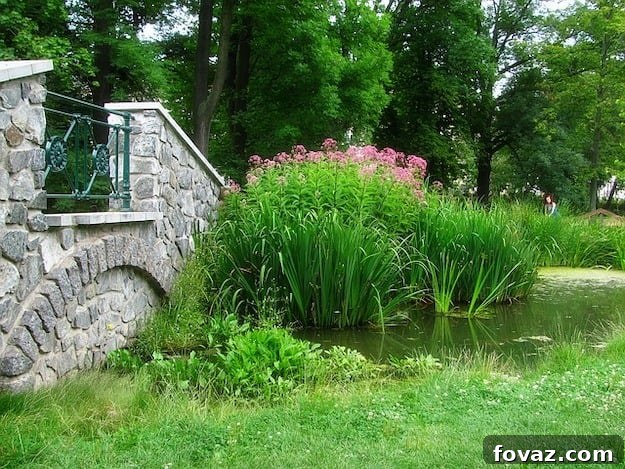
- Enduring Stone or Concrete Bridges: These materials are generally reserved for very robust, permanent structures, often integrated into larger, more ambitious landscape designs or spanning wider expanses where immense stability and a timeless, monumental appearance are desired.
4. Ensuring Structural Integrity and Prioritizing Safety
Safety must be the paramount concern, especially if the bridge is anticipated to be regularly used. Here’s what you need to keep firmly in mind during the planning and construction phases:
- Adequate Width: For a strictly decorative walking bridge, width might seem less critical. However, if you intend to move items like lawn mowers, wheelbarrows, or other garden equipment across it, it is imperative to measure your widest tool and construct the bridge at least one foot wider than that measurement. This ensures comfortable, safe, and unhindered passage.
- Sufficient Strength: The bridge must be engineered to robustly support its intended maximum load. For bridges spanning less than 8 feet, 2×8 joists installed on 16-inch centers (or spaced closer for even distribution) should be entirely adequate. For spans extending up to 12 feet, it’s advisable to upgrade to 2×10 joists, and for spans up to 18 feet, use substantial 2×12 joists. Any span exceeding 18 feet will absolutely necessitate the incorporation of an intermediate support beam for critical added stability and safety.
- Essential Supports: Unless the bridge is exceptionally short, incorporating vertical center supports on each side is a highly prudent decision. These supports can be cleverly recessed from the edges to maintain a clean, less noticeable appearance, thereby ensuring superior stability without visually compromising the bridge’s design.
- Secure Railings: While a purely decorative bridge might sometimes forgo railings, any bridge intended for foot traffic should ideally feature sturdy railings on both sides. This is crucial for security and convenience, particularly if children, elderly individuals, or those with mobility challenges will be using it.
Constructing Your Garden Bridge: A Detailed Approach
Approach the construction of your garden bridge much like you would a long, narrow deck. Precision in measurements and ensuring levelness are key ingredients for both safety and an aesthetically pleasing outcome.
1. Thorough Site Preparation
Begin by meticulously clearing the entire area where the bridge will be constructed. If your design includes creating a new gully or installing a pond, complete these excavation and landscaping tasks first. Ensure the ground is stable, well-drained, and properly prepared to receive the bridge’s foundations or footings.
2. Establishing Perfectly Level Foundation Points
Accurately locate and mark the level beginning and ending points for your bridge. Utilize stakes and taut string lines to stretch perfectly level guides between these points. A reliable carpenter’s level will then allow you to precisely check for levelness across the entire width of your bridge. This foundational step is absolutely critical for achieving a professional finish, ensuring optimal structural stability, and preventing any sagging or unevenness over time.
3. Assembling the Robust Substructure
Based on your calculated length and anticipated load requirements, precisely cut your chosen lumber (e.g., pressure-treated 2x8s, 2x10s, or 2x12s) for the joists and beams. Carefully assemble the main frame of the bridge, ensuring all connections are exceptionally secure using high-quality, weather-resistant screws or bolts. If your design mandates an intermediate support beam, ensure it is firmly anchored with its own proper, stable foundation.
4. Installing Decking and Secure Railings
Next, meticulously lay the decking material across the joists, fastening each board securely with appropriate fasteners. Maintain consistent, even spacing between boards; this is vital for effective drainage and contributes significantly to the bridge’s overall aesthetic appeal. Once the decking is fully installed, proceed to attach the railings. Railings can range from simple, functional vertical posts to more elaborate, custom designs that greatly enhance the decorative aspect of your bridge. For instance, an arc walkway garden bridge with integrated side railings crafted from natural fir wood not only adds security but also contributes significantly to a charming and traditional garden design, resisting water, rotting, cracking, and splitting with a good varnish finish.
5. Applying Finishing Touches and Seamless Integration
Carefully consider the transition points at the ends of your bridge. If it is designed as a purely walking bridge, a slight, gentle step at both ends can actually amplify its decorative charm. However, for bridges intended to accommodate wheeled items, the ends must be perfectly flush with the surrounding ground. In such scenarios, strategically placed pavers or natural stone should be used at either end to create a smooth, seamless transition and, crucially, to prevent the bridge’s lumber from making direct contact with the soil, which can lead to premature rot and degradation. Once construction is complete, protect your wooden bridge with appropriate stains or sealants for maximum longevity. Finally, integrate the bridge into your broader landscape with thoughtful surrounding plantings, pathway lighting to highlight its features at night, or decorative stones, creating a cohesive, inviting, and magical outdoor space. Even a smaller, gracefully arched miniature Japanese wood garden bridge, treated and ready to finish, can contribute immense character and unique flair to any yard.
Maximizing Your Investment: Beyond Initial Construction
While adding a garden bridge is a significant and rewarding step in home improvement, ensuring its long-term beauty and functionality guarantees it continues to add substantial value to your property over many years.
- Diligent Regular Maintenance: For wooden bridges, this includes routine cleaning, re-staining, or re-sealing every few years to provide continuous protection against the harsh elements. Periodically inspect for any loose screws, damaged boards, or signs of wear. While vinyl bridges require significantly less maintenance, they still benefit from occasional cleaning to remove dirt and grime, preserving their pristine appearance.
- Thoughtful Landscaping Around the Bridge: Soften the bridge’s structural edges with carefully selected, complementary plantings. If your bridge spans a pond or stream, consider water-loving plants to enhance the natural feel. For a dry gully, drought-tolerant groundcovers or ornamental grasses can create a harmonious look. Strategic lighting can dramatically highlight the bridge’s features and its surroundings at night, creating a magical and inviting ambiance.
- Effective Showcasing of the Feature: When the time comes to sell your home, prominently feature the garden bridge in your property listing, professional photographs, and during open house tours. Emphasize its unique aesthetic appeal, the enhanced outdoor living experience it provides, and how it contributes to the overall charm and value of the property.
By thoroughly planning, skillfully building, and diligently maintaining this distinctive and attractive feature, you will undoubtedly enhance your home’s aesthetic appeal, expand its functionality, and make it stand out in the real estate market. This careful attention to detail will lead to a significantly higher property value and potentially a quicker, more profitable sale. A garden bridge isn’t merely a structure; it’s a powerful statement about the care, thoughtfulness, and investment poured into your home—a statement that discerning potential buyers are sure to appreciate and value greatly.
For more expert insights on impactful home improvement projects that significantly boost property value, explore our related guides:
- How to Use Paver Bricks to Create an Attractive Driveway
Questions about enhancing your home’s outdoor spaces? Feel free to seek expert advice from home improvement professionals.
This article draws inspiration from expert advice and widely recognized home improvement practices. COPYRIGHT 2008 CREATORS.COM