
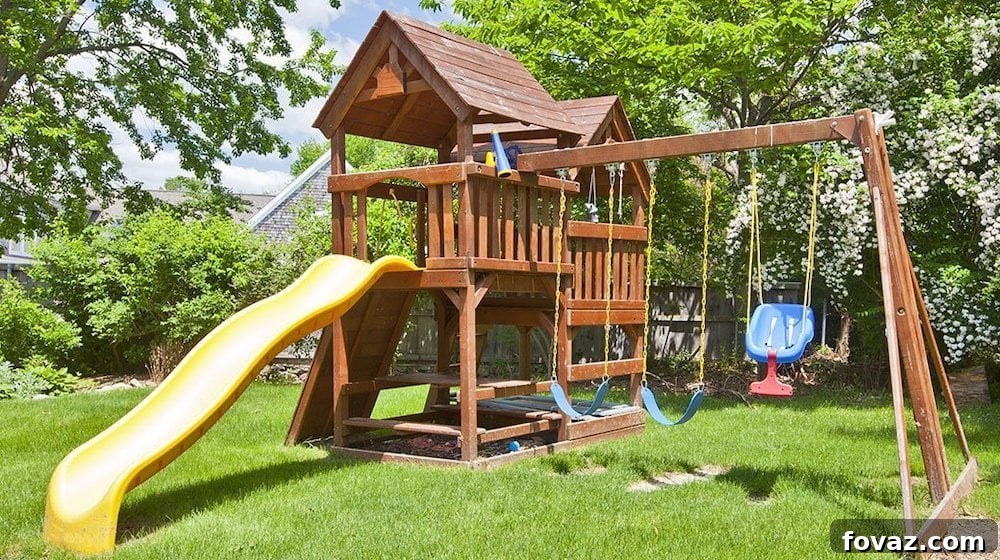
The gentle breeze, the warm sun, and the vibrant sounds of children’s laughter—there’s no better time than now to transform your backyard into a haven of family fun and cherished memories. While enjoying your outdoor space solo offers tranquility, imagine the boundless joy of watching your children thrive in a dedicated play area. Building backyard swing sets isn’t just about adding a structure; it’s about investing in invaluable family time, fostering healthy development, and creating a focal point for countless adventures. As you unwind in your serene garden, your kids can safely explore, play, and make the most of every sun-drenched day. So, put away the screens, step outside, and prepare to bask in the sun and joy with your loved ones in your very own backyard paradise.
The Ultimate Guide to Building and Maintaining Backyard Swing Sets for Endless Family Fun
A backyard swing set is more than just a piece of playground equipment; it’s a launchpad for imagination, a space for physical activity, and a cornerstone of childhood memories. In today’s digital age, encouraging outdoor play is more crucial than ever. A well-chosen and safely installed swing set can provide hours of entertainment, helping children develop crucial motor skills, social interaction, and a love for the outdoors. This comprehensive guide will walk you through everything you need to know, from planning and installation to essential maintenance, ensuring your backyard playset remains a safe and joyful hub for years to come.
Why a Backyard Swing Set is a Must-Have for Every Family
Investing in a backyard swing set offers a multitude of benefits that extend far beyond simple entertainment. For starters, it promotes vital physical activity, helping children develop strength, coordination, and balance. Instead of being glued to tablets or televisions, kids are encouraged to run, jump, climb, and swing, burning off energy and improving their overall fitness. Beyond the physical, playsets are fantastic for fostering imaginative play. A swing set can transform into a pirate ship, a castle, a space station, or anything else a child’s creativity can conjure. This type of open-ended play is essential for cognitive development, problem-solving skills, and emotional expression. Furthermore, if you have multiple children or if neighborhood kids frequently visit, a swing set becomes a natural gathering spot, encouraging social interaction, sharing, and cooperation. It’s also incredibly convenient; you don’t need to pack up the car and head to a public park when adventure is just a few steps away, right outside your door.
Planning Your Dream Backyard Playset
Before you even think about picking up a hammer, thoughtful planning is paramount. A successful swing set project begins with careful consideration of various factors to ensure safety, longevity, and enjoyment for your family. This initial phase will save you time, money, and potential headaches down the line.
Understanding Local Regulations and Permits
One of the most overlooked aspects of building outdoor structures is local zoning laws and regulations. Before breaking ground, it’s crucial to check with your local municipality or homeowner’s association (HOA) for any specific guidelines regarding playset dimensions, placement, or even required permits. Some areas may have restrictions on height, proximity to property lines, or even material choices. Ignoring these regulations could lead to fines or the costly necessity of disassembling your playset later on. A quick call to your local planning department can provide all the necessary information and ensure your project complies with all legal requirements, giving you peace of mind.
Budgeting for Your Playset
The cost of a swing set can vary significantly based on its size, materials, and whether you choose a DIY approach or a pre-assembled kit. Set a realistic budget from the outset, factoring in not just the playset itself but also supplementary costs. These might include tools if you don’t already own them, safety surfacing materials (which can be a substantial expense), anchoring hardware, and any additional accessories you wish to include. Researching different options, from basic swing frames to elaborate multi-component play structures, will help you determine what fits your financial plan. Remember that quality materials and robust construction often translate to greater durability and safety, making them a worthwhile investment in the long run.
Selecting the Right Swing Set for Your Family
Choosing the perfect swing set involves considering your children’s ages, the size of your backyard, and the features that will provide the most enjoyment. For younger children, a simpler, lower-profile set with bucket swings and a small slide might be ideal. As children grow, they might need a larger structure with rock walls, monkey bars, and taller slides to keep them challenged and engaged. Materials play a significant role too: wood offers a natural aesthetic and durability, metal provides strength and often a lower price point, while plastic sets are typically maintenance-free and brightly colored, often suited for younger kids. Measure your available space carefully, accounting for the playset’s footprint and the crucial safety perimeter around it. Think about longevity; a modular playset that can be expanded or modified as your children grow might be a wise choice.
Essential Installation Tips for Building a Safe and Fun Backyard Swing Set
Once you’ve planned your dream playset and gathered all your materials, the installation phase begins. This is where meticulous attention to detail is critical. Following these tips will not only ensure a sturdy and durable structure but, most importantly, a safe environment for your children to play in for years to come.
1. Strategic Site Selection: Finding the Perfect Spot
Choosing the optimal location for your swing set is paramount for both safety and enjoyment. Begin by identifying an area that is naturally level. A sloped ground can compromise the stability of the playset and make it challenging to maintain the integrity of your safety surfacing. The chosen spot should be free from any overhead obstructions, such as low-hanging tree branches, power lines, or clotheslines, which could pose a significant hazard during play. Furthermore, ensure there’s an adequate safety zone around the entire playset. A general rule of thumb is to have at least six feet of clear space extending beyond the perimeter of the structure, and even more space in front and behind swings and slides, to accommodate children swinging or sliding off. If your backyard features mature trees, you might strategically place the playground near them. While avoiding direct overhead branches, the trees can act as a natural, shaded border, providing a comfortable play environment and even offering aesthetic appeal, as long as they don’t impede movement or safety. Always ensure visibility from your house, so you can easily supervise children while they play.
2. The Golden Rule: Always Follow Manufacturer Instructions
It’s tempting for many DIY enthusiasts to glance at the instructions and then proceed based on intuition, but when it comes to a children’s playset, this is a dangerous shortcut. Manufacturer instructions are meticulously designed to ensure the structural integrity and safety of the unit. They provide a step-by-step guide, detailing everything from which fasteners to use for specific connections to the correct order of assembly. Skimping on this vital step can lead to instability, premature wear, and, most importantly, potential hazards for your children. The manual will also come with a comprehensive checklist of all parts and hardware. Take the time to verify every single component before you begin. This not only confirms you have everything you need but also familiarizes you with the parts, making the assembly process smoother. If any parts are missing or damaged, contact the manufacturer immediately to order replacements, rather than improvising with unsuitable alternatives.
3. Anchoring and Securing Your Playset for Maximum Stability
A playset that isn’t properly secured to the ground is an accident waiting to happen. Regardless of its size or material, every swing set needs robust anchoring to prevent tipping or shifting during vigorous play. Many playsets come with ground anchors that can be hammered or screwed into the earth, providing sufficient stability for lighter structures. For larger, heavier, or more frequently used playsets, consider more permanent solutions such as concrete footings. These involve digging holes, placing the playset’s support posts into them, and then filling them with concrete to create an unmovable base. Throughout the assembly process and after completion, meticulously check that all bolts, screws, and fasteners are tightened securely. Loose hardware can lead to structural weakness, wobbling, and potential component failure. Make it a habit to re-check all connections periodically, especially after the playset has settled and endured some use.
4. Creating a Safe Landing: Choosing the Right Ground Base
The surface beneath your playset is just as critical as the playset itself for ensuring children’s safety. Hard surfaces like concrete, asphalt, or even compacted dirt can lead to serious injuries from falls. A shock-absorbing surface is essential to cushion impacts. You have several excellent options, each with its own benefits and considerations:
- Wood Mulch/Engineered Wood Fiber (EWF): This is one of the most popular choices due to its natural appearance, excellent shock absorption properties, and affordability. It’s soft, drains well, and tends to stay within the play area reasonably well. However, it does require periodic raking to maintain even depth and replenishment as it decomposes over time.
- Rubber Mulch: A premium alternative to wood mulch, rubber mulch offers superior shock absorption, is extremely durable, and requires very little maintenance. It doesn’t decompose, resists compaction, and comes in various colors. While it’s more expensive upfront, its longevity and safety benefits can make it a worthwhile investment. Be aware that it can absorb and retain heat in direct sunlight.
- Sand: Washed sand (or playground sand) is another cost-effective option. It provides a soft landing and good drainage. However, sand can be messy, easily displaced by play, and may attract animals. It also requires frequent raking and replenishment to maintain the required depth.
- Pea Gravel: Similar to sand, pea gravel is budget-friendly and offers decent drainage. It can be less comfortable for children to fall on than mulch or sand and can also be easily displaced.
- Rubber Tiles/Mats: These interlocking tiles provide an exceptionally safe, uniform, and accessible surface. They are highly durable, low maintenance, and come in various thicknesses and colors. However, they are typically the most expensive option and require a carefully prepared, level sub-base for proper installation.
Regardless of your choice, ensure the safety surfacing is installed at the recommended depth, usually 6-12 inches, depending on the fall height of your playset and the material used, to provide adequate cushioning.
5. Longevity Through Diligent Maintenance: A Year-Round Responsibility
Proper maintenance is not a one-time task but an ongoing commitment that ensures the safety, cleanliness, and longevity of your backyard swing set. Establish a routine of checks and upkeep throughout the year. At the beginning of the play season (typically spring), give the entire playset a thorough cleaning with a mild cleaner and water to remove dirt, mold, and mildew that may have accumulated over winter. Inspect all structural components: for wooden sets, check for splinters, rot, cracks, or loose boards; for metal sets, look for rust spots, bent bars, or stress fractures; for plastic components, check for cracks, fading, or brittleness. Crucially, re-tighten all bolts, screws, and hardware, as these can loosen over time due due to temperature fluctuations and repeated use. Lubricate any moving metal parts, such as swing hangers or chain connections, on a monthly basis to prevent squeaking and wear. Pay close attention to swing seats and chains; check for tears in the seats, signs of rust or deterioration in the chains, and ensure they are securely attached to the hangers. Replace any damaged or worn parts immediately. Also, regularly rake and replenish your safety surfacing to ensure it maintains the correct depth and remains evenly distributed, providing consistent fall protection.
6. Organizing for the Future: Tools and Spare Parts
After the playset is built, don’t just toss the instruction manual and leftover hardware. Keeping a well-organized collection of essential items will prove invaluable for future maintenance and repairs. Designate a specific container or space to store the instruction manual, any assembly tools provided by the manufacturer (like hex wrenches), and all spare nuts, bolts, washers, and caps. This ensures you have the correct hardware readily available for those periodic tightening checks or if a part needs replacing. For playsets with removable plastic components like swing seats, gliders, or ropes, especially those exposed to harsh weather, consider storing them indoors or in a weatherproof container during the off-season. Extreme humidity, freezing temperatures, or prolonged sun exposure can cause plastic parts to become brittle, faded, or cracked, significantly shortening their lifespan. Proper storage will keep these components in excellent condition, ready for the next play season.
Here is a helpful video from Lowe’s Home Improvement offering more tips for building backyard swing sets:
The Ultimate Safety Net: Active Adult Supervision
While building a safe and well-maintained swing set is crucial, no amount of careful planning or robust construction can replace active adult supervision. Even the safest playground can become hazardous if children are not using it properly or if unexpected situations arise. Always ensure that a responsible adult is present and attentive whenever children are playing on the swing set. Teach your children basic safety rules: no pushing, taking turns, using swings one at a time, and always sitting properly. Regular supervision allows you to intervene if conflicts arise, ensure equipment is being used as intended, and respond swiftly to any minor scrapes or more serious incidents. Your watchful eye is the most important safety feature of any backyard playset.
Beyond the Swing Set: Complementary Outdoor Fun
A swing set is a fantastic start, but your backyard can be so much more! Consider adding other DIY projects to create a truly comprehensive outdoor play and relaxation space. Imagine a cozy DIY teepee for quiet reading or imaginative hideaways, a simple backyard pond for a touch of nature and calm, or even an outdoor pizza oven to gather the family for delicious meals under the stars. The possibilities for enhancing your outdoor living experience are limitless, encouraging more time spent together as a family and nurturing a love for nature and hands-on creativity.
Building a backyard swing set for your kids is an incredibly rewarding project. It’s an investment in their health, happiness, and development, providing them with a dedicated space to play, grow, and create lasting memories. By following these detailed planning, installation, and maintenance guidelines, you can ensure that your playset is not only a source of endless fun but also a safe and durable addition to your home for many years to come. So, gather your tools, unleash your creativity, and get ready to enjoy the priceless sound of children’s laughter filling your backyard.
You’ll also love these fantastic DIY projects!
12 Fun DIY Teepee Ideas for Kids
51 Fun Summer Activities You Can DIY!
A Simple Backyard DIY Pond Project For Beginners
Featured image via TravelToyatra