
Navigating Rough-In Plumbing Costs in 2026: A Comprehensive Guide
Embarking on a new construction or major renovation project invariably involves significant plumbing work, a critical phase known as rough-in plumbing. This foundational stage lays the groundwork for all water supply, drainage, and venting systems before walls are sealed. Understanding the associated costs is paramount for accurate budgeting and preventing unexpected expenses.
In 2026, homeowners can anticipate spending anywhere from $1,500 to $4,000 for the rough-in plumbing of a standard three-piece bathroom, which typically includes a toilet, shower, and sink. However, various factors can significantly influence this baseline. Projects that require extensive pipe relocation (more than three feet from existing lines), involve complex structural modifications, or fall under “Project Rescue” scenarios where a professional takes over after DIY framing, could see costs escalating to a broader range of $5,000 to $20,000 or more. This guide aims to demystify rough-in plumbing costs, providing detailed breakdowns and essential insights for informed decision-making.
Key Factors Influencing Rough-In Plumbing Expenses in 2026
Several critical elements contribute to the overall cost of rough-in plumbing. Being aware of these factors can help homeowners better estimate their project budget and understand where their investment is going:
- Labor Dominance: Professional plumbing labor typically constitutes a substantial portion—around 40–60%—of the total rough-in costs. This reflects the specialized skill, licensing requirements, and time involved in precise pipe installation and adherence to complex building codes.
- The “Project Rescue” Audit: If you’ve undertaken DIY demolition and framing, hiring a professional for the plumbing rough-in will necessitate a mandatory structural audit. This crucial step ensures your framing adequately supports the required 3-inch or 4-inch waste lines and meets all structural integrity standards, often adding to the total expense.
- The 3-Foot Rule for Relocation: Moving a plumbing fixture more than three feet from its original or planned location can significantly increase costs. Each such relocation may add $500–$1,000 per appliance, due to the need for new piping, additional structural modifications, and potential re-routing of waste and supply lines.
- Permit Responsibility: It is highly advisable to have your plumber pull all necessary permits. This ensures they are legally responsible for the work, that it complies with the latest 2026 safety codes, and that it passes all mandatory inspections. Permit costs typically range from $30 to $500, but the peace of mind and legal protection are invaluable.
- Seasonal Rates: Strategic scheduling can lead to potential savings. Plumbers often experience a “slow season” during colder months (October–February). Booking your project during this period might result in 10–20% more competitive pricing as plumbers seek to maintain a steady workload.
- Material Choices: The type of piping used for water supply (PEX vs. Copper) and drainage (PVC vs. ABS) will impact material costs. While labor remains the dominant factor, material upgrades can add a noticeable amount to the overall budget.
- Geographic Location: Plumbing costs vary significantly by region, state, and even metropolitan area. Factors such as local cost of living, prevailing wage rates, and regional demand for plumbing services play a critical role.
Our Methodology: How These Rough-In Plumbing Estimates Are Calculated
The cost estimations presented in this guide are derived from robust, nationally recognized construction data and have been thoroughly reviewed for real-world accuracy as of January 2026. Our commitment is to provide homeowners with reliable, data-driven insights to help them plan their projects effectively.
Our primary data sources include:
- RSMeans City Cost Index: This industry-standard resource is utilized to apply precise regional adjustments to construction costs, ensuring our estimates reflect local market conditions across various cities and states.
- U.S. Bureau of Labor Statistics (BLS): We incorporate current wage data for plumbing trades professionals, including journeymen and master plumbers, to accurately reflect labor expenses.
- Contractor-Validated Pricing Models: Our estimates are further refined using real-world bid data gathered from experienced plumbing contractors as of January 2026, offering practical insights into actual project costs.
Note: While we do not offer an automated rough-in plumbing cost calculator, the detailed state tier tables and per-fixture breakdowns provided in subsequent sections are designed to empower you to construct accurate estimates tailored to your specific project needs.
Understanding Rough-In Plumbing: The Foundation of Your Home’s Water System
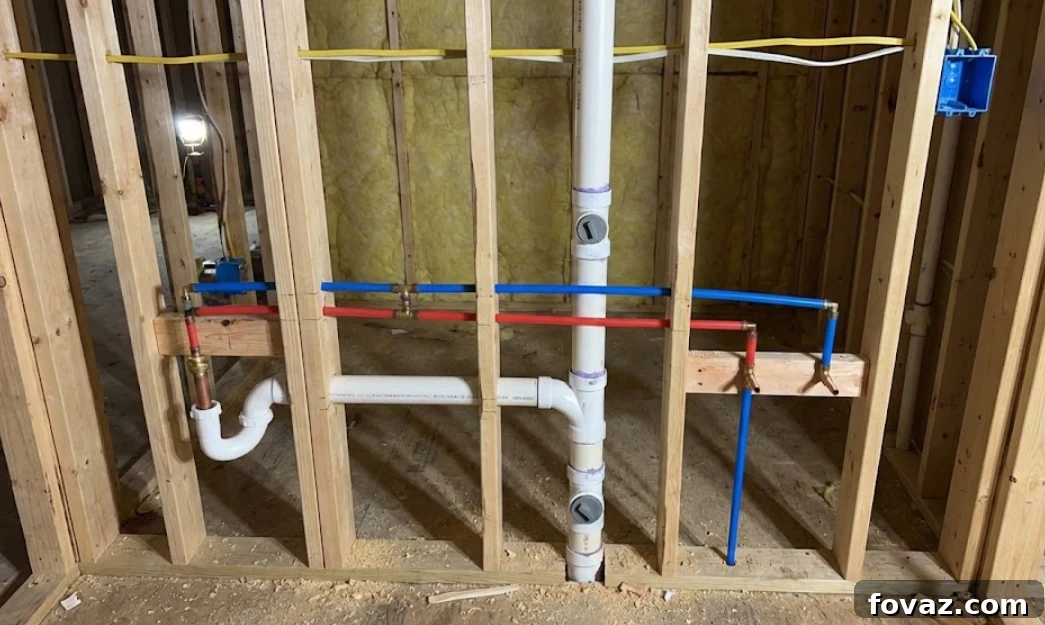
Before any visible fixtures—such as faucets, toilets, or showers—can be installed, plumbers must meticulously construct the “skeleton” of the entire water and waste system. Rough-in plumbing is this crucial stage where all water supply lines, drain pipes, and vent pipes are precisely installed within the wall cavities, beneath floors, and through ceilings.
Timing is Everything: This intricate work is performed after the structural framing of the building is complete but critically, before any walls are closed up with drywall or flooring is laid. This allows plumbers unobstructed access to run pipes and ensures proper installation and alignment.
Core Components: A comprehensive rough-in system consists of two primary networks:
- Drain-Waste-Vent (DWV) System: This vital network is responsible for efficiently removing all wastewater and harmful sewer gases from your home. It includes various sizes of drain pipes for sinks, showers, toilets, and the vent pipes that regulate air pressure within the system, preventing siphoning and ensuring smooth drainage.
- Water Supply Lines: These lines are dedicated to delivering hot and cold potable water to every fixture in your home, from kitchen sinks to bathroom showers. Modern installations often utilize PEX tubing, known for its flexibility and ease of installation, or traditional copper piping, favored for its durability.
The success of your entire plumbing system, its efficiency, and its longevity hinge on the quality and precision of the rough-in work. It’s a stage where corners cannot be cut.
Rough-In Plumbing Costs Per Square Foot in 2026
While per-fixture pricing offers a detailed view, considering rough-in plumbing costs on a per-square-foot basis can provide a useful general estimate, particularly for new construction or additions. For a standard installation, rough-in plumbing typically ranges from $4 to $10 per square foot. This cost can climb higher in premium markets, for highly complex layouts, or when dealing with multi-story buildings.
To illustrate, a modest 50-square-foot bathroom would incur rough-in plumbing expenses ranging from $200 to $500 for the plumbing components alone, excluding fixtures or finishing materials. This metric helps in initial budgeting, though project-specific factors will always dictate the final price.
Exploring Different Rough-In Plumbing Scopes and Their Costs
The final cost of your plumbing service bill is heavily influenced by the specific area being plumbed, its proximity to existing utility lines, and any unforeseen challenges hidden within the structure. The four primary rough-in scopes homeowners typically encounter are:
- Bathroom Rough-In: This is one of the most common projects, involving standard 3-piece setups (toilet, sink, shower/tub) for new bathrooms or complete remodels. Costs are influenced by the number of fixtures and their layout.
- Kitchen Rough-In: Kitchens require plumbing for sinks, dishwashers, refrigerators with ice makers, and potentially gas lines for ranges. Complexity increases with island installations or custom layouts.
- Project Rescue: This specialized service addresses situations where a homeowner has completed demolition and framing but requires professional plumbing installation to ensure code compliance and structural integrity.
- Slab & Basement Work: These projects are inherently more complex and costly due to concrete cutting, excavation, and specialized equipment required for below-grade installations, especially when involving ejector pumps.
Detailed Rough-In Plumbing Costs for a New Bathroom
A new bathroom rough-in is a significant investment, with costs varying based on the bathroom’s size, complexity, and location within the home. For a standard 3-piece bathroom (toilet, sink, shower) situated adjacent to existing plumbing lines, homeowners can expect costs to range from $1,500 to $4,000.
However, this range can expand considerably for more challenging installations. For instance, basement bathroom rough-ins or projects requiring work on concrete slabs typically cost between $3,000 and $8,000, reflecting the added labor and equipment involved.
Here’s a breakdown of rough-in plumbing costs per fixture in a new bathroom:
- Toilet: $300–$600 (Includes drain, water supply, and vent connections)
- Sink/Vanity: $250–$500 (Covers hot/cold supply lines, drain, and vent)
- Shower/Tub: $600–$1,200 (More complex due to multiple supply lines, larger drain, and often specific shower valve installations)
Cost escalations commonly occur when:
- Relocating fixtures: Moving any fixture more than 3 feet from its pre-existing or planned plumbing point can add $500–$1,000 per fixture. This requires re-routing extensive supply and drain lines.
- Installing below the sewer line: For basement bathrooms, if the fixtures are below the main sewer line, an ejector pump system is necessary. This can add an additional $1,000–$3,000 to the total cost.
- Working in concrete slabs: Penetrating and repairing concrete slabs for drain and supply lines is labor-intensive and requires specialized tools, adding $1,500–$3,500 for cutting, excavation, and patching.
Understanding Kitchen Plumbing Rough-In Costs
The kitchen is often considered the heart of the home, and its plumbing rough-in is equally vital. For a standard kitchen setup including a sink, dishwasher, and ice maker connection, costs generally range from $1,200 to $3,500. The complexity can increase significantly if the design includes a kitchen island.
Kitchen islands, while aesthetically pleasing, pose unique plumbing challenges, especially concerning venting and drain runs. The extended piping and more intricate installation required for islands can add an additional $800–$1,500 to the total rough-in cost.
Here’s a breakdown of kitchen rough-in plumbing costs per fixture:
- Sink: $350–$700 (Includes hot/cold supply, drain, and vent connections, sometimes garbage disposal wiring)
- Dishwasher: $300–$600 (Requires hot water supply line, drain connection, and often an electrical outlet)
- Ice Maker (Refrigerator): $200–$400 (Typically a cold water supply line)
- Gas Line: Adding or extending a gas line for a range or other gas appliances can incur an additional $300–$800, depending on the length of the run and complexity.
The Cost of a “Project Rescue”: Hiring a Plumber After DIY Framing
Many homeowners are eager to save money by tackling demolition and framing themselves. However, when it comes to plumbing, the intricacies of code compliance and structural requirements often necessitate professional intervention, leading to a “Project Rescue” scenario. Hiring a licensed plumber to install pipes after DIY framing can cost significantly more, typically ranging from $4,500 to $15,000+.
This higher cost stems from the additional work involved. A Project Rescue service includes a mandatory framing audit to ensure structural integrity and code compliance, necessary code corrections, professional pipe installation, and the critical responsibility of pulling and managing permits. It’s often more expensive to correct mistakes than to do it right the first time.
Common corrections identified during a framing audit for 3-inch or 4-inch waste line installation include:
- Oversized joist holes: Holes drilled through floor joists that exceed the allowed 1/3 joist depth limit, compromising structural integrity.
- Missing fire blocking: Absence of fire-blocking materials around pipe penetrations, which is essential for preventing the spread of fire through wall cavities.
- Inadequate slope or support: Incorrect pitching or insufficient support for drain runs can lead to poor drainage, clogs, and potential code violations.
Engaging a professional from the outset for plumbing rough-in is almost always a more cost-effective and safer approach than attempting to fix DIY errors.
Slab & Basement Work: Moving Drains in Concrete Slabs and Below-Grade Installations
Plumbing work involving concrete slabs or basement installations presents unique challenges and higher costs. Moving a toilet drain in a concrete slab, for instance, typically costs between $1,500 and $3,500. This comprehensive estimate includes the specialized process of concrete cutting, precise pipe installation, and subsequent patching of the slab.
For basement bathrooms where fixtures are located below the main sewer line, a more complex solution is required: an ejector pump system. The rough-in for a basement bathroom with an ejector pump can add $1,000–$3,000 to the total project cost.
Why slab and basement work is more expensive:
- Specialized Equipment: Requires heavy-duty concrete cutting equipment, jackhammers, and dust control systems, all of which add to labor and equipment rental costs.
- Precision Requirements: Demands extremely precise slope calculations (typically 1/4″ per foot) to ensure proper drainage, as corrections in concrete are difficult and costly.
- Multi-Contractor Involvement: Often necessitates coordination with a separate concrete repair contractor for re-pouring and finishing the slab, adding another layer of complexity and expense.
Ejector pump systems include several components that contribute to their cost:
- Pump basin: The holding tank for wastewater and the pump itself, typically costing $800–$1,500.
- Dedicated Electrical Circuit: Requires a new electrical circuit to power the pump safely, adding $300–$600.
- Lifespan: Ejector pumps have a typical lifespan of 7–10 years, requiring eventual replacement.
Rough-In Plumbing Costs Based on Geographic Location (State Tiers)
The cost of rough-in plumbing is heavily influenced by regional economic factors, including local labor rates, material supply chain variations, and the overall demand for plumbing services. To provide a clearer picture, states can be grouped into tiers based on these economic indicators:
| State Tier | Representative States |
| Tier 1 (Low Cost) | Alabama (AL), Arkansas (AR), Florida (FL), Idaho (ID), Indiana (IN), Mississippi (MS), Nebraska (NE), Oklahoma (OK) |
| Tier 2 (Mid Cost) | Arizona (AZ), Delaware (DE), Georgia (GA), Kentucky (KY), Ohio (OH), South Carolina (SC), Tennessee (TN), Texas (TX) |
| Tier 3 (High Cost) | Colorado (CO), Illinois (IL), Pennsylvania (PA), Rhode Island (RI), Washington (WA), Wisconsin (WI) |
| Tier 4 (Premium Cost) | California (CA), Connecticut (CT), Massachusetts (MA), New Jersey (NJ), New York (NY), Oregon (OR), Washington (WA) |
Rough-In Plumbing Cost Ranges by State Tier (2026 Estimates)
These ranges provide a general idea of what to expect for different scopes of work, depending on your state’s economic tier:
| Tier | Standard Rough-In (e.g., 3-Piece Bath) | Project Rescue (After DIY Framing) | Slab/Relocation Work |
| Tier 1 | $1,500–$2,800 | $4,500–$7,500 | $2,500–$4,500 |
| Tier 2 | $2,000–$3,500 | $5,000–$8,500 | $3,000–$5,500 |
| Tier 3 | $2,800–$4,500 | $6,000–$10,000 | $4,500–$7,000 |
| Tier 4 | $3,500–$6,000 | $8,000–$15,000+ | $6,000–$10,000+ |
Fast Rough-In Plumbing Estimates by Tier (Budgeting Snapshot)
To assist with quick budgeting, these estimates are calculated using the Tier 2 midpoint as a baseline (representative of states like Ohio, Texas, and Florida). They include a 15% contingency for unforeseen issues and a 2% permit fee, offering a more realistic financial snapshot:
| Scope of Work | Budget Estimate | Midpoint Estimate | Premium Estimate |
| Standard 3-Piece Bathroom Rough-In | $1,850 | $2,450 | $3,200 |
| Project Rescue (Plumbing After DIY Framing) | $5,200 | $6,750 | $8,800 |
| Slab/Basement Work (with Relocation) | $3,100 | $4,200 | $5,900 |
Understanding Common Plumbing Material Costs in 2026
While labor is the largest component of rough-in plumbing costs, your choices in materials can significantly shift your project’s total expense within its expected range. Different piping materials offer varying benefits in terms of cost, durability, and installation ease.
| Item | Budget-Friendly | Mid-Range Option | Premium Choice |
| PEX Supply Line (per ft) | $1.50–$2.50 | $3.00–$4.00 | $5.00+ |
| Copper Supply Line (per ft) | N/A (Generally not budget) | $4.00–$8.00 | $9.00–$12.00 |
| Licensed Plumber (per hr) | $80–$100 | $110–$130 | $200+ |
| Slab Leak Detection | $150–$250 | $350–$450 | $600 |
Additional Material Considerations:
- PVC/ABS for DWV: These plastic pipes are the standard for drain, waste, and vent systems, known for their affordability and ease of installation. Costs are relatively stable compared to supply lines.
- Fittings and Valves: The numerous connectors, elbows, tees, and shut-off valves required for a plumbing system can add a substantial amount to the material budget, especially for complex layouts.
- Insulation: Insulating hot water lines can improve energy efficiency and is often a recommended practice.
- Water Heaters & Other Equipment: While not strictly “rough-in,” the space and connections for these major appliances are factored into the rough-in design.
FAQs: Rough-In Plumbing Cost and Process
Can a plumber complete the rough-in phase after I’ve finished the framing myself?
Yes, many licensed plumbers offer specialized “Project Rescue” services tailored for scenarios where homeowners have completed demolition and framing. However, be prepared for a mandatory audit of your DIY framing to ensure it meets structural requirements and local building codes for proper pipe installation. This often adds to the overall cost.
What is the estimated cost to move a drain pipe within a concrete slab?
Relocating a drain in a concrete slab typically costs between $1,500 to $3,500. This comprehensive estimate covers the diagnostic work, the labor-intensive process of concrete demolition and excavation, the installation of new piping with correct sloping, and basic patching or repair of the concrete slab.
Are permits and inspections included in a typical rough-in plumbing quote?
Most reputable and comprehensive rough-in plumbing quotes will include the procurement of all necessary permits (which can range from $30 to $500, depending on location and project scope) and the scheduling of all required inspections. It’s crucial to confirm this with your plumber to ensure full compliance and avoid future legal issues.
What is the typical timeline for completing a standard plumbing rough-in?
For a standard residential project, a professional plumber typically requires 3 to 5 business days to meticulously complete the installation of all water supply lines, drain pipes, and waste vents. Complex projects or those requiring significant structural modifications may extend this timeline.
Is it absolutely necessary to hire a licensed plumber for rough-in work?
Absolutely. Hiring a licensed, bonded, and insured plumber is critically important. Uncertified work not only risks immediate safety hazards but can also lead to significant long-term problems. It can void your homeowner’s insurance policy, making you ineligible for claims related to water damage or faulty plumbing. Licensed professionals ensure work meets all safety and building codes.
What happens if my rough-in plumbing fails inspection?
If an inspector finds code violations during the rough-in inspection, they will issue a “Correction Notice” detailing the necessary fixes. One of the major advantages of hiring a licensed plumber is that they are generally responsible for correcting any deficiencies in their work at no additional labor cost to you, ensuring the project eventually passes inspection.
Does homeowner’s insurance cover slab leaks?
Homeowner’s insurance policies often cover the “resulting damage” from a slab leak (e.g., ruined flooring, damaged drywall). However, they typically exclude the cost of repairing the actual pipe itself that caused the leak. Review your specific policy for detailed coverage information.
How can I identify a slab leak during my renovation project?
During a renovation, keep an eye out for tell-tale signs of a slab leak, even with walls open. These include unexplained warm or persistently damp spots on concrete floors, the subtle sound of running water when all fixtures are off, or a sudden, unexplained spike in your water bill. If suspicious, call a professional for leak detection.
What is the difference between PEX and Copper piping for rough-in plumbing?
PEX (cross-linked polyethylene) is a flexible plastic tubing that is more affordable and easier to install, especially in complex layouts, reducing labor costs. It’s corrosion-resistant and expands to prevent freezing bursts. Copper, a traditional material, is durable, long-lasting, and recyclable, offering superior rigidity and often preferred for its aesthetic in exposed areas. However, it’s more expensive, prone to corrosion in certain water conditions, and installation is more labor-intensive due to soldering.
How does the number of fixtures impact rough-in plumbing costs?
The number of fixtures directly correlates with higher rough-in plumbing costs. Each additional fixture (toilet, sink, shower, dishwasher, etc.) requires its own set of supply lines, drain lines, and vent connections. More fixtures mean more materials, more labor hours for installation, and potentially a more complex overall system design, all contributing to increased expenses.