
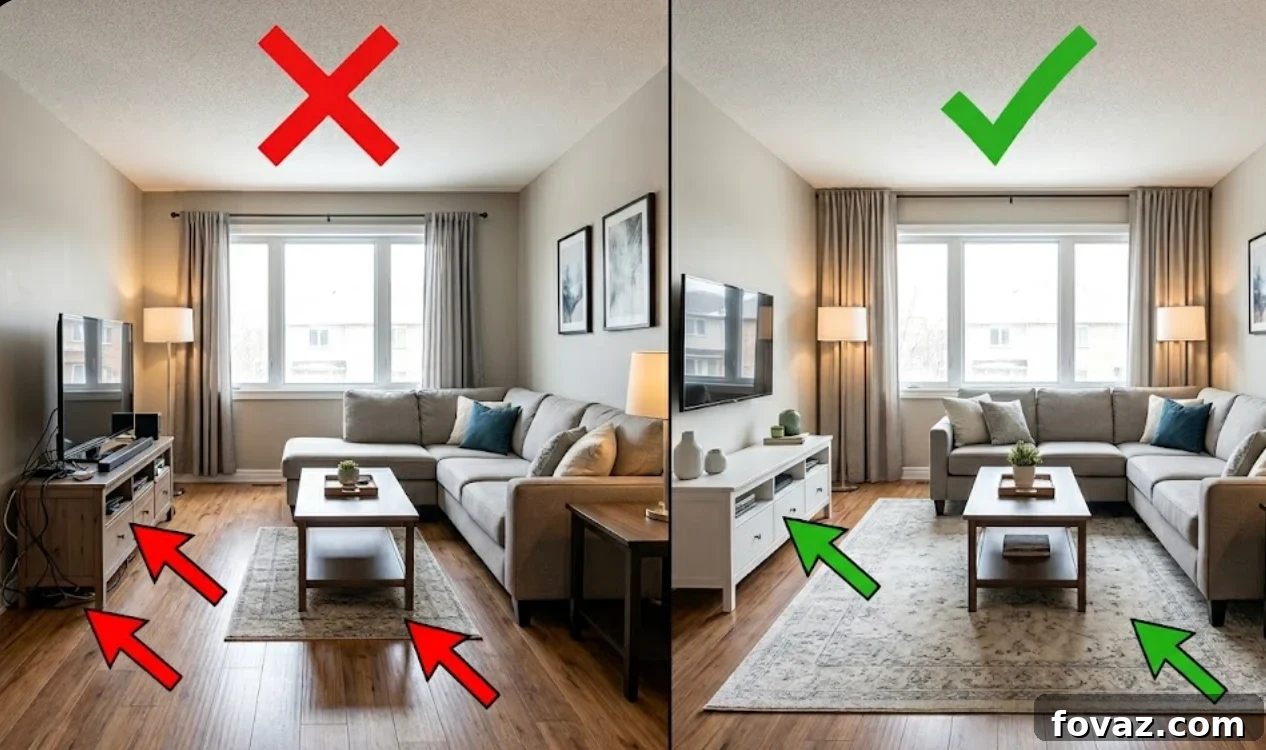
At a Glance: 7 Mistakes That Make Your Home Look Cheap
- Most homes that read as cheap aren’t failing because of big-ticket items. They’re failing at the details. Small swaps fix more than major purchases.
- Each mistake here has a simple, affordable fix you can complete in a weekend or less—often for under $50.
- The aim isn’t to spend more. It’s to spend on the right things.
You don’t need a full renovation to make your home look polished. The things that make a space feel inexpensive are usually the small, overlooked details: curtains hung too low, rugs that are the wrong size, yellowed switch plates, or mismatched hardware. These are the subtle signals that tell visitors a house hasn’t been cared for, even when the big pieces—sofa, floors, layout—are fine.
The good news: each of the seven mistakes below is inexpensive and straightforward to fix. Think hardware-store runs, new bulbs, updated plates, and swapping a fixture or two. Here are the most common problems that make a home look cheap, and exactly how to address each one.
Mistake #1: Hanging Your Curtains Too Low
Hanging curtain rods just above the window frame shortens the perceived height of the room, visually cutting the wall in half and making ceilings look lower. Designers almost always raise curtains first because it’s such an impactful, low-cost change.
The Fix: Mount the curtain rod 4–6 inches below the ceiling and extend it 10–12 inches beyond each side of the window frame. Choose floor-length panels—96″ or 108″—so the fabric puddles or just grazes the floor. This simple change makes windows look larger and ceilings feel taller.
Mistake #2: Buying a Rug That’s Too Small
A rug that’s too small makes furniture appear to float and reads as an unfinished room. People choose small rugs because they’re cheaper, but a tiny rug under a full seating area often looks worse than none at all.
The Fix: For living rooms, opt for an 8×10 minimum. Ensure the front legs of sofas and chairs sit on the rug. Add a rug pad to prevent slipping and to give an inexpensive rug extra heft and presence.
Mistake #3: Leaving Your Builder-Grade Light Fixtures Up
Builder-grade flush mounts are functional but generic. Those ubiquitous dome fixtures say “untouched” more loudly than almost anything else. Swapping one fixture can change the look of a room faster than paint.
The Fix: Replace at least one fixture per room. Start with the entryway or dining area. A statement semi-flush mount or pendant can be installed in about 20 minutes and instantly elevates the space.
Mistake #4: Mixing the Wrong Light Bulb Colors
Mixed bulb temperatures are often imperceptible at first, but once noticed they make a room feel off—cold, clinical, or inconsistent. Using daylight bulbs in one area and warm bulbs in another creates a disjointed look.
The Fix: Standardize on warm white LEDs between 2700K and 3000K throughout living spaces. Consistent color temperature makes lighting feel intentional and cohesive.
Mistake #5: Running Mismatched Hardware Throughout Your Home
Hardware is the jewelry of a room. When finishes are random—chrome in the kitchen, brass on bathroom drawers, dark bronze on doors—the space looks like a collection of mismatched decisions rather than a cohesive design.
The Fix: Choose one finish—matte black, brushed nickel, or satin brass—and be consistent across cabinets, drawers, and door hardware in each room. A full kitchen hardware refresh can be very affordable and dramatically improves the perceived quality of the space.
Mistake #6: Decorating With Zero Texture
Smooth, flat surfaces everywhere read as staged and cold. Texture is what makes a room feel lived-in, warm, and layered without spending a fortune on furniture.
The Fix: Introduce one woven element (a basket or jute rug), one soft layer (a chunky knit throw or linen pillow), and one organic or rough material (a wood tray or stone accent). That combination instantly makes a space feel richer and more inviting.
Mistake #7: Keeping Your Builder Plastic Switch Plates
Switch plates go unnoticed until they don’t match. Yellowed, cracked, or paint-splattered plastic covers are a subtle but powerful sign that a home hasn’t been updated. Replacing plates is one of the highest return-per-dollar improvements you can make.
The Fix: Swap out every switch plate and outlet cover for screwless metal versions. A 10-pack is inexpensive, and each plate takes only a few minutes to install with a flathead screwdriver.
Final Thoughts
Making your home look expensive is less about spending more and more about addressing the details that signal neglect. Curtain height, rug size, hardware finish, bulb temperature—none of these fixes cost much, but they all change how a room reads. Pick one of these mistakes to correct this weekend, then move to the next. Over time those small, intentional choices add up to a home that looks considered and complete.
Frequently Asked Questions
1. What are the most common mistakes that make your home look cheap? Often it’s the overlooked details: curtains hung too low, too-small rugs, mismatched hardware, and unchanged builder-grade fixtures. These small things have outsized visual impact.
2. How can I make my home look expensive on a budget? Start with the details. Upgrading switch plates, choosing a consistent bulb temperature, adding texture through throws and baskets, and swapping one light fixture per room can cost under $100 and transform a space.
3. Does curtain height really make that big a difference? Yes. Hanging curtains near the ceiling rather than just above the window frame makes ceilings feel taller and windows look larger—one of the most effective low-cost changes.
4. What’s the easiest mistake to fix first if I’m on a tight budget? Switch plates. A 10-pack of screwless metal covers costs less than $20, and replacing each plate takes minutes with a screwdriver. It’s a small effort with a big visual payoff.
5. Can mismatched hardware really make a home look cheap? Absolutely. Inconsistent finishes across a home read as accidental. Choosing one finish and applying it consistently makes spaces appear designed rather than assembled piecemeal.
Quick Poll
Be honest. When you walk into someone’s home, what’s the first thing you judge?
Hmm. The rug always gets me. What about you? Comment down below.