
Transforming your living space with the luxurious comfort of radiant floor heating combined with the timeless elegance of hardwood flooring can be a truly rewarding endeavor. While the idea of a warm, inviting floor underfoot is incredibly appealing, especially in cooler climates, the installation process requires careful planning and execution. This comprehensive guide will walk you through the essential steps and critical considerations for successfully heating and finishing a concrete slab floor with beautiful, long-lasting hardwood.
How to Successfully Heat and Finish a Concrete Slab Floor with Hardwood
Building an addition, like an extra bedroom for your children, on a concrete slab is often one of the most cost-effective and structurally sound construction methods. When you integrate radiant heating into this slab, you’re not just building a room; you’re creating a sanctuary of warmth and comfort. Imagine your children enjoying comfortably warm floors even on the coldest winter nights. The good news is, installing hardwood flooring over such a system is not only possible but can also create an incredibly desirable and functional space, provided you adhere to specific best practices.
The Undeniable Comfort and Efficiency of Radiant Floor Heating
Radiant floor heating systems offer a superior level of comfort and efficiency compared to traditional forced-air systems. Instead of heating the air and distributing it through vents, radiant systems heat surfaces directly, primarily the floor, which then radiates warmth evenly throughout the room. This method provides a consistent, gentle warmth that eliminates cold spots and drafts, creating a truly cozy atmosphere.
Silent and Consistent Warmth
One of the most appealing aspects of radiant heating, especially for a bedroom, is its complete silence. Unlike noisy furnaces or creaking ducts, a radiant system operates without a sound, allowing for undisturbed sleep and a peaceful environment. The heat is distributed uniformly from the floor up, enveloping the room in a gentle warmth that prevents the uncomfortable temperature fluctuations often associated with other heating methods. This steady temperature helps maintain a stable environment, which is also beneficial for the longevity of hardwood flooring.
Health Benefits for Your Home
For families with children, particularly those prone to allergies or respiratory sensitivities, radiant heating offers significant health advantages. Because there’s no forced air blowing through ducts, there’s less circulation of dust, pet dander, pollen, and other airborne allergens. This stillness of the air greatly reduces indoor allergen levels, leading to cleaner air and fewer allergy triggers. Furthermore, radiant heat can help maintain more stable indoor humidity levels, which is not only beneficial for respiratory health but also crucial for the stability and durability of hardwood floors.
Energy Savings and Modern Aesthetics
Beyond comfort and health, radiant floor heating is also an energy-efficient choice. By heating objects and people directly, rather than just the air, it can feel comfortable at lower thermostat settings compared to conventional systems. This often translates to noticeable savings on heating bills. Aesthetically, radiant systems are entirely invisible, freeing up wall space from radiators and allowing for greater design flexibility in your room. This seamless integration makes it an ideal choice for modern homes aiming for both functionality and minimalist design.
Can You Install Hardwood Flooring Over a Heated Concrete Slab?
The answer is a resounding yes, but it comes with a crucial caveat: success hinges on meticulous planning and adherence to established guidelines. While the combination of a warm, inviting floor and the classic beauty of hardwood is highly desirable, wood is a natural material that reacts to its environment. When exposed to heat from below, coupled with potential moisture from the concrete, special care is required to ensure the floor remains beautiful and stable for years to come.
Understanding the Unique Challenges
Hardwood flooring, despite often being finished with durable sealants like urethane, remains a hygroscopic material. This means it constantly interacts with the moisture in its surrounding environment, absorbing and releasing it. In the context of a radiant heated slab, this interaction is amplified. Small changes in temperature and humidity can cause the wood to expand and contract. If these movements are not properly managed, issues like cupping, crowning, gapping, or even warping can occur, diminishing the floor’s appearance and structural integrity.
Mastering Moisture: The Key to a Lasting Hardwood Floor
The single most critical factor in a successful hardwood installation over a concrete slab, especially one with radiant heating, is managing moisture. Both the concrete and the wood itself need to be properly prepared to prevent future problems.
The Hygroscopic Nature of Wood Explained
To truly understand why moisture management is paramount, it’s important to grasp the inherent properties of wood. Wood cells naturally absorb moisture from the air when humidity is high and release it when humidity is low. This process causes the wood planks to expand (swell) and contract (shrink). When this movement is excessive or uneven, it can lead to various forms of damage: “cupping” (edges higher than the center), “crowning” (center higher than the edges), “gapping” between planks, or more severe “warping.” A heated slab can exacerbate this, as the warmth can drive residual moisture out of the concrete and into the wood, or dry the wood out too quickly if conditions aren’t stable.
The Critical Role of Concrete Curing
Concrete slabs, while appearing solid and dry, undergo a chemical process called curing. While concrete achieves significant strength within a few days, it continues to release moisture for an extended period, often many weeks or even months. For a hardwood installation, it’s not just about the concrete being structurally sound; it’s about it being sufficiently dry. Installing hardwood over a slab that still contains excess moisture is a recipe for disaster, as the moisture will inevitably transfer to the wood, causing it to swell and potentially fail.
A general guideline for concrete to be ready for flooring is to allow at least 28 days for initial curing. However, for radiant heated slabs and especially for moisture-sensitive materials like hardwood, it’s often recommended to wait even longer, sometimes up to 60-90 days, depending on environmental conditions and slab thickness. This extended period allows a significant portion of the trapped moisture to dissipate naturally.
Accelerating the Drying Process
To expedite the drying process of your concrete slab, several methods can be employed during the construction phase. Ensuring good ventilation by leaving windows open (weather permitting) or utilizing fans can significantly help dissipate moisture into the air. In colder or more humid conditions, employing a commercial-grade dehumidifier can further draw moisture out of the air and the slab. Additionally, once the radiant heating system is installed, a gentle, gradual heating cycle can be initiated to slowly dry out the slab, mimicking the operational conditions the floor will experience.
Essential Moisture Testing Methods
Before any hardwood plank touches the slab, accurate moisture testing is non-negotiable. The simple, yet effective, plastic film test is a good preliminary indicator. To perform this, tape two-foot square pieces of clear plastic film to several locations on the slab, ensuring all edges are sealed with strong tape. After 24 to 48 hours, check for condensation under the film or darkening of the concrete. If moisture is present, the slab is not yet dry enough. However, for a truly reliable assessment, especially with radiant heat, consider more professional methods such as a calcium chloride test (ASTM F1869) or a relative humidity (RH) probe test (ASTM F2170). These tests provide quantitative data on moisture vapor emission rates or in-situ relative humidity, offering a more precise indication of the slab’s readiness.
Building a Solid Foundation: Vapor Barriers and Underlayment
Once your concrete slab is confirmed to be adequately dry, the next critical layers are the vapor barrier and underlayment. These components serve as essential defenses against residual moisture and provide a stable base for your hardwood flooring.
The Indispensable Vapor Barrier
Even after proper curing and drying, concrete can still transmit small amounts of moisture vapor. A vapor barrier acts as an impermeable shield, preventing this residual moisture from reaching your hardwood. For radiant heated slabs, a robust vapor barrier is crucial to protect the wood from both slab moisture and potential condensation issues. Common options include heavy-duty polyethylene sheeting (at least 6-mil thick) with overlapping and taped seams, or specialized liquid-applied moisture-mitigation membranes that are painted directly onto the concrete. Always choose a product specifically rated for use with radiant heating systems and hardwood flooring.
Selecting the Right Underlayment
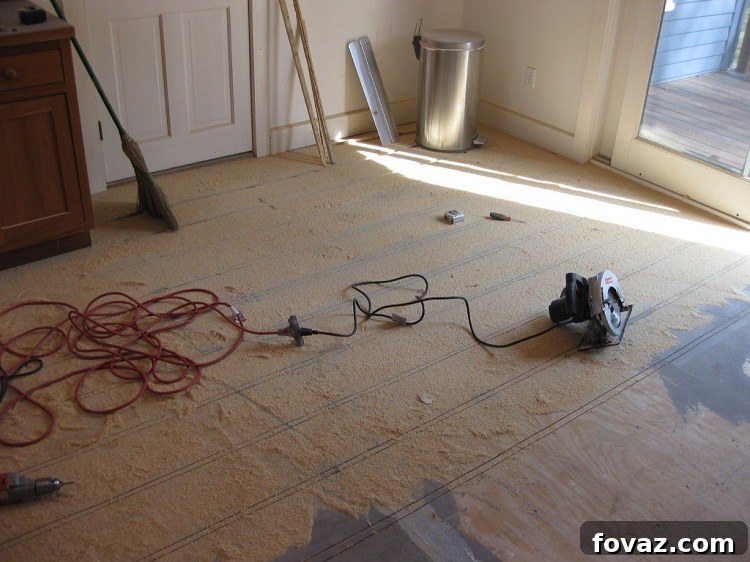
On top of the vapor barrier, an underlayment is installed. Its primary functions are to provide a stable, level surface for the hardwood, offer additional moisture protection, and in some cases, enhance insulation or sound dampening. The original text suggests plywood underlayment, which is an excellent choice for nail-down hardwood installations. The plywood creates a dimensionally stable substrate that allows for secure nailing of the hardwood planks. Ensure the plywood is exterior-grade or specifically rated for subflooring, and that it is securely fastened to the concrete slab using appropriate adhesives and/or fasteners, taking care not to puncture the radiant heating tubes.
Other specialized underlayments designed for radiant heating systems, often incorporating grooves for water tubing or electrical elements, might also be considered, particularly for glue-down or floating hardwood installations. Always consult with your flooring manufacturer for their specific recommendations regarding underlayment with radiant heat.
Acclimatization: Letting Your Hardwood Settle In
Once the slab is dry and the underlayment is in place, the hardwood itself needs preparation. This crucial step is called acclimatization, and it allows the wood to adjust its moisture content to the ambient conditions of the room where it will be installed. Skipping or rushing this step is one of the leading causes of hardwood flooring failures.
Have your chosen hardwood delivered to the new room at least one week (and ideally two weeks) before installation. It’s vital that the room’s radiant heating system is already set to its normal operating temperature, and that the indoor relative humidity is stable and within the manufacturer’s recommended range for your specific hardwood. Unwrap the hardwood bundles, unstack the planks, and “sticker” them, meaning place small spacers between layers, allowing air to circulate freely around each piece. This exposure to the room’s environment allows the wood to slowly expand or contract to achieve equilibrium with the room’s temperature and humidity levels, minimizing post-installation movement.
Achieving Equilibrium with Your Environment
The goal of acclimatization is to ensure the wood reaches its “in-use” moisture content before installation. This means the wood should be as stable as possible in the environment it will inhabit. If the wood is installed when it’s too wet, it will shrink, leading to gaps. If it’s too dry, it will expand, leading to cupping or buckling. Using a moisture meter to check the wood’s moisture content throughout the acclimatization period is highly recommended. The wood should be within the manufacturer’s specified range and also within 2-4% of the moisture content of the subfloor.
Choosing the Best Hardwood for Radiant Heat Applications
Not all hardwood is created equal when it comes to radiant heating. Careful selection can significantly impact the long-term success and appearance of your floor.
Prioritizing Plank Width for Stability
When selecting hardwood planks for a radiant heated floor, prioritize narrower pieces. Widths in the two to three-inch range are ideal. The reason for this is simple: wider planks have more surface area to absorb and release moisture, leading to greater expansion and contraction across the width of each board. Narrower planks experience less individual movement, and the greater number of seams between them can better accommodate these subtle size changes without creating noticeable gaps or stress on the flooring system.
Solid vs. Engineered Hardwood: Making the Right Choice
This is a critical distinction for radiant heat applications. While traditional solid hardwood can be installed, it is generally considered more susceptible to moisture and temperature fluctuations due to its homogeneous construction. For this reason, **engineered hardwood flooring** is often the preferred and recommended choice over radiant heated slabs. Engineered wood consists of multiple layers of wood veneers or plywood cross-plied together, topped with a real hardwood veneer. This cross-grain construction makes engineered wood significantly more stable and resistant to expansion and contraction, making it much better suited for the dynamic environment created by radiant heating.
If you opt for solid hardwood, ensure it is carefully selected, properly acclimatized, and comes from a reputable manufacturer that specifically approves its products for radiant heat applications. Even then, wider solid planks should generally be avoided.
Recommended Wood Species for Enhanced Stability
Certain species of wood exhibit greater dimensional stability than others, making them more suitable for radiant heated floors. American Cherry, Red Oak, and White Oak are excellent choices, known for their moderate movement. Other stable options include Maple and Walnut. Species like Hickory, while beautiful, tend to be less stable and might be riskier over radiant heat unless they are engineered products. Always check with the wood manufacturer for specific recommendations regarding their products’ suitability for radiant heating.
Considerations for Wood Thickness and Finish
Thinner hardwood (especially the wear layer of engineered wood) will generally allow for better heat transfer from the radiant system to the room. While appearance is key, also consider the finish. High-quality, durable finishes, like multi-coat urethane, not only protect the wood from wear and tear but also provide an additional layer of moisture resistance. Prefinished hardwood often comes with incredibly durable factory finishes, but site-finished floors allow for a custom look and seamless aesthetic.
The Final Touch: Finishing and Maintaining Your Radiant Heated Hardwood Floor
Once your hardwood is expertly installed, applying the right finish is the final step to protecting your investment and enhancing its beauty. For radiant heated floors, a high-quality, durable finish is paramount.
Apply several coats of a premium-grade floor urethane. Urethane finishes are known for their excellent resistance to abrasion, chemicals, and moisture. Water-based urethanes are popular for their low VOCs (volatile organic compounds), quicker drying times, and non-yellowing properties, making them an excellent choice. Oil-modified urethanes offer a rich, amber glow and exceptional durability. Ensure the finish is compatible with the hardwood species and is designed to withstand the subtle temperature fluctuations inherent in radiant heating systems. The finish should fully cure according to the manufacturer’s instructions before heavy use.
Ongoing Care for Long-Term Beauty
To ensure the long-term beauty and integrity of your radiant heated hardwood floor, consistent care is essential. Maintain a stable indoor environment by keeping the relative humidity within the range recommended by your flooring manufacturer (typically 35-55%) and the temperature consistent. Use humidifiers in dry winter months and dehumidifiers in humid summer months if necessary. Regularly clean your floor with products specifically designed for hardwood, and avoid excessive water. Promptly clean up spills and use furniture pads to prevent scratches. With proper care and attention to the initial installation guidelines, your radiant heated hardwood floor will provide unparalleled comfort and beauty for decades.
Conclusion: Your Path to a Beautiful, Comfortable Home
Installing hardwood flooring over a radiant heated concrete slab is an investment that truly elevates the comfort and value of your home. While it demands careful attention to detail—from meticulous concrete curing and moisture testing to thoughtful wood selection and proper acclimatization—the rewards are significant. By understanding the unique properties of wood and concrete, and by following these expert guidelines, you can achieve a floor that is not only visually stunning but also luxuriously warm, quiet, and healthy. Embrace the journey, and you’ll soon be enjoying the unparalleled comfort of your beautifully heated hardwood floors.