
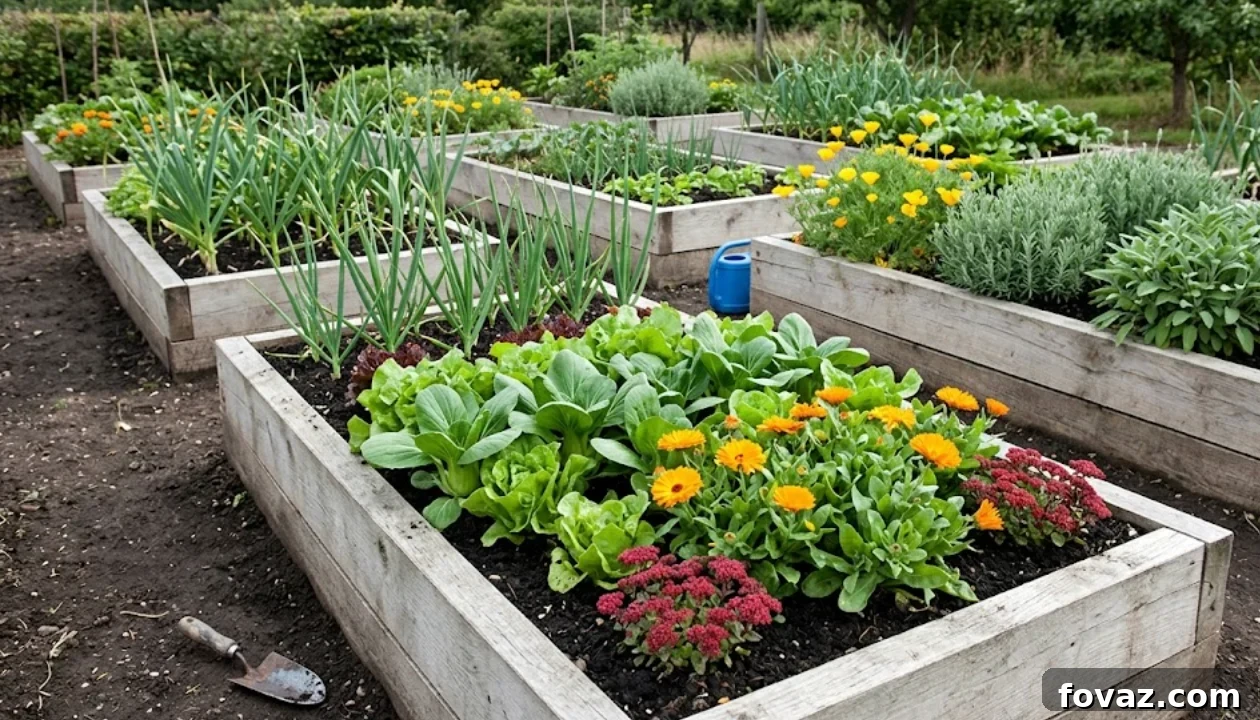
At a Glance: Raised Garden Bed 4x8x2
- Project Size: 4′ Wide x 8′ Long x 2′ High
- Skill Level: Beginner
- Estimated Time: 3–5 hours (grab a buddy to make it faster!)
- Cost Estimate: $150–$300 (depends on cedar vs. untreated pine)
Why Build This Raised Garden Bed?
Spring is the season for fresh starts, and building a 4x8x2 raised garden bed is an easy, high-payoff project. The design is simple to build, offers generous planting space, and the 2-foot height reduces bending, making it comfortable for adults and accessible for kids. It’s an ideal weekend project for a family or two people working together: build the bed one day and plant the next.
Safety Reminder: Wear PPE (gloves, safety glasses, ear protection) when using power tools. Work in a ventilated area and minimize dust. Since this bed will grow food, use untreated lumber or naturally rot-resistant woods like cedar.
Raised Garden Bed Step-by-Step Guide
Materials List
| Item | Quantity / Description |
| Lumber (Sides) | 4 boards — 2″ x 12″ x 8′ (cedar or untreated) |
| Lumber (Ends) | 4 boards — 2″ x 12″ x 4′ (cedar or untreated) |
| Braces/Cleats | 6 pieces — 1.5″ x 1.5″ x 2′ (standard 2x2s cut to length) |
| Seat Boards | 2 boards — 1″ x 4″ x 6′ (optional) |
| Screws (Braces) | 32 — 2½″ exterior coated screws |
| Screws (Ends) | 24 — 3½″ exterior coated screws |
| Tools Needed | Power drill, drill bits, tape measure, 24″+ spirit level |
Use quality exterior screws to avoid rust and a solid level to ensure the frame is square. A decent drill and a good level will save time and headaches.
The Soil Recipe (per bed)
| Component | Volume (Cubic Yards) | Volume (Cubic Feet) |
| Topsoil | 1.5 yards | 40 cu. ft. |
| Compost | 0.7 yards | 20 cu. ft. |
| Peat Moss | 0.4 yards | 4 cu. ft. |
Instructions
Step 1: Build the 8-Foot Side Panels
Lay two 2″x12″x8′ boards flat, edge-to-edge, to form a 24″ high side. Position three 2′ braces: one at each end and one centered at 4′. Secure the braces through the board faces with 2½″ exterior screws. Repeat for the second long side.
Step 2: Attach the 4-Foot End Boards
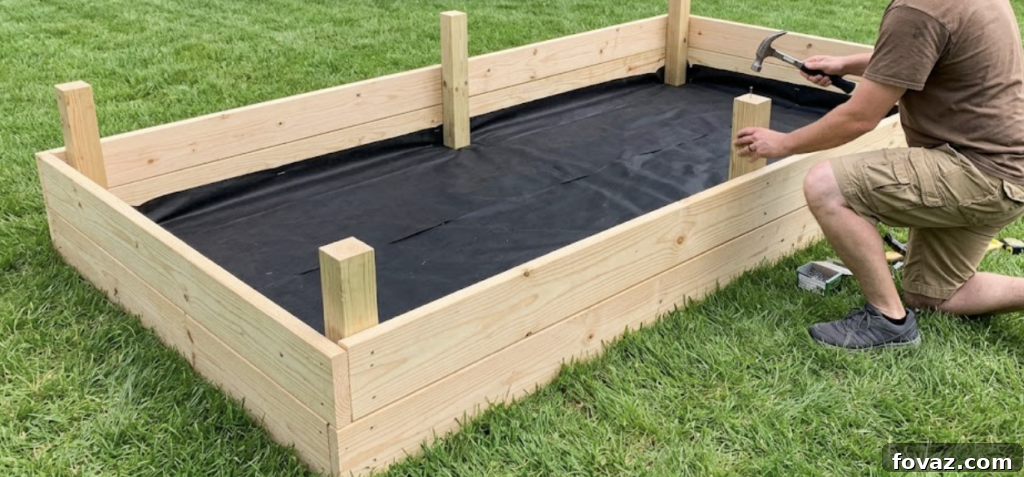
With two people, stand the long panels upright and parallel, braces facing inward. Hold a 2″x12″x4′ end board flush to the ends and drive 3½″ screws through the end board into the long boards and interior braces. Repeat for the opposite end.
Step 3: Complete the Box
Stack the second set of 4′ end boards on top of the first and secure with 3½″ screws, keeping corners square and flush. The result is a sturdy 4x8x2 box.
Step 4: Level and Position
Move the frame to a sunny location (6–8 hours of sun). Use a spirit level across the top in multiple directions and adjust by digging out high spots until the box sits level.
Step 5: Add the Seats (Optional)
Center the two 1″x4″x6′ boards along the tops of the long sides and fasten down into the 2×12s. These provide a useful ledge for sitting or resting tools.
Step 6: Fill the Bed
Lay cardboard at the base to suppress grass, then mix and add the topsoil, compost, and peat moss until the bed is filled. This blend balances drainage, moisture retention, and nutrients for a wide range of vegetables.
If you’re new to gardening, consider a basic hand tool set (gloves, trowel, small fork) to make planting and maintenance easier.
Step 7: Plant and Enjoy!
Plant your favorite spring crops—tomatoes, peppers, carrots, leafy greens and herbs will all do well in this deep, nutrient-rich bed. Reuse any leftover lumber for stakes or row markers to minimize waste.
Taking a few hours to build this 4×8 raised bed sets you up for productive seasons of homegrown food. The robust lumber and deep soil volume support healthy plants and high yields—grab your drill and get growing.
FAQs Raised Garden Bed 4x8x2
Do I need to line the inside of the wood with plastic?
No. Plastic can trap moisture and speed rot. If you want a barrier, use breathable landscaping fabric to contain soil while allowing moisture to escape.
Why use a mix of topsoil, compost, and peat moss?
Topsoil gives bulk and structure, compost supplies nutrients and biology, and peat moss improves drainage and moisture retention. Together they prevent compaction and support healthy root growth.
How long will untreated wood last compared to cedar?
Untreated pine typically lasts around 3–5 years depending on climate and moisture exposure. Cedar or redwood has natural rot resistance and can last 10–15 years, making it a longer-lasting but more expensive option.