
Are you looking to reclaim valuable space in your home while simultaneously enhancing its aesthetic appeal? Look no further than the remarkable resurgence of pocket doors! Once considered a relic of the past, modern pocket doors have undergone a significant transformation, emerging as a sophisticated, practical, and highly sought-after solution for contemporary living. This guide will walk you through everything you need to know about integrating these ingenious doors into your home, from their undeniable benefits to a detailed look at DIY installation, ensuring your next home project is both rewarding and successful.
Reimagine Your Space with Modern Pocket Doors: A Smart Home Upgrade
Many homeowners are familiar with the frustrations of traditional swinging doors, which demand a significant portion of floor and wall space to operate. This is especially true in smaller rooms, tight hallways, or areas where furniture placement becomes a constant puzzle. Imagine a doorway that simply disappears into your wall, offering an unobstructed passage and freeing up precious square footage. This is the core appeal of pocket doors, and thanks to advancements in design and materials, today’s versions are leagues ahead of their predecessors.
The Evolution of Pocket Doors: From Clunky to Contemporary
Perhaps your experience with pocket doors harks back to an older building, where they were notoriously difficult to slide, prone to sticking, and generally more of a nuisance than a convenience. This was a common lament, often stemming from rudimentary hardware and less precise construction methods of yesteryear. However, the landscape has dramatically shifted. Modern pocket door systems have been completely re-engineered, addressing every past drawback with innovative solutions.
The key to this transformation lies in superior materials and precision engineering. The advent of low-friction, smooth-running plastic materials like high-grade nylon for wheels and rollers has made an immense difference. Coupled with robust, intelligently designed track systems and self-lubricating components, today’s pocket doors glide effortlessly and silently, offering a truly premium user experience. They are built for durability, ensuring smooth operation for years to come with minimal maintenance.
Unlocking the Benefits: Why Pocket Doors Are a Game Changer
The advantages of installing pocket doors extend far beyond mere nostalgia. They offer a host of practical and aesthetic benefits that can profoundly impact the functionality and feel of your living spaces:
- Maximize Every Square Foot: This is arguably the most significant benefit. A typical swinging door requires approximately 10 square feet of unobstructed floor space for its arc of operation. Pocket doors, by disappearing into the wall, liberate this entire area. This reclaimed space is invaluable in small bathrooms, compact kitchens, laundry rooms, closets, or even as a clever divider in open-plan layouts. It allows for more flexible furniture arrangement and a less cluttered environment.
- Enhanced Design Flexibility & Aesthetics: Beyond the functional space saving, pocket doors offer a sleek, minimalist aesthetic. When open, they provide an uninterrupted flow between rooms, creating a more expansive and open feel. This clean look is perfect for modern and contemporary interiors. Furthermore, the wall space adjacent to the doorway remains entirely usable for artwork, shelving, or other decorative elements, which would be impossible with a traditional swinging door.
- Improved Accessibility: For individuals using wheelchairs, walkers, or crutches, traditional doors can present significant challenges. A swinging door often requires backing up to open it, navigating its arc, and then passing through. Pocket doors eliminate this obstacle entirely, providing a wide, clear opening without any door swing to contend with. This makes them an excellent choice for universal design and aging-in-place renovations, fostering greater independence and ease of movement.
- Noise Reduction & Privacy: While providing an open feel when desired, pocket doors are also excellent for creating private, sound-buffered spaces when closed. With proper installation and a solid core door, they can offer comparable or even superior sound attenuation to traditional doors, making them ideal for home offices, bedrooms, or bathrooms.
- Versatility in Application: Pocket doors aren’t just for primary entrances. They are incredibly versatile and can be used in numerous creative ways:
- En-suite bathrooms: Maximize space in compact master baths.
- Kitchen pantries: Easy access without obstructing kitchen flow.
- Laundry closets: Hide away appliances when not in use.
- Home offices: Create a quiet workspace that can be opened up when entertaining.
- Connecting rooms: Seamlessly merge two rooms or divide them for privacy.
- Wardrobe closets: Full access to your closet without door interference.
DIY Pocket Door Installation: A Rewarding Home Project
Installing a pocket door might seem daunting, but for the average homeowner with basic carpentry skills, it’s a completely achievable and highly rewarding do-it-yourself project. The key to a successful installation, particularly if you’re not a seasoned carpenter, is to opt for a high-quality pocket door hardware kit rather than attempting to construct the frame and mechanism from scratch. These kits are meticulously engineered to provide all the necessary components and precise instructions, minimizing the margin for error.
As noted from past experiences, even slight misalignments or warped components can lead to a pocket door that sticks, jams, or is difficult to operate. A well-designed kit mitigates these issues by providing a robust, square, and plumb frame that integrates seamlessly into your wall structure. You’ll typically find an excellent selection of pocket door hardware kits at your local home improvement center or specialized hardware stores.
What to Look for in a Quality Pocket Door Hardware Kit
Not all pocket door kits are created equal. To ensure your new pocket door operates smoothly and reliably for years, it’s crucial to evaluate the features of different kits. Prioritize quality components that contribute to durability, ease of installation, and long-term performance:
- Large, Durable Wheels: Seek out kits with wheels that are at least 1-inch in diameter, ideally made from robust materials like nylon or high-grade plastic. Larger wheels distribute the door’s weight more effectively, reducing friction and ensuring a smoother, quieter glide. Material quality is also vital for longevity and resistance to wear.
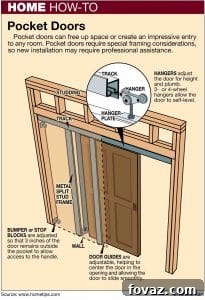
- Removable, Jump-Proof Roller Track: The track is the backbone of your pocket door system. A “jump-proof” design means the rollers are securely contained within the track, preventing the door from accidentally coming off its runners, which can be a significant hassle to fix. A removable track is a huge advantage for future maintenance or adjustments, allowing access without needing to dismantle the entire wall structure.
- Easily Accessible Adjustments: Over time, houses settle, and doors might require minor adjustments. Choose a kit where the hardware adjustments (for height or plumb) can be easily accessed without having to remove the door casing or open up the wall. This feature saves considerable time and effort in the long run.
- Self-Leveling Hangers with Multiple Wheels: Self-leveling hangers simplify installation by automatically compensating for minor ceiling or track imperfections, ensuring the door hangs perfectly plumb. Hangers with three wheels provide superior stability and weight distribution compared to those with fewer, reducing stress on the track and wheels.
- Steel-Wrapped Side Split Door Jambs: The vertical “split jambs” form the actual pocket inside the wall where the door slides. Kits featuring steel-wrapped jambs offer superior strength and rigidity. This reinforcement is critical in preventing the jambs from warping over time due to moisture or structural shifts, which can lead to binding and operational issues.
- Soft-Close/Soft-Open Mechanisms: For an added touch of luxury and improved functionality, consider kits that include soft-close and soft-open features. These mechanisms gently decelerate the door as it approaches the end of its travel, preventing slamming and ensuring a quiet, controlled operation.
- Weight Capacity: Always check the maximum door weight capacity of the kit. If you plan to install a heavy solid wood door, you’ll need a robust system designed to handle that load.
If you encounter difficulty finding specific quality pocket door hardware kits at your local retailer, consider reaching out directly to reputable manufacturers for information on their product lines and local dealer networks. Leading manufacturers known for their quality pocket door systems include, but are not limited to, Arthur Cox (800-456-5656, www.acox.com), John Sterling (800-367-5726, www.johnsterling.com), L.E. Johnson (800-837-5664, www.johnsonhardware.com), Ledco (800-626-6367, www.ledcodoors.com), and National Manufacturing (815-625-1320, www.natman.com).
Pre-Installation Checklist: Setting the Stage for Success
Before you even unbox your kit, some crucial preparatory steps will ensure a smooth installation:
- Door Selection and Preparation:
- Read Kit Instructions: Begin by thoroughly reviewing the hardware kit instructions, paying close attention to the recommended door dimensions, thickness, and maximum weight. This will guide your door selection.
- Choose Your Door Wisely: Pocket doors come in various materials and styles, including hollow core, solid core, wood, MDF, and fiberglass. Solid core doors offer better sound insulation and feel more substantial, but they are heavier. Fiberglass doors are excellent for moisture resistance and stability.
- Seal Wood Doors: If you select a wood door, it is imperative to seal all six edges (top, bottom, and all four sides) with a high-quality urethane or primer/paint. This prevents moisture absorption, which can lead to warping, a common culprit for sticky pocket doors. Fiberglass doors are less susceptible to moisture and generally do not require sealing.
- Wall Assessment and Opening Preparation:
- Check for Obstructions: Before tearing into your wall, carefully assess the area where the pocket will reside. Use a stud finder and potentially an inspection camera to check for electrical wiring, plumbing pipes, HVAC ducts, or other obstructions that might run through the wall cavity. Rerouting these elements can add significant complexity and cost to your project.
- Ensure Plumb and Level: The absolute most critical step for a well-functioning pocket door is to ensure the rough door opening is perfectly plumb (vertically straight) and the floor beneath it is level. Any deviation here will inevitably lead to alignment problems, causing the door to bind or sag. Use a long level and a plumb bob or laser level to check. If the floor is not perfectly level, always measure from the highest point to ensure adequate clearance. Stretching strings from corner to corner of the opening (diagonally) is an excellent way to confirm squareness and plumbness – the distances should be equal.
- Demolition: Carefully remove the existing door frame, door, and any drywall or plaster needed to create the rough opening for the pocket frame.
- Gather Your Tools: Have all necessary tools on hand before you start, including a tape measure, level (4ft and torpedo), drill, saw (reciprocating saw for demolition, miter saw for trim), hammer, screwdriver, stud finder, shims, and safety gear.
Step-by-Step Installation: Bringing Your Pocket Door to Life
While specific instructions will vary slightly by manufacturer, the general sequence for installing your pocket door kit is as follows:
- Assemble the Pocket Frame: Follow your kit’s instructions to assemble the vertical and horizontal frame components that will create the “pocket” inside your wall. These frames are designed to be integrated into the wall’s stud structure.
- Install the Track System: Once the rough opening is prepared and the frame is assembled, the next critical step is to install the roller track that supports the pocket door. This track must be installed perfectly level and securely fastened to the header of the rough opening. Take your time with this step, as any deviation here will affect the door’s operation.
- Install the Split Jambs: The vertical “split jambs” are installed next, forming the actual cavity within the wall that the door will slide into. These are crucial for guiding the door and providing structural integrity to the pocket. Ensure they are plumb and parallel.
- Prepare and Hang the Door:
- Attach the pocket door hardware (hangers, rollers, guides, and any handles/pulls) to the top edge and sides of your prepared door, following the kit’s instructions precisely.
- Carefully lift and hang the door onto the roller track. This may require an extra set of hands, especially for heavier doors.
- Once hung, test the door’s movement immediately. It should glide smoothly and freely without binding or sticking. Make any initial adjustments to the hangers to ensure the door is plumb and has adequate clearance from the floor and header.
- Install Finishing Jambs and Trim:
- Install the finishing side jambs (the vertical pieces that frame the opening) and the top jamb (header trim). These trim pieces conceal the rough opening and provide a finished look.
- When fastening these finishing pieces, especially those that might need to be removed for future access to the hardware (such as the split jamb closest to the track), consider using finish screws that are easily removable rather than nails. This foresight can save a lot of hassle if maintenance or adjustments are needed down the line.
- Add Hardware: Install the door pulls, latches, or locks designed for pocket doors. Ensure they are flush and do not protrude excessively, which could interfere with the door’s travel into the pocket.
Maintenance Tips for Long-Lasting Smooth Operation
With proper installation, modern pocket doors require minimal maintenance. However, a few simple steps can ensure their longevity:
- Keep Tracks Clean: Periodically vacuum or wipe the exposed parts of the track to remove dust, dirt, or debris that could impede smooth operation.
- Lubricate Rollers: If you notice any squeaking or stiffness, a light application of a silicone-based lubricant (avoid oil-based products which can attract dirt) on the rollers can often resolve the issue.
- Check Alignment: If the door starts to stick, check its plumb and level. The accessible adjustment features of a good quality kit will allow you to make minor tweaks to restore smooth operation.
Conclusion: Embrace the Future of Interior Doors
Pocket doors are more than just a passing trend; they are a smart, functional, and aesthetically pleasing solution for optimizing space and enhancing the design of any home. With significant advancements in hardware quality and ease of installation, undertaking a DIY pocket door project is now well within the grasp of many homeowners. By choosing a high-quality kit, preparing thoroughly, and following installation instructions carefully, you can enjoy the myriad benefits of these innovative doors for years to come. Reclaim your space, elevate your style, and enjoy the seamless functionality that modern pocket doors bring to your living environment.
For further questions or expert advice on home improvement, you can send your inquiries to Here’s How, 6906 Royalgreen Dr., Cincinnati, OH 45244, or visit www.dulley.com.
To find out more about James Dulley and read features by other Creators Syndicate writers and cartoonists, visit the Creators Syndicate website at www.creators.com. COPYRIGHT 2008 CREATORS SYNDICATE, INC.