
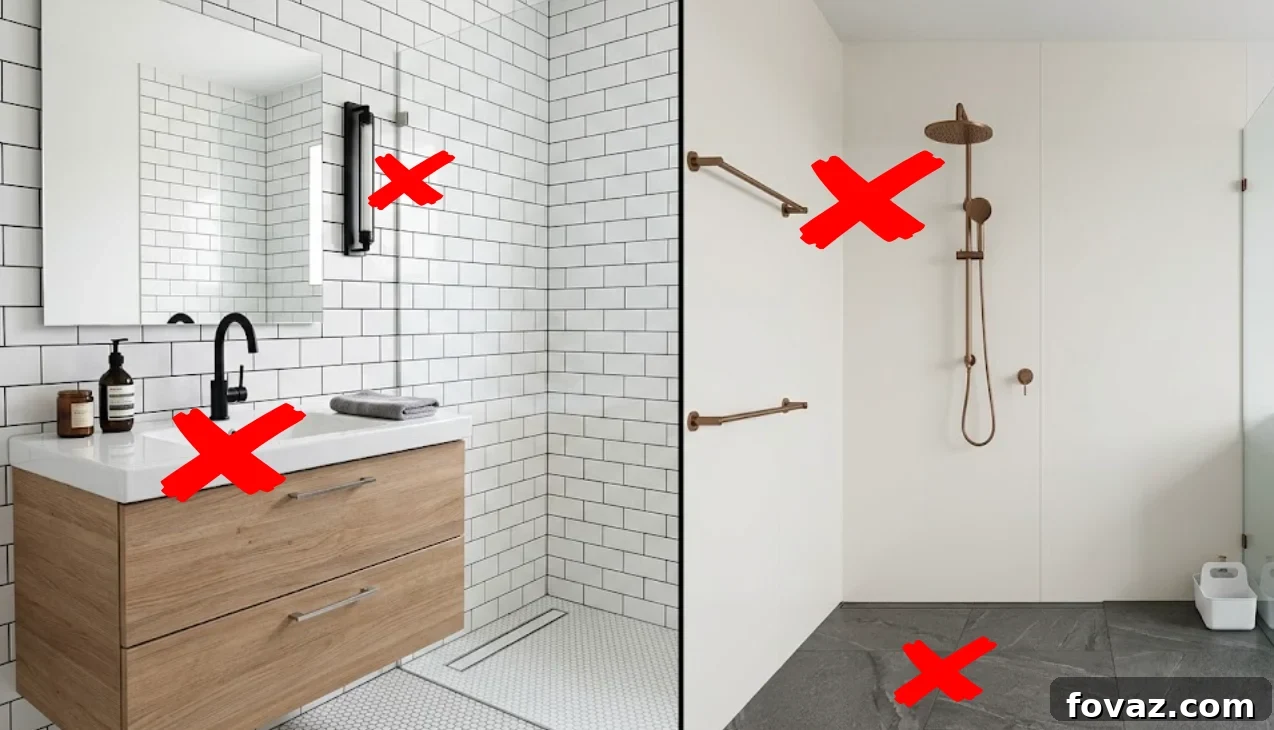
At a Glance: Bathroom Renovation Mistakes
Everyone wants a bathroom that feels like a cozy hotel. Bathrooms, however, are different from other rooms because of constant moisture. A paint mistake in a bedroom is easy to fix; a mistake in a bathroom can lead to leaks, mold, and expensive repairs. This guide highlights the most common beginner mistakes, explains why they matter, and gives clear, practical fixes and product types to consider so you can avoid costly problems.
7 Remodel Mistakes to Avoid
| The Mistake | What Happens? | How to Fix It |
|---|---|---|
| 1. No waterproofing | Mold grows inside your walls | Apply a liquid waterproofing membrane or install a waterproof sheet behind tile |
| 2. Only ceiling lights | Harsh shadows on your face | Add wall sconces at eye level beside the mirror |
| 3. Too much tile and stone | Feels cold and institutional | Introduce warm wood accents and soft textiles |
| 4. Zero hidden storage | Cluttered counters and disorganization | Use a medicine cabinet, under-sink organizers, or built-in niches |
| 5. Dark grout with white tile | Highlights uneven tiles and imperfections | Choose grout that matches the tile color |
| 6. Cheap $20 faucets | Coatings peel and parts fail quickly | Invest in reputable, solid-brass faucets with durable finishes |
| 7. Flat shower floors | Water pools and can flood the bathroom | Use a pre-sloped shower base or properly slope the subfloor |
7 Bathroom Mistakes (And How to Fix Them)
01 Mistake: Tiling Straight Over Regular Drywall
The Mistake: Assuming tile and grout are waterproof and tiling directly onto ordinary drywall.
Why You’ll Regret It: Grout is porous. Without a waterproof layer beneath, moisture travels into framing and sheathing, causing rot and mold that can compromise the structure and force a full gutting of the bathroom.
The Fix: Install a liquid waterproofing membrane or a waterproof sheet membrane behind tile installations. These products create a durable barrier that prevents moisture intrusion. For cost-effective reliability, apply a quality liquid membrane in two coats or lay a polyethylene or PVC sheet membrane over studs or cement board before tiling.
02 Mistake: Putting All Your Lights on the Ceiling
- The Mistake: Relying only on ceiling-mounted fixtures because they are easy to install.
- Why You’ll Regret It: Overhead lighting casts downward shadows, making grooming tasks harder and leaving the room feeling harsh.
- The Fix: Keep a ceiling fixture for ambient light, but add wall sconces or vertical fixtures on either side of the mirror to provide even, flattering illumination at face level.
03 Mistake: Making Everything Look Like Stone and Tile
- The Mistake: Covering all surfaces with tile or stone for a uniform look.
- Why You’ll Regret It: All hard surfaces can make a space feel cold and unwelcoming.
- The Fix: Soften the space with natural materials and textiles: a teak or bamboo bath mat, wooden shelving, woven baskets, and good-quality cotton towels warm the room and add texture.
04 Mistake: Buying a Pretty Sink With No Storage
- The Mistake: Choosing a pedestal sink or a stylish basin without considering practical storage needs.
- Why You’ll Regret It: Everyday items end up on counters, creating clutter and reducing usable space.
- The Fix: Add a mirrored medicine cabinet or wall shelving. If replacing the sink isn’t an option, use stackable bins or under-sink organizers to keep supplies out of sight.
05 Mistake: Picking Grout That Clashes With Your Tile
- The Mistake: Choosing a grout color that contrasts sharply with tile.
- Why You’ll Regret It: High-contrast grout highlights uneven tiles and installation flaws.
- The Fix: Select a grout shade that blends with the tile. That reduces visible seams and gives a cleaner, more professional finish.
06 Mistake: Buying Cheap Faucets to Save $50
- The Mistake: Buying inexpensive, low-quality faucets because they look good and are cheap.
- Why You’ll Regret It: Poor materials and thin coatings fail quickly in humid conditions; finishes peel and parts corrode.
- The Fix: Spend more up front on faucets with solid-brass construction and durable, corrosion-resistant finishes. Quality valves and ceramic cartridges reduce leaks and extend lifespan.
07 Mistake: Forgetting to Slope the Shower Floor
- The Mistake: Building a walk-in shower floor flat and assuming water will reach the drain.
- Why You’ll Regret It: Flat floors trap water, causing puddles, slime, and leaks that damage floors and finishes.
- The Fix: Use a pre-sloped shower pan or purchase a factory-made pre-slanted base. They ensure correct drainage and are much easier for beginners than forming a slope in mortar.
Final Thoughts
A successful bathroom renovation isn’t about complex design tricks — it’s about getting the fundamentals right. Protect concealed surfaces from moisture, plan storage from the start, choose compatible materials and finishes, and invest in a few quality fixtures. When you prioritize those hidden steps, the finished space will look and feel professionally done.
5 Questions Home Renovation Beginners Always Ask
Q1: What’s the most expensive mistake I can make?
A: Moving plumbing fixtures such as the toilet or shower. Relocating drains and water lines means cutting into floors and walls and significantly increases labor and material costs. Keeping fixtures in their existing locations is the most budget-friendly option.
Q2: Is it a bad idea to get rid of my only bathtub?
A: If you plan to stay long-term and prefer a shower, removing a tub is a personal choice. However, if you’re likely to sell within a few years, retain at least one tub to appeal to families with children and to preserve resale value.
Q3: What tile choices make a small bathroom feel even smaller?
A: Using very small tiles combined with dark, busy grout creates visual clutter and makes walls feel closer. Large-format tiles with grout that matches the tile color open the space and create a cleaner look.
Q4: Why is my new bathroom paint already peeling?
A: Regular or flat paints absorb moisture and fail quickly in humid spaces. Always use paints labeled for bathrooms—satin or semi-gloss finishes formulated for high humidity—to prevent bubbling and peeling.
Q5: Can a beginner build a curbless walk-in shower?
A: Not usually as a first project. Curbless showers require precise floor framing and waterproofing to achieve the correct slope; small errors can cause major leaks. Start with a standard shower base and attempt curbless designs after gaining experience.